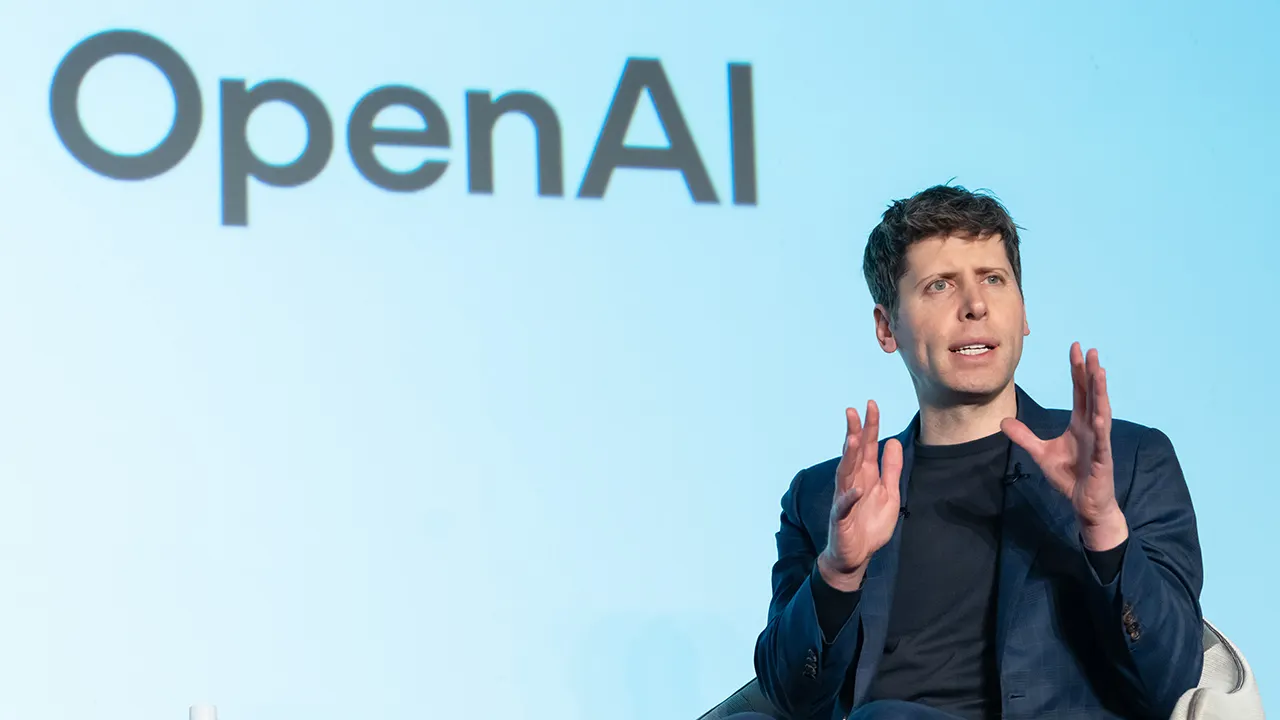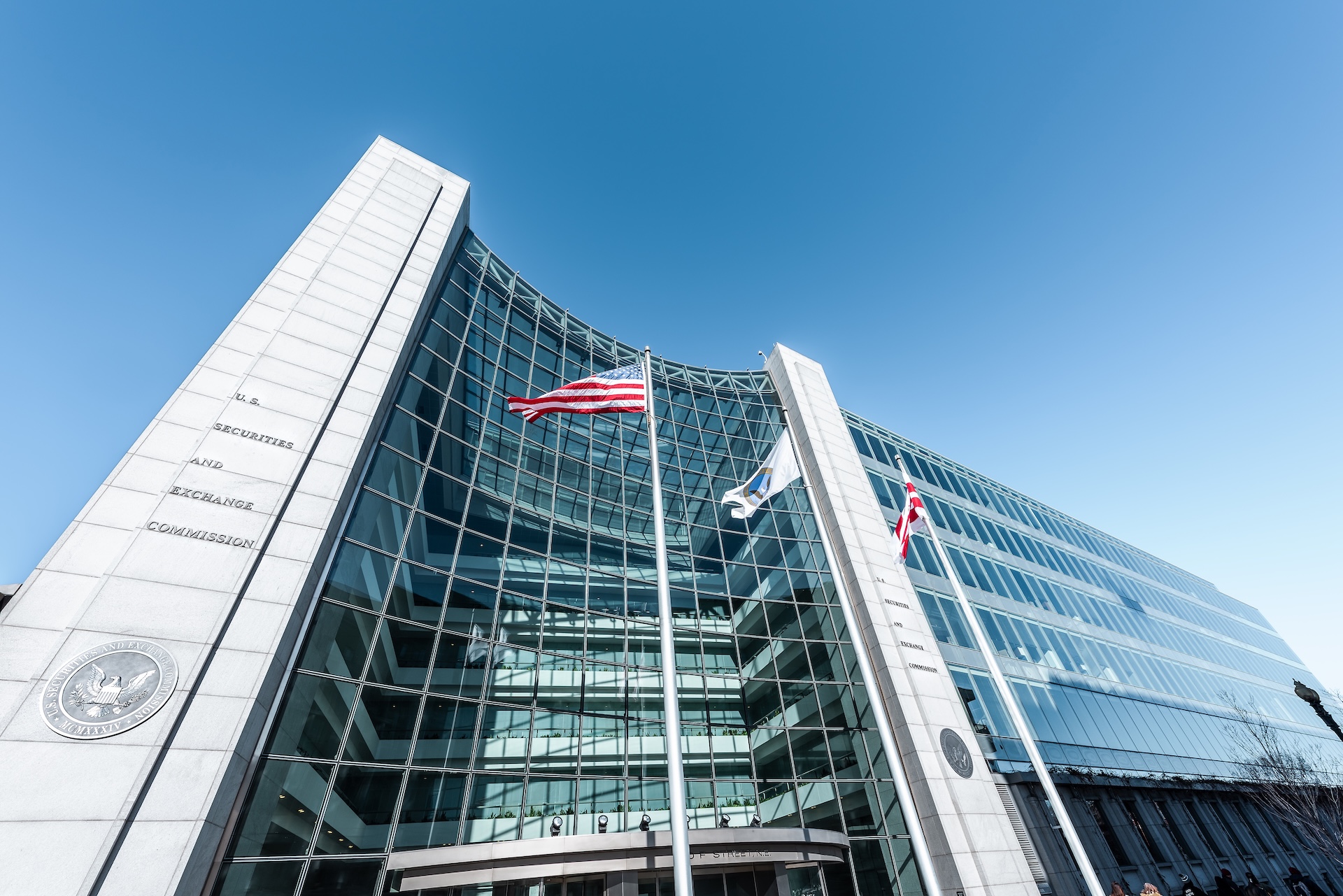




Employees at Anthropic, OpenAI and SpaceX are declining to sell into tender offers, and Anthropic's most recent one came up short of the roughly $6 billion of equity investors reportedly wanted to buy. SpaceX's public shares are now trading below their June offer price, which gives that holdout logic its first live read. And Clear Street, which withdrew its own IPO in February, spent last week launching a pre-IPO marketplace.
The people closest to the numbers aren't selling
Photo by Growtika on Unsplash
PitchBook reported that employees at Anthropic, OpenAI and SpaceX, the three most valuable private companies in the world, are increasingly passing on tender offers. Anthropic's most recent tender reportedly fell short of the roughly $6 billion of equity investors had hoped to buy, with employees holding at a $350 billion valuation. PitchBook analyst Emily Zheng put the behavior plainly: employees are declining transactions priced above their employer's own valuation, at a moment when secondary sales at most other companies clear at a discount.
The arithmetic behind it is not subtle. OpenAI's late-2024 tender priced at $157 billion. The round it closed in March priced at $852 billion. Anyone who sold into that tender watched the number move more than fivefold in about eighteen months, and every employee at these companies has run that calculation at least once.
For anyone pricing pre-IPO stock, this is a supply question before it is a valuation question. The names with the deepest buyer interest are producing the least available paper, which means observed indications on those names may reflect scarcity as much as any view of the underlying business.
There is now something close to a test. SpaceX priced its IPO at $135 in June, the largest offering on record, at a reported $1.77 trillion valuation. Shares ran past $200 in the first week and have since traded below the offer price. SPCX sat in the $108–$115 band on Monday (live quote).
At first glance That looks like a verdict, and it mostly is not one. SpaceX floated roughly 4% of its shares, so the price is being set by a thin slice of a very large company. The December 2025 tender those employees held through was also struck at $421 a share, before a five-for-one split, which means comparing today's screen price to what they turned down takes an adjustment most of the coverage is skipping. The defensible statement is narrower: buyers at the June offer price are underwater, and employees who held through December are not obviously in the same position.
Reported private-company financials and secondary-market indications may be unaudited, incomplete, non-standard, or based on limited transaction activity. They should not be relied upon as fair value, executable pricing, or a basis for any investment decision.
A broker that couldn't price its own IPO is now selling other people's

Clear Street launched Clear Street Private Markets on July 31, opening with pre-IPO exposure to Databricks, valued at $188 billion in July. Clients don't buy shares directly — they take an interest in an SPV that holds a stake in a fund that owns the stock. The firm says it may add as many as 30 companies by year-end, focused on names valued between $5 billion and $20 billion, and has hired analyst Owen Lau to build dedicated private-company research.
Two details are doing more work than the launch itself. The first is that Clear Street withdrew its own $351 million IPO in February after cutting the deal and postponing it. Six months later it is selling other companies' pre-IPO exposure. Call that a position rather than a contradiction: a broker that could not get itself public on acceptable terms is building a business on the premise that staying private is where value accrues.
The second is financing. Clear Street says it will lend against eligible pre-IPO positions, which changes who the marginal buyer is. A borrower behaves differently in a drawdown than a patient family office does. How that affects secondary pricing under stress is not yet observable, and it is one of the more consequential open questions in the market's structure.
Reported private-company financials and secondary-market indications may be unaudited, incomplete, non-standard, or based on limited transaction activity. They should not be relied upon as fair value, executable pricing, or a basis for any investment decision.
📈 Data Point of the Day
474 gigawatts
That's the volume of data-center connection requests sitting in ERCOT's interconnection queue — more than five times the Texas grid's record peak demand. Governor Greg Abbott ordered state regulators on Monday to audit every project in that queue before any of them advance, and ERCOT paused its batch zero review the same day. His office said data centers account for roughly 90% of the requested capacity. For anyone marking AI-infrastructure names, power siting has been the assumed input and the modeled cost; a state-level pause on approvals makes it a schedule risk with a regulator attached.
💨 Quick Takes
- Sequoia led a $1B Series B for Valar Atomics at a $6B valuation. The small-modular-reactor company reportedly tripled its valuation from a round months earlier, after using a fission reaction in July to power an Nvidia chip.
- Visa agreed to acquire BioCatch for $2.4B in cash. A strategic-acquirer exit for the Israeli fraud-detection company, and the day's largest venture-backed M&A transaction.
- Horizon3 raised a $250M Series E at more than $2B, co-led by NightDragon and NEA. That is roughly triple the $650M the autonomous-pentest company carried after its Series D in June 2025.
- Olix raised $312M at a $3.3B valuation, the largest chip round ever raised by a European company, led by Fundomo with Arm, Hudson River Trading and the UK's sovereign AI fund participating. The London company was valued above $1B in February.
Financing rounds and valuations are included for market context only and are not recommendations or valuation opinions.
🎓 Manual
Free float
Free float is the portion of a company's shares actually available to trade publicly, as distinct from total shares outstanding. Insider holdings, locked-up stock and strategic stakes sit outside it. The distinction matters because a market capitalization calculated on total shares can be set by trading in a very small slice of them: SpaceX sold about 4% of itself in June, so the price on the screen is discovered by that 4% and then multiplied across the other 96%. A thin float can produce sharp moves in both directions, and a price formed that way may not represent what a large block would settle at. The symmetry is the useful part. The standard objection to a secondary-market indication is that it reflects a small number of shares changing hands. A 4% float is a version of the same condition, on an exchange.
👀 What We're Watching
- Whether Zepto's private round draws outside money. The Indian quick-commerce company delayed its IPO after anchor investors indicated a valuation near $2.3 billion, against a $7 billion private mark from October 2025, and is instead reportedly raising roughly $105–120 million at about $4.5 billion. Three prices for one company inside a month. Whether that round attracts new investors or only existing holders is one thing to monitor, since the two would say different things about where the price was actually found.
- The audit trail on Texas data-center approvals. The state's reviewasks developers already in the queue to document power draw, water use and whether they are relying on public subsidies. Additional state-level reviews, if they occur, may provide context for how AI-infrastructure companies model buildout timelines.
- Tuesday's White House session on the AI oversight framework.The administration said it met its deadline for a voluntary evaluation framework for advanced models without releasing details, and staff from OpenAI, Google and Anthropic are reportedly invited to review it Tuesday. The EU's AI Act enforcement powers took effect the same day. Regulatory clarity is one input into listing timelines for AI companies.
Augment Markets Inc. is a technology company offering software and data services. Brokerage services are offered through Augment Capital LLC, an affiliated broker-dealer and member FINRA/SIPC. Investment advisory services are offered through Augment Advisors LLC, an SEC-registered investment adviser.
Important Disclosures: This material has been prepared for informational purposes only. None of the information provided represents a recommendation, an offer or the solicitation of an offer to buy or sell any security. The information provided does not constitute investment, legal, tax, or accounting advice. You should consult with qualified professionals before making any investment decisions. Investing in private securities involves substantial risk, including the potential loss of principal. Private securities are typically illiquid, have limited pricing transparency, and often require longer holding periods. These investments are available exclusively to qualified accredited investors and offer no guarantee of returns. An IPO or other liquidity event is not guaranteed. Additionally, past performance of private securities does not indicate or predict future results. Share price data are estimates only, based on proprietary data from Caplight and Augment Markets Inc. and its affiliates.

Paul leads editorial at Augment, building Pulse into the private markets' go-to intelligence source. He also develops editorial content strategies for startups and venture capital firms. Previously, he spent 15 years as a business and opinion journalist at The New York Times, Fortune, Fast Company, Reuters, and more. He believes transparency creates liquidity—and that someone should actually publish what private shares are trading for. He lives in Marin with his wife and two rescue dogs, and wishes he had more time to surf.
Learn more