


Vlad Tenev says tokenization will take over the entire financial system. Robinhood, Nasdaq, and Robinhood's own European brokerage all now sell something called a stock token, but the three products carry three different legal claims, with different rights, different recourse, and different owners of the underlying asset.
Deep Dive: A Stock Token Can Be Three Different Things
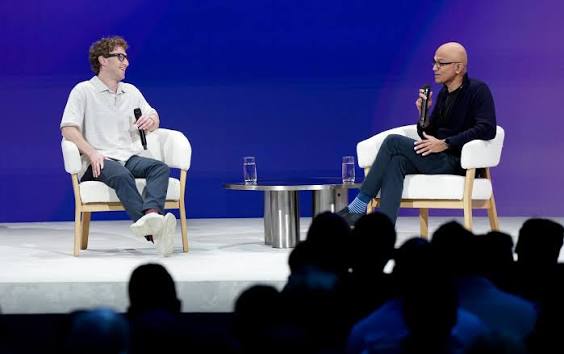
Vlad Tenev made the case for tokenization in Washington this week. On Tuesday, the Robinhood CEO called it "the best path to modernizing the American financial system." On Wednesday, he told CNBC it would "take over the entire financial system."
Robinhood has been building toward that pitch. It launched Robinhood Chain on July 1, and its new Stock Tokens now trade around the clock through wallets in more than 120 countries, subject to local restrictions. Tenev also returned to the part of the market where he sees the largest opening: private companies. "There's no good exchanges for private companies," he told CNBC.
The phrase "stock token" makes all of this sound simpler than it is. Nasdaq, Robinhood Wallet and Robinhood's European brokerage now use blockchain technology for products with different issuers, different ownership rights and different failure points. Before tokenization can change private markets, buyers need to know which legal claim sits underneath the token.
One label, three legal claims
Start with the version closest to a conventional share. In March, the SEC approved Nasdaq's rule change allowing eligible securities to trade in tokenized form through a DTC pilot. The tokenized and traditional versions would share the same CUSIP and ticker, trade on the same order book with the same priority, and carry the same shareholder rights. The blockchain changes how the position is recorded and transferred after a trade. It does not create a second security.
There is an important limit to the "faster settlement" pitch. Trades in Nasdaq's approved model would still settle on T+1. DTC has already completed limited production transactions and expects to launch its tokenization service in October. Nasdaq must give members at least 30 days' notice before its tokenized trading begins.
Robinhood's new wallet-based Stock Tokens are a different product. The company describes the 190-plus tokens as debt securities issued by Robinhood Assets (Jersey) Limited. Robinhood says each token is backed one-for-one by the corresponding public share, but the token holder gets economic exposure rather than legal or beneficial rights against the company whose stock the token tracks. The product is not available in the United States.
Then there are Robinhood's 2,000-plus Classic Stock Tokens in Europe. Robinhood calls these derivative contracts between the customer and Robinhood. They track public stocks and exchange-traded products, but they do not give the customer rights in the underlying security. They trade 24 hours a day on weekdays and cannot currently be moved to another wallet or platform.
These are not cosmetic differences. They determine who owes the holder money, where the underlying asset sits, how dividends and voting rights work, what happens in an insolvency and whether moving the token legally moves the security. The SEC's January statement on tokenized securities draws the same broad line: some tokens represent the security or a security entitlement, while others are third-party securities or swaps that provide exposure to something the holder does not own.
Better plumbing, but only for the product you bought
Tokenization may offer operational efficiencies. A blockchain record can make an asset easier to divide, move between approved wallets, use as collateral and integrate with other software. It can also reduce some of the reconciliation work that comes with maintaining separate ledgers across brokers, custodians and transfer agents.
Funds were early adopters because the legal wrapper already existed. Hamilton Lane and Securitize put a feeder fund for a private-markets vehicle on Polygon and lowered the minimum investment from the $5 million common in the institutional channel to $20,000 for qualified investors. The token made distribution and administration easier. It did not turn an interest in the feeder fund into direct ownership of every asset the fund held, and it did not guarantee a liquid secondary market.
The same distinction runs through public stock tokens. Robinhood's states that its new wallet product offers 24/7 transfers and use in decentralized-finance applications, but the holder owns a debt security issued by a Robinhood affiliate. Nasdaq's model preserves the rights of the underlying share, but its approved pilot keeps T+1 settlement and depends on DTC's infrastructure. Tokenization can improve a particular structure. It does not erase the structure.
That is why much of Wall Street's pushback has focused less on the technology than on the legal shortcuts that might travel with it. SIFMA supports settlement modernization, simpler recordkeeping and better collateral mobility. It also argues that a tokenized security should not lose the investor protections attached to the same security in conventional form.
Private-company tokens make the gap harder to ignore
Robinhood tested the private-company version in 2025 with promotional OpenAI and SpaceX tokens for eligible European customers. The governing terms made an important distinction, and they were clear.
Robinhood's promotion terms described the tokens as financial derivative contracts. The OpenAI tokens were hedged through fund units in an SPV holding convertible notes. The SpaceX tokens were hedged through fund units in an SPV holding preferred shares. Holders had no right to the underlying assets, the company stock or even the assets Robinhood held as a hedge. At launch, the tokens could not be sold, redeemed or transferred, and Robinhood did not guarantee that those functions would ever become available.
OpenAI responded that it did not endorse or participate in tokenized interests in its equity or in SPVs holding its equity. It also said transfers made without its written consent could be void. Tenev's answer at the time was unusually direct: "I don't think it's entirely relevant that it's not technically an equity instrument."
For private markets, it is relevant. A private issuer's transfer restrictions and ownership records are part of the asset, not administrative clutter around it. A token created without issuer cooperation may provide economic exposure to a chain of contracts, but it does not put the holder on the cap table. And if that token trades around the clock while the referenced private security barely trades at all, its price reflects the market for the token, not necessarily an executable price for the underlying shares.
Tokenization also leaves the disclosure problem untouched. A public stock token can refer back to SEC filings, exchange prices and a continuous market in the underlying security. A private-company token may reference an issuer that publishes little, approves transfers selectively and has no dependable public price. Faster trading does not necessarily reduce that information gap and may create more frequent price signals based on limited underlying issuer information.
Reported private-company financials and secondary-market indications may be unaudited, incomplete, non-standard, or based on limited transaction activity. They should not be relied upon as fair value, executable pricing, or a basis for any investment decision.
Private markets need the issuer in the room
The regulated public-market version now has a visible path. DTC expects its tokenization service to launch in October. Nasdaq's approved rules can take effect once the required infrastructure and post-trade services are ready. Separately, the Senate has scheduled a September 15 procedural vote on the CLARITY Act, the broader digital-asset market-structure bill.
Private-company tokenization needs more than regulatory permission. It needs an issuer willing to recognize the transfer, a transfer agent or administrator that can keep the official ownership record aligned with the blockchain, a venue allowed to serve the relevant investors, and disclosures that support whatever price the market produces.
Funds got there first because a fund already has a manager, an administrator, governing documents and a defined interest to record. A tokenized private-company share would need the same legal machinery at the issuer level. Without it, the market gets more wrappers: tradable claims issued by third parties, linked to private shares but legally separate from them.
If issuers participate, blockchains could become useful infrastructure for regulated private-company ownership and transfers. If they do not, tokenization can still create exposure, but not the share itself. For a private-company token to function as the share, transferring the token must legally transfer the security and update the recognized ownership record.
Browse private-company pages on Augment for company information, recent coverage, and available market data.
📊 Data Point of the Day
190-plus
That is how many new Stock Tokens Robinhood says are available through wallets outside the United States. Its European brokerage separately offers more than 2,000 Classic Stock Tokens. The two product lines share a name, but one consists of tokenized debt securities and the other of derivative contracts.
🎓 Manual
Security entitlement
Under Article 8 of the Uniform Commercial Code, an investor holding securities through a securities intermediary generally holds a security entitlement with respect to the financial asset credited to the investor's securities account. The precise rights associated with that entitlement depend on the applicable legal and custodial structure. Under DTC's tokenization pilot, that entitlement may be recorded and transferred using a blockchain while retaining the same rights and protections as the conventionally recorded position.
Augment Markets Inc. is a technology company offering software and data services. Brokerage services are offered through Augment Capital LLC, an affiliated broker-dealer and member FINRA/SIPC. Investment advisory services are offered through Augment Advisors LLC, an SEC-registered investment adviser.
Important Disclosures: This material has been prepared for informational purposes only. None of the information provided represents a recommendation, an offer or the solicitation of an offer to buy or sell any security. The information provided does not constitute investment, legal, tax, or accounting advice. You should consult with qualified professionals before making any investment decisions. Investing in private securities involves substantial risk, including the potential loss of principal. Private securities are typically illiquid, have limited pricing transparency, and often require longer holding periods. These investments are available exclusively to qualified accredited investors and offer no guarantee of returns. An IPO or other liquidity event is not guaranteed. Additionally, past performance of private securities does not indicate or predict future results. Share price data are estimates only, based on proprietary data from Caplight and Augment Markets Inc. and its affiliates.

Paul leads editorial at Augment, building Pulse into the private markets' go-to intelligence source. He also develops editorial content strategies for startups and venture capital firms. Previously, he spent 15 years as a business and opinion journalist at The New York Times, Fortune, Fast Company, Reuters, and more. He believes transparency creates liquidity—and that someone should actually publish what private shares are trading for. He lives in Marin with his wife and two rescue dogs, and wishes he had more time to surf.
Learn more