



Two companies last valued near the top of the 2021 market took different routes on Thursday. Bending Spoons agreed to buy Miro for $1.36 billion in enterprise value, well below its 2022 valuation, while Motive withdrew its S-1 after securing more than $1.3 billion from General Catalyst. Elsewhere, Harvey raised at $15.5 billion, the Pentagon was reportedly in talks to lend Fluidstack $5 billion, and the 10-year Treasury yield reached 4.9% ahead of next week’s Fed meeting.
Miro agreed to a $1.36 billion sale
Miro agreed on Thursday to be acquired by Bending Spoons at an enterprise value of $1.355 billion. Miro’s net cash brings the implied equity value to about $1.79 billion. The transaction is expected to close in the fourth quarter, subject to regulatory approval and other closing conditions. Certain Miro shareholders also agreed to invest $295 million of their proceeds in newly issued Bending Spoons shares. Morgan Stanley advised Miro.
Miro raised $400 million at a $17.5 billion valuation in January 2022, per TechCrunch. Bending Spoons said Miro now has about $600 million in annual recurring revenue, nearly 90% of it from business and enterprise customers, and more than 750 customers paying over $100,000 a year. TechCrunch reported that Miro is profitable and has roughly $435 million in net cash. On those figures, the enterprise value is about 2.3 times ARR.
Bending Spoons completed its acquisition of Airtable last week after agreeing to a deal at about $2.25 billion in equity value, roughly 81% below Airtable’s 2021 round. Miro is the second collaboration-software company in five weeks to agree to sell to the same buyer at a steep discount to its last primary valuation. Both companies raised near the top of the 2021 market, continued to grow and did not raise another priced round. Their old valuations remained the reference points until an exit supplied new ones.
For Miro’s shareholders, proceeds will depend on how the $1.79 billion equity value moves through the cap table, including any preferences ahead of common stock. Miro’s liquidation stack has not been disclosed. The $295 million rollover also gives some shareholders continued exposure through the public acquirer rather than an all-cash exit.
Reported private-company financials and secondary-market indications may be unaudited, incomplete, non-standard, or based on limited transaction activity. They should not be relied upon as fair value, executable pricing, or a basis for any investment decision.
Motive withdrew its S-1 after securing more than $1.3 billion
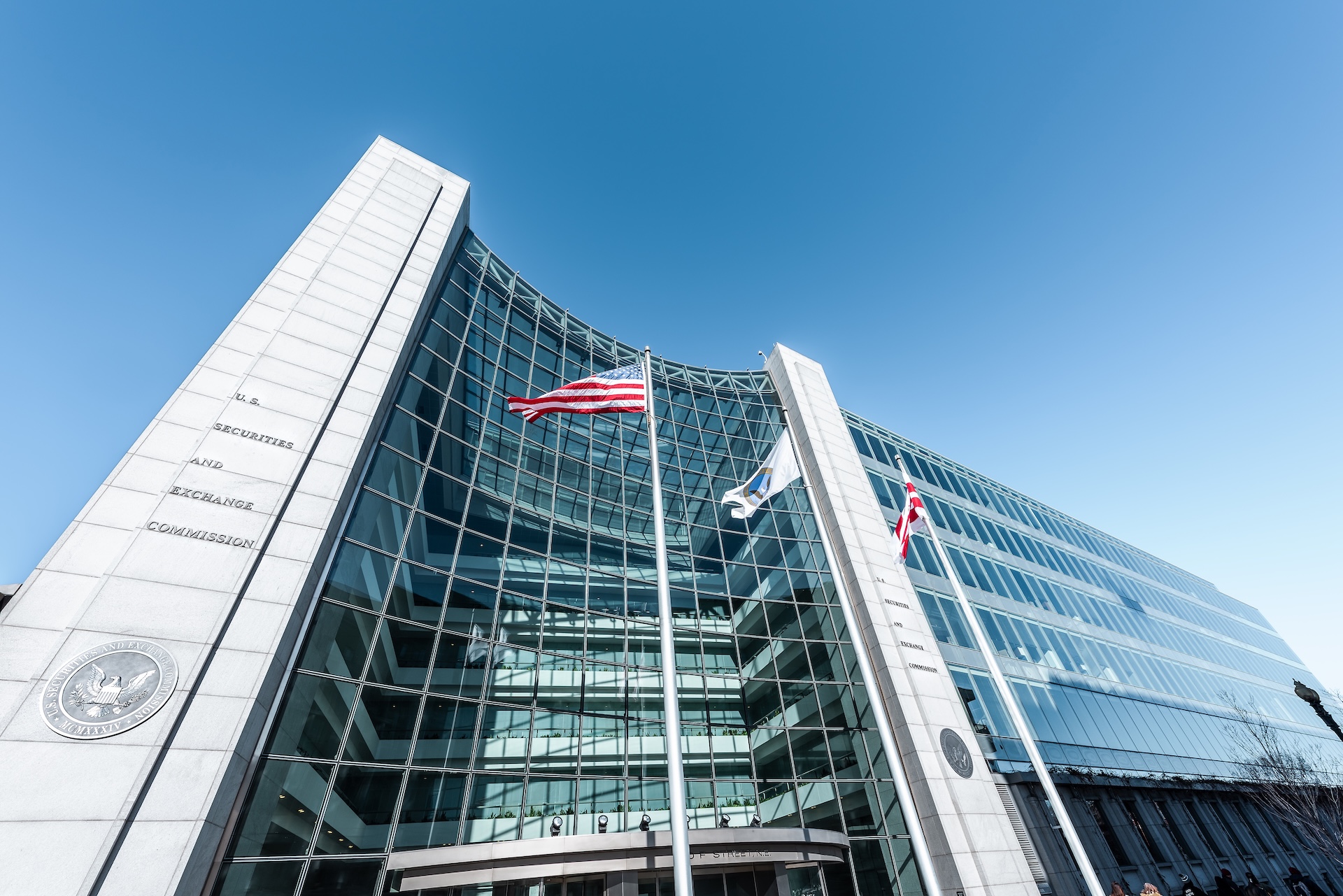
Motive filed a Form RW with the SEC on Thursday, withdrawing the registration statement it filed on December 23, 2025, for a New York Stock Exchange listing. The letter says the company “has determined not to proceed with the proposed initial public offering” at this time, sold no securities under the filing and asked that its SEC fees be credited toward a future filing.
The company separately announced that it had secured more than $1.3 billion in growth financing from General Catalyst’s Customer Value Fund, per The Next Web. General Catalyst managing director Pranav Singhvi joined Motive’s board. CEO Shoaib Makani told FreightWaves that the financing allows Motive to remain private while continuing to invest. Motive said annual recurring revenue had crossed $600 million and was growing 30% a year, while revenue from customers paying more than $100,000 had risen nearly 60%. The company did not disclose its valuation or the financing terms.
Motive delayed its IPO in January, according to The Information, and never launched a roadshow. The company said it “remains well positioned to pursue a public listing in the future,” but it has not given a new timetable. Any liquidity before a future listing would have to come through a private transaction or another exit. Motive and Miro have similar reported ARR and the same vintage, though they differ in growth rate, sector and ownership. One agreed to sell; the other chose more private capital.
Reported private-company financials and secondary-market indications may be unaudited, incomplete, non-standard, or based on limited transaction activity. They should not be relied upon as fair value, executable pricing, or a basis for any investment decision.
The Pentagon is reportedly in talks to lend Fluidstack $5 billion
The Defense Department is in talks to lend roughly $5 billion to Fluidstack, the Wall Street Journal reported Thursday, with Reuters confirming the report. The money would come from the Pentagon’s Office of Strategic Capital and support US supply-chain and manufacturing capacity for data-center components rather than a single new facility. Erebor, the bank Palmer Luckey opened this year, is advising Fluidstack on the application.
Fluidstack closed a $1.5 billion round led by Jane Street at a valuation above $18 billion last week, as we covered last Friday. If the loan closes, it would add a federal lender to a capital stack that already includes hyperscaler contracts and private equity. Oracle’s earnings offer some context for the demand behind that financing: the company reported cloud infrastructure revenue up 121% to $7.4 billion, with remaining performance obligations of $664 billion, up $209 billion in a year. Government credit comes with different covenants and policy goals than venture funding. Whether the Fluidstack terms become public is one thing to monitor.
Reported private-company financials and secondary-market indications may be unaudited, incomplete, non-standard, or based on limited transaction activity. They should not be relied upon as fair value, executable pricing, or a basis for any investment decision.
Power 20 Watch
“Power 20” refers to Augment’s internal ranking of selected private-market activity. It may not represent the broader private market and should not be treated as a valuation benchmark.
Miro’s new reference price arrived through a sale. Elsewhere at the top of the market, public share unlocks, an expected filing, a product launch and new funding talks supplied very different kinds of information.
SpaceX’s third scheduled lock-up release came Wednesday, with up to 319 million Class A shares eligible to trade and a further 59.1 million affiliate shares on Thursday, per its June prospectus as summarized by FinanceFeeds. The stock closed Wednesday at $147.55, down 3.86%, still above its $135 IPO price. Three more 7% tranches are scheduled for September 24, October 9 and October 24, and a release of up to 1.3 billion shares is tied to the company’s third-quarter results. These releases make shares eligible for sale but do not indicate that any particular number of shares will actually be sold. Accordingly, subsequent trading activity should not necessarily be attributed to the lock-up releases. Separately, The Information reported that SpaceX is redesigning existing data centers to prioritize power and cooling redundancy, which may slow new construction.
Anthropic’s public S-1 had not appeared on EDGAR as of Thursday evening. Reuters reported on September 5 that the filing is now expected in late September, with IPO marketing in mid-October at the earliest. On Thursday, Anthropic published a threat intelligence report on misuse of its models, the kind of disclosure that may appear again in an S-1 risk-factor section.
OpenAI launched ChatGPT for Financial Services on Thursday, with Morgan Stanley and Evercore as design partners, according to CNBC. The company also paused new $200-a-month Pro subscriptions, citing demand for its Astra model.
Ramp is in early talks to raise about $1 billion at a roughly $60 billion valuation, Bloomberg reported Tuesday, three months after a $44 billion Series F. Talks are ongoing and the terms could change.
Augment and its affiliates may hold positions in Anthropic securities.
Reported private-company financials and secondary-market indications may be unaudited, incomplete, non-standard, or based on limited transaction activity. They should not be relied upon as fair value, executable pricing, or a basis for any investment decision.
Quick Takes
The DOJ is investigating whether Nvidia’s $20 billion Groq deal was structured to avoid merger review — The New York Times reported, and Axios confirmed, that the department opened the probe shortly after the December deal and sent Nvidia a formal demand for information. Nvidia took a non-exclusive license to Groq’s technology and hired much of its team rather than buying the company. A finding against that structure could affect other license-and-hire deals in AI.
Altera is preparing to file confidentially for an IPO that could raise more than $2 billion — Reuters reported Thursday that the chipmaker, 51% owned by Silver Lake since Intel sold the stake last year at an $8.75 billion valuation, has picked Barclays, Citigroup, JPMorgan and Morgan Stanley and could list as early as this year. Altera is a private-equity carve-out rather than a venture-backed company, so any comparison with venture secondaries is limited.
Nasdaq invested $100 million in Kraken’s parent at a $21 billion valuation — The investment in Kraken parent Payward, first reported by Bloomberg, extends a March partnership under which Kraken will distribute tokenized Nasdaq-listed stocks. The companies reportedly expect the product to launch in the second quarter of 2027. Deutsche Börse bought a stake at a reported $13.3 billion valuation in April, so the two strategic investments imply a roughly 58% rise in Payward’s valuation over five months.
Moonshot AI is exploring dual Hong Kong and Shanghai listings — The South China Morning Post reported that the Kimi developer, which filed confidentially in Hong Kong last week, may pursue a second listing on the mainland amid weaker trading in Hong Kong AI stocks. Differences in chip access, disclosure, listing venues and ownership rules limit direct comparisons with US private valuations.
The Funding Lineup
The following financing rounds are included for market context only and are not recommendations or valuation opinions.
Harvey — $550M at a $15.5B valuation (Sept. 9). Harvey’s round was co-led by Diffusion, a new firm from former Coatue investor Kris Fredrickson, and Lightspeed, with Sequoia, Kleiner Perkins, a16z, Coatue and GIC among the participants. The legal-AI company raised at $11 billion in March and says ARR has passed $400 million. Harvey has now reset its valuation twice in 2026. Miro’s sale agreement landed in the same week, though the companies differ in growth rate, sector and vintage.
Positron — $875M at a $5B valuation (Sept. 10). Positron raised the money in two tranches: a $375 million Series C at a $3.5 billion pre-money valuation, co-led by NEA, Andra Capital, Atreides, Valor and SemiAnalysis Capital, and a Series C-1 of up to $500 million led by NEA and Jim Clark. The inference-chip company says its Asimov chip is scheduled to tape out on TSMC’s N3P process at the end of 2026, with production planned for the second half of 2027.
Mach Industries — $600M Series C extension at a $3.7B valuation (Sept. 10). Mach Industries doubled its valuation from the $1.8 billion set in June, with Ribbit, Infinite Capital, Bedrock and Sequoia participating in both tranches. The company builds unmanned vehicles, long-range strike systems and counter-drone systems, and said the money will expand manufacturing capacity. The extension reset the company’s valuation just three months after the original round.
Stoke Space — $1B Series E first close, valuation undisclosed (Sept. 8). Stoke Space said the round, co-led by Point72 Ventures and Spark Capital, brings its total funding to $2.3 billion. Its Nova rocket, designed to reuse both stages, is targeting a first orbital flight in early 2027. Without a disclosed valuation, the round adds scale to private launch financing but does not establish a new pricing reference.
Kepler Computing — $468M raised, out of stealth (Sept. 9). The San Jose company says it stacks memory directly on logic dies with a ferroelectric material and existing fabrication equipment, an approach designed to ease the EUV and high-bandwidth-memory bottlenecks behind this year’s chip shortages. Kepler has raised $468 million over several years from investors including GlobalFoundries, Intel Capital, AMD Ventures, Baillie Gifford and Bill Gates’s Gates Frontier fund. The Commerce Department separately committed up to $245 million in July. Kepler says it plans to ship its first HBM samples this year, ramp production in Singapore in 2027 and begin US chip production in 2028.
Savvy Wealth — $100M Series C at a $600M valuation (Sept. 9). Halo Fund, run by Qualtrics founder Ryan Smith and Accel’s Ryan Sweeney, led the round for the AI-native RIA, with Thrive, Index and Goldman Sachs’s Industry Ventures returning. Savvy manages about $9 billion in client assets and said its valuation rose 6.6 times in 15 months. Its push into alternative investments places its advisor software close to the distribution layer for private-market products.
Cylake — $245M convertible note (Sept. 8). Lightspeed, Picture Capital and Redpoint participated, six months after a $45 million Greylock-led seed for the company started by Palo Alto Networks founder Nir Zuk. Cylake says its product is expected to reach beta by year-end. The nine-figure note provides capital without setting a current equity valuation or a new reference price for the shares.
Data Point of the Day
$150 billion
That is how much investors have put into deep-tech companies outside AI since the start of 2024, according to Dealroom data cited by the Financial Times on Thursday. That is more than the $133 billion invested in the entire decade through 2019. The FT linked the shift in part to returns earned by early SpaceX backers and falling valuations for traditional software. This week’s Stoke Space, Mach Industries and Kepler Computing financings fit the category.
Reported private-company financials and secondary-market indications may be unaudited, incomplete, non-standard, or based on limited transaction activity. They should not be relied upon as fair value, executable pricing, or a basis for any investment decision.
From the Manual
Form RW (registration withdrawal)
A company files Form RW under Rule 477 of the Securities Act to withdraw a registration statement, such as an S-1, before it becomes effective. The application is deemed granted after 15 days unless the SEC objects, and the company may ask to apply its filing fees to a future registration. A delay leaves the registration statement on file; a withdrawal ends the current registration process and requires a new filing to restart it. That makes Motive’s Form RW a longer pause than its January delay.
What We’re Watching
The Fed’s September 15–16 meeting. The 10-year Treasury yield reached 4.9% on Thursday, its highest level since 2023, while fed-funds futures put the probability of a quarter-point rate increase near 70%. Higher rates may put pressure on late-stage private valuations with a lag; the fall IPO calendar may offer the first public read.
SpaceX’s September 24 tranche. The next scheduled release covers up to 328.4 million shares, according to the prospectus schedule summarized by FinanceFeeds, with two more tranches in October and a larger earnings-linked release after that. The trading around the fourth release will add another data point on how the stock absorbs newly eligible shares.
Miro’s closing. Bending Spoons expects the transaction to close in the fourth quarter, subject to regulatory approval and other closing conditions. Any additional disclosure about Miro’s cap table or the shareholder rollover could clarify how the equity value is distributed.
Augment Markets Inc. is a technology company offering software and data services. Brokerage services are offered through Augment Capital LLC, an affiliated broker-dealer and member FINRA/SIPC. Investment advisory services are offered through Augment Advisors LLC, an SEC-registered investment adviser.
Important Disclosures: This material has been prepared for informational purposes only. None of the information provided represents a recommendation, an offer or the solicitation of an offer to buy or sell any security. The information provided does not constitute investment, legal, tax, or accounting advice. You should consult with qualified professionals before making any investment decisions. Investing in private securities involves substantial risk, including the potential loss of principal. Private securities are typically illiquid, have limited pricing transparency, and often require longer holding periods. These investments are available exclusively to qualified accredited investors and offer no guarantee of returns. An IPO or other liquidity event is not guaranteed. Additionally, past performance of private securities does not indicate or predict future results. Share price data are estimates only, based on proprietary data from Caplight and Augment Markets Inc. and its affiliates.

Paul leads editorial at Augment, building Pulse into the private markets' go-to intelligence source. He also develops editorial content strategies for startups and venture capital firms. Previously, he spent 15 years as a business and opinion journalist at The New York Times, Fortune, Fast Company, Reuters, and more. He believes transparency creates liquidity—and that someone should actually publish what private shares are trading for. He lives in Marin with his wife and two rescue dogs, and wishes he had more time to surf.
Learn more