




Nvidia has reportedly agreed to buy Hugging Face for $12.9 billion, choosing an outright acquisition after a year of license-and-hire deals. Anthropic is reportedly planning to let existing shareholders sell stock in its IPO while considering lockups longer than the standard 180 days. The company also discussed and then dropped a roughly $7 billion acquisition of chip startup MatX, Reuters reported. Meanwhile, SpaceX traded below its $135 IPO price for part of the week as lockup expirations added shares to the market.
Nvidia reportedly agreed to buy Hugging Face for $12.9 billion
The Information reported Wednesday that Nvidia has agreed to buy Hugging Face, the repository that hosts most of the world's open-source AI models, datasets, and benchmarks, for $12.9 billion, citing a person with knowledge of the agreement. Neither company has confirmed the deal, and Nvidia did not address it on Thursday's earnings call. Hugging Face last raised at a $4.5 billion valuation in 2023. The Financial Times reported in January that the company rejected a $500 million Nvidia investment in 2025 that would have valued it at $7 billion. That gap has kept interest in Hugging Face stock elevated ahead of the deal's expected close.
The structure sets this deal apart from Nvidia's recent license-and-hire transactions. As yesterday's Pulse covered, Nvidia reportedly paid roughly $20 billion for Groq's technology and leaders in December, then struck a reported $7 billion licensing and investment deal with Poolside last week. Neither transaction involved buying the company, so shareholder outcomes depended on terms outside the headline. An acquisition provides a headline transaction value that can be compared with the company's prior financing valuation, although the amount ultimately received by individual holders can vary based on preferences, dilution, consideration structure and other transaction terms. Hugging Face is an infrastructure and distribution layer for open models, not a competing frontier lab. Buying a neutral platform would raise different competitive questions than buying a model company. If confirmed, the deal would join a string of major tech acquisitions over the past 18 months, including Google's purchase of Wiz and SpaceX's purchase of Cursor stock.
Reported private-company financials and secondary-market indications may be unaudited, incomplete, non-standard, or based on limited transaction activity. They should not be relied upon as fair value, executable pricing, or a basis for any investment decision.
Browse private-company pages on Augment for company information, recent coverage, and available market data.
Anthropic is reportedly planning to let shareholders sell in its IPO
The Information reported Thursday that Anthropic has been working on a plan to let existing shareholders sell some stock in its initial public offering. It is also considering lockup periods longer than the customary 180 days for at least some holders. Reuters reported, citing The Information, that the company plans to make its prospectus public after Labor Day. Anthropic filed confidentially on June 1, and bankers have reportedly discussed an IPO valuation of around $1.5 trillion. None of these terms is final, and the structure could change before any offering.
A secondary component would distinguish Anthropic's offering from this year's two biggest listings. SpaceX and Cerebras sold only newly issued shares in their IPOs, leaving existing holders to wait for lockup expirations. In SpaceX's case, those expirations arrived in waves through August, and the stock traded below its offer price as the float grew. Allowing some holders to sell in the offering, while imposing longer lockups on those who remain, would bring part of that supply forward and stagger the rest. The design would determine when employees and early investors can convert their positions into cash and when the public market must absorb the additional shares.
Augment and its affiliates may hold positions in Anthropic securities.
Reported private-company financials and secondary-market indications may be unaudited, incomplete, non-standard, or based on limited transaction activity. They should not be relied upon as fair value, executable pricing, or a basis for any investment decision.
Anthropic reportedly discussed, then dropped, a $7 billion MatX acquisition
Reuters reported Thursday that Anthropic discussed buying MatX, an AI chip startup founded by former Google TPU engineers, for roughly $7 billion. The talks are no longer active and have reportedly shifted to a possible partnership. MatX is now seeking new capital at a valuation of about $4 billion. Reuters could not determine why the acquisition talks ended.
The two numbers describe different transactions. A $7 billion acquisition would have priced control of the company and its team. A $4 billion financing mark would price a minority stake. They are not directly comparable because they value different ownership and control rights.
The talks also offer a glimpse of Anthropic's hardware strategy. Reuters reported that the company has been hiring chip designers and engineers as it looks to develop custom hardware and reduce its reliance on Nvidia processors. A reported acquisition discussion at that level indicates that Anthropic considered an external acquisition as one potential path to expanding that capability.
Reported private-company financials and secondary-market indications may be unaudited, incomplete, non-standard, or based on limited transaction activity. They should not be relied upon as fair value, executable pricing, or a basis for any investment decision.
🔋 Power 20 Watch
"Power 20" refers to Augment's internal ranking of selected private-market activity. It may not represent the broader private market and should not be treated as a valuation benchmark.
SpaceX, the largest IPO in history by proceeds when it listed in June, traded below its $135 offer price this month. It was roughly 42% below its post-IPO high as successive lockup expirations added shares to the market. More than 900 million shares unlocked in early August, followed by a 319 million-share tranche, with further expirations scheduled into 2027.
The effects have reached private-market pricing. According to Forge's August update, the Forge Accuidity Private Market Index fell 4.2% in July, with SpaceX the largest drag. Anthropic's reported plan would represent a different approach to managing shareholder liquidity and post-IPO supply. OpenAI, meanwhile, completed a $7 billion employee tender at an $852 billion valuation earlier this month, setting its own liquidity window before any listing.
The three companies have taken three different approaches: sell primary shares and let lockups expire, include secondary shares in the offering and extend the remaining lockups, or run tenders before a listing. Other late-stage companies may draw on those examples when designing their own liquidity plans.
Reported private-company financials and secondary-market indications may be unaudited, incomplete, non-standard, or based on limited transaction activity. They should not be relied upon as fair value, executable pricing, or a basis for any investment decision.
⚡ Quick Takes
- Software stocks staged their sharpest recovery of the year — Salesforce closed up 22.6% Thursday, its second-best day on record, after beating Q2 expectations and expanding its Anthropic partnership. Okta rose nearly 29%, while CrowdStrike had its best day ever after reporting its own earnings. Public software multiples can influence how late-stage private software companies are valued, though the two markets differ in liquidity and disclosure.
- SoftBank is reportedly in talks to buy a majority stake in 1X at a $6 billion valuation — The Information reported that the humanoid-robot maker sought $1 billion at a $10 billion valuation in 2025 but raised less than half that amount. The gap offers a rare public look at the difference between a requested valuation and one attached to an actual transaction.
- OpenAI put about $400 million into its second startup fund — According to an SEC filing reported this week, the new vehicle is more than twice the size of OpenAI's $175 million debut fund. AI labs are becoming substantial investors in the infrastructure and applications built around their models.
- Shein is set to price its Hong Kong IPO at about a $26.5 billion valuation — Reuters reported that the fast-fashion company would raise about $1.7 billion, pricing near the midpoint of its range. That valuation is well below the roughly $100 billion peak reported in 2022 and the $66 billion mark from its 2023 round.
💰 The Funding Lineup
The following financing rounds are included for market context only and are not recommendations or valuation opinions.
DeepSeek — reportedly raising $7.4B at a $74B valuation. The Wall Street Journal reported that the Chinese lab is set to raise from existing and new investors. The proceeds would support research and an expansion into computing infrastructure. DeepSeek built its reputation on training competitive models cheaply, but the reported plans show that it still needs substantial computing capacity at its current scale. Chinese AI valuations may not be comparable to US private valuations because of differences in chip access, disclosure, and ownership structures.
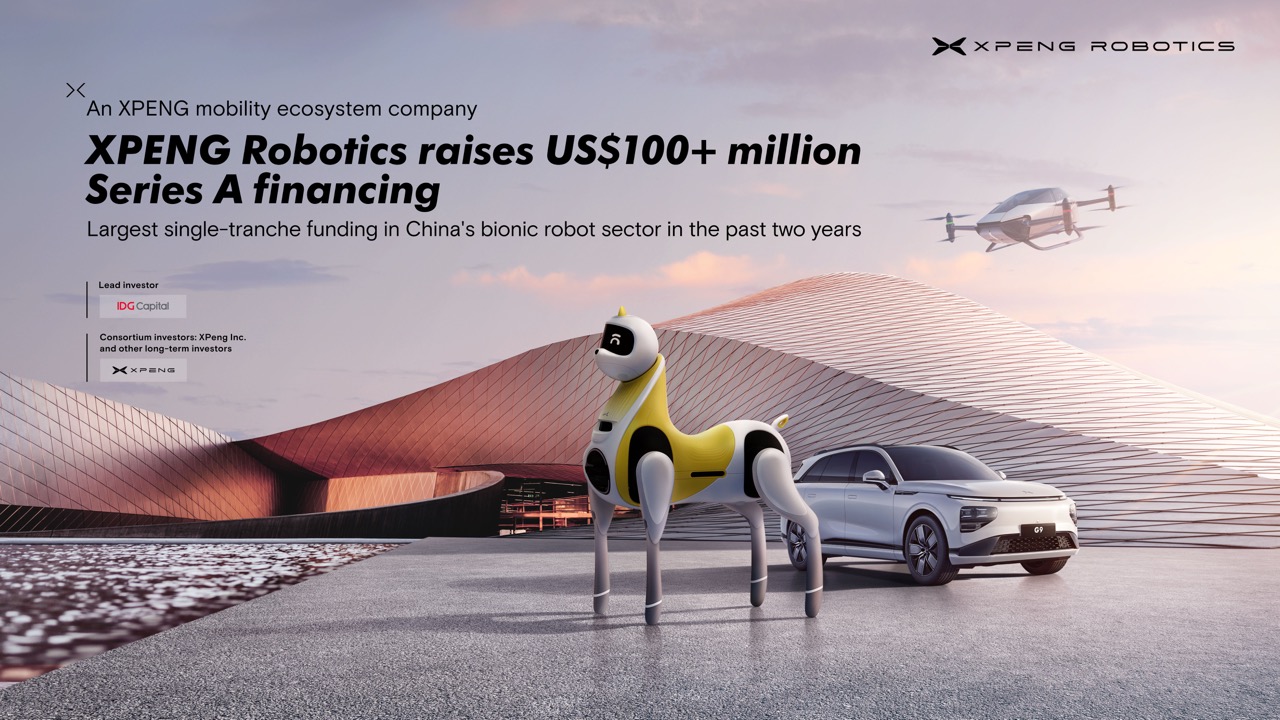
XPeng Robotics — $900M+ at a $6.3B post-money valuation (Aug. 26). IDG led the round for XPeng's newly carved-out robotics unit, with Alibaba and Tencent joining as strategic investors. XPeng invested $200 million, and senior executives added another $100 million. The carve-out gives investors access to a pre-IPO AI business that did not exist as a standalone company a year ago. "Pre-IPO" is used generally to describe a privately held company that may be viewed as a potential candidate for a future public offering. The term does not mean that the company has filed for, scheduled, or committed to an IPO. An IPO or other liquidity event may never occur. Private securities are speculative and illiquid, and investors may lose their entire investment.
Generalist — $200M extension at a reported $3B valuation (Aug. 25). 8VC led the extension of the robotics AI company's Series B, two months after Radical Ventures led a $400 million round at a reported $2 billion valuation. Founded by Google DeepMind and Boston Dynamics alumni, Generalist builds robot-control models rather than hardware.
Gatik — $200M following its PepsiCo agreement (Aug. 25). Qatar Investment Authority and Koch Disruptive Technologies led the round for the autonomous box-truck company. Gatik operates driverless routes for PepsiCo, Walmart, and Kroger and reports that it is targeting more than 100 driverless trucks by year-end.
REGENT — $240M Series B, split between equity and debt (Aug. 27). Mare Liberum and AE Ventures co-led the equity portion for the electric seaglider maker. Erebor Bank provided roughly $120 million in debt. The round combines venture equity with debt financing to fund a capital-intensive hardware business.
Socure — $156M at a $5.2B valuation (Aug. 27). Summit Partners led the round for the identity-verification company, which also announced its acquisition of agentic AI startup Fravity. The two deals put new capital and AI capabilities behind Socure's response to identity fraud.
Stability AI — $76M Series B (Aug. 25). Universal Music Group, Sony Music, Warner Music, and Electronic Arts joined the round alongside AMD Ventures, bringing total funding to $232 million. Content owners that spent two years litigating against generative AI are now on a generative AI company's cap table, pairing equity ownership with licensing agreements.
📈 Data Point of the Day
$47.9 billion
That was the value of Nvidia's holdings in private companies as of late July, according to the 10-Q it filed Wednesday. Nvidia had also committed another $18 billion to equity investments through the rest of its fiscal year. Together with the reported $12.9 billion Hugging Face agreement, the filing shows how far Nvidia's role in private markets now extends beyond supplying chips.
Reported private-company financials and secondary-market indications may be unaudited, incomplete, non-standard, or based on limited transaction activity. They should not be relied upon as fair value, executable pricing, or a basis for any investment decision.
🎓 From the Manual
Secondary component of an IPO
These are shares sold in an IPO by existing holders, such as employees, early investors, and founders, rather than newly issued by the company. The proceeds go to the sellers, not the company's balance sheet. An offering can include any mix of primary and secondary shares. SpaceX and Cerebras reportedly sold only primary shares in this year's listings, so existing holders had to wait for lockup expirations to sell.
👀 What We're Watching
- Kevin Warsh's first Jackson Hole keynote, this morning. The Fed chair speaks Friday morning at the Kansas City Fed symposium. Prediction markets put the odds of a September rate hike at roughly one in three, with the odds of a cut near zero. The rate path can affect late-stage valuations and the fall listing calendar.
- Anthropic's public prospectus, reportedly expected after Labor Day. Reuters, citing The Information, reported that the filing would replace press reports with company disclosures, including the lockup and secondary-sale structure Anthropic ultimately chooses.
- MatX's reported raise at about $4 billion. Reuters reported that the chip startup is seeking new capital after acquisition talks with Anthropic ended. The final valuation and lead investor may show how the market prices a chip company that a frontier lab reportedly considered buying outright.
- The competing personal-assistant rounds. Instinct raised a $250 million Series B at a $2.5 billion valuation, co-led by Index Ventures and Benchmark, four months after the company launched. Newcomer reported that rival Town is in talks to raise at a $1 billion valuation in a round led by Index. The two deals offer a useful comparison of how investors are pricing the personal-assistant category.
See what's trading on the secondary market: augment.market.
Augment Markets Inc. is a technology company offering software and data services. Brokerage services are offered through Augment Capital LLC, an affiliated broker-dealer and member FINRA/SIPC. Investment advisory services are offered through Augment Advisors LLC, an SEC-registered investment adviser.
Important Disclosures: This material has been prepared for informational purposes only. None of the information provided represents a recommendation, an offer or the solicitation of an offer to buy or sell any security. The information provided does not constitute investment, legal, tax, or accounting advice. You should consult with qualified professionals before making any investment decisions. Investing in private securities involves substantial risk, including the potential loss of principal. Private securities are typically illiquid, have limited pricing transparency, and often require longer holding periods. These investments are available exclusively to qualified accredited investors and offer no guarantee of returns. An IPO or other liquidity event is not guaranteed. Additionally, past performance of private securities does not indicate or predict future results. Share price data are estimates only, based on proprietary data from Caplight and Augment Markets Inc. and its affiliates.

Paul leads editorial at Augment, building Pulse into the private markets' go-to intelligence source. He also develops editorial content strategies for startups and venture capital firms. Previously, he spent 15 years as a business and opinion journalist at The New York Times, Fortune, Fast Company, Reuters, and more. He believes transparency creates liquidity—and that someone should actually publish what private shares are trading for. He lives in Marin with his wife and two rescue dogs, and wishes he had more time to surf.
Learn more