




When Wall Street Buys the Private Markets
For roughly a decade, the secondary market for private company shares operated mostly outside the traditional financial system. The platforms that emerged to serve it — Forge, EquityZen, Hiive — were built by startups, operated with startup speed, and designed for a different kind of investor than the one Charles Schwab or Morgan Stanley typically had in mind.
That era is closing out, literally within weeks.
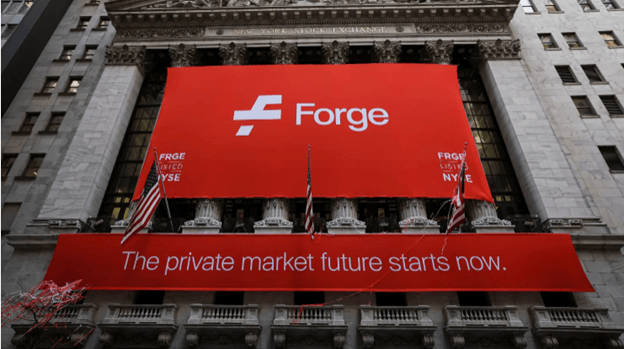
Forge's stockholders voted on January 22 to approve their acquisition by Schwab for $660 million — nearly 70% of outstanding shares represented, with 9,666,293 votes in favor and just 570 against. The deal is now in final regulatory review. Morgan Stanley's acquisition of EquityZen closed in late January. Taken together, two of the three largest independent secondary marketplaces will soon be subsidiaries of firms that collectively manage more than $15 trillion in client assets.
The official framing from both acquirers is democratization. Schwab gains access to Forge's $17 billion in historical transaction volume and private markets infrastructure; Forge gains Schwab's 46 million account holders. Morgan Stanley gets EquityZen's platform and distribution; EquityZen gets Wall Street behind it. The press releases write themselves.
That framing is partly accurate. But the full picture takes some unpacking.
Who These Products Are Actually Being Built For
Neither Schwab nor Morgan Stanley is acquiring these platforms primarily to serve the customers who use them today. The acquisition is about plugging Forge and EquityZen's capabilities into their own distribution — and that distribution serves a very different client.
Schwab has been direct about this in its own announcements. Access to Forge's marketplace through Schwab will initially be available to clients with more than $5 million in household assets — the same threshold as Schwab Alternative Investments Select, the firm's existing alternatives platform. For context, Forge's independent marketplace has historically served accredited investors starting at $5,000 to $10,000 minimum investments for certain transactions. The gap between those two numbers tells you something about the audience shift underway.
Morgan Stanley's direction with EquityZen is expected to look similar. The firm's existing private markets offerings skew heavily toward ultra-high-net-worth clients and family offices — the segment that defines its core business model.
None of that is a surprise, exactly. It's simply what tends to happen when a platform built for accessibility gets absorbed into an institution built for wealth management. The product evolves to serve the acquirer's distribution, not the acquired company's original audience. Schwab's own press release cites the broader trend driving the deal: private wealth capital allocated to alternative assets is projected to grow from $4 trillion to $13 trillion by 2032, per Bain & Company research. That's the market Schwab is positioning for — not the individual accredited investor deploying $50,000 into SpaceX shares, but the family office allocating $10 million to private equity.
The Integration Clock Is Already Running
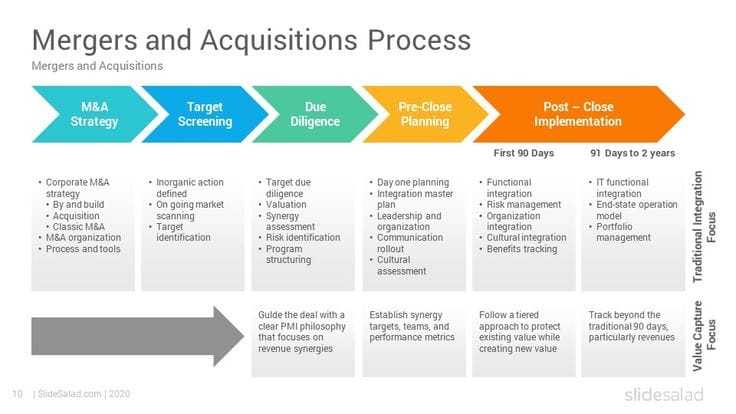
There's also a more immediate dynamic worth understanding: financial services M&A integration is slow, and it's slow in predictable ways.
When a startup gets absorbed into a large institution, the 12 to 18 months after close tend to get consumed by compliance harmonization, technology migration, regulatory approvals, and internal debates about product roadmap. The people who built the product spend their time in meetings. Product velocity stalls. The acquiring institution's change management processes — designed for a very different operating tempo — don't flex to accommodate startup speed. The startup bends to fit.
Forge has been one of the more innovative data providers in private markets, publishing the Forge Price — a proprietary daily indicative price for approximately 200 pre-IPO companies — and building out trading infrastructure as a technological moat. Whether that pace of innovation continues smoothly inside Schwab's compliance and product approval frameworks is a reasonable question. Large institutions aren't structured for the kind of rapid iteration that defines secondary market platforms at their best.
The Part Nobody's Talking About
Here's where it gets genuinely interesting: these acquisitions may be net positive for the secondary market overall, even if the picture is more complicated for individual investors in the near term.
When Schwab and Morgan Stanley put their brand and distribution behind secondary market investing — even if it starts at higher asset thresholds — they normalize the asset class in ways that independent platforms simply can't. They train financial advisors across thousands of branches. They run advertising to tens of millions of account holders. They put secondary market access on the same product menu as municipal bonds and ETFs. Secondary market investing, which has spent years being explained to skeptical audiences, suddenly has the institutional imprimatur of two of the most recognized names in American finance.
Secondary deal volume hit a record $226 billion in 2025, up 41% year-over-year, per Evercore's annual report released in January. Institutional validation from Schwab and Morgan Stanley could accelerate that trajectory further — even if the products they initially launch aren't designed for the broader accredited investor population.
The question the market is now answering is who builds the infrastructure for everyone else. The senior engineer with $400,000 in vested RSUs thinking about liquidity. The accredited investor who wants exposure to Stripe or Databricks before they go public. The buyers and sellers who don't have $5 million in household assets at Schwab but meet every regulatory standard to participate in secondary markets. That's a large and underserved segment, and the two platforms that spent years building for them are now being absorbed into institutions that serve a different one.
What to Watch

The DOL's February deadline on 401(k) alternative access. The Trump administration's August 2025 executive order on alternative assets in 401(k)sdirected the Department of Labor to take action by February 2026 — meaning regulatory guidance could land any day now. The DOL already rescinded Biden-era guidance discouraging private equity in retirement plans within a week of the order. If the follow-up rules create a real pathway for secondary market exposure inside defined contribution plans, the addressable market for platforms like Forge-under-Schwab expands dramatically. BlackRock announced a 401(k) target-date fund including private investments, and Empower is moving in the same direction. The shape of the final rules will determine how quickly that flows to secondary markets specifically.
What Schwab does with the Forge brand. Schwab's existing private markets platform, Alternative Investments Select, requires $5 million in household assets. Whether Forge keeps its own brand and lower access thresholds — or gets absorbed into that higher-minimum product — is the most concrete near-term signal of who Schwab is actually building for. Watch the product pages and any Schwab earnings call commentary on private markets integration.
The accredited investor definition. In July 2025, the House passed a bill that would allow anyone who passes a FINRA exam to qualify as an accredited investor — breaking the current income and net worth thresholds that have defined the category since 1982. The Senate Banking Committee is working on related legislation. If the definition expands, the potential audience for secondary market platforms grows substantially. This is a slow-moving story but one with significant structural implications if it clears Congress.
Augment Markets Inc. is a technology company offering software and data services. Brokerage services are offered through Augment Capital LLC, an affiliated broker-dealer and member FINRA/SIPC. Investment advisory services are offered through Augment Advisors LLC, an SEC-registered investment adviser.
Important Disclosures: This material has been prepared for informational purposes only. None of the information provided represents a recommendation, an offer or the solicitation of an offer to buy or sell any security. The information provided does not constitute investment, legal, tax, or accounting advice. You should consult with qualified professionals before making any investment decisions. Investing in private securities involves substantial risk, including the potential loss of principal. Private securities are typically illiquid, have limited pricing transparency, and often require longer holding periods. These investments are available exclusively to qualified accredited investors and offer no guarantee of returns. An IPO or other liquidity event is not guaranteed. Additionally, past performance of private securities does not indicate or predict future results. Share price data are estimates only, based on proprietary data from Caplight and Augment Markets Inc. and its affiliates.

Paul leads editorial at Augment, building Pulse into the private markets' go-to intelligence source. He also develops editorial content strategies for startups and venture capital firms. Previously, he spent 15 years as a business and opinion journalist at The New York Times, Fortune, Fast Company, Reuters, and more. He believes transparency creates liquidity—and that someone should actually publish what private shares are trading for. He lives in Marin with his wife and two rescue dogs, and wishes he had more time to surf.
Learn more