A Substack post helped tank the Dow 800 points. Here's why it matters for private markets






A Substack post helped crash the market. That tells you everything about where we are.
Here's something that would have been unthinkable two years ago: a 7,000-word hypothetical scenario published on Substack was one of the factors behind the Dow dropping 822 points on Monday.
Citrini Research, a macro-focused newsletter with a large Substack following, published what it called a "thought experiment"—a fictional dispatch from June 2028 describing what it would look like if AI disruption spiraled from a sector story into a systemic crisis. The piece wasn't a prediction. It was a scenario. But the market treated it like a stress test result.
The thesis: What if AI is so productive that it's actually bearish? In Citrini's scenario, white-collar layoffs boost corporate margins initially, but the displaced workers stop spending, consumer demand collapses, PE-backed software deals default, and the "daisy chain of correlated bets on white-collar productivity growth" unravels into something resembling a financial crisis. The scenario ends with prime mortgage delinquencies rising in San Francisco, Seattle, and Austin—not because the loans were bad, but because the borrowers' jobs no longer exist.
Monday's market reaction aligned uncomfortably well with the scenario's logic. IBM fell 13%—its worst day since 2000—after Anthropic demonstrated Claude Code automating COBOL modernization. Software names like Datadog, CrowdStrike, and Zscaler each dropped 9%+. Private credit firms Apollo and Blue Owl sold off. Even DoorDash fell 6.6% after Citrini called it a "poster child" for companies whose moats are built on consumer friction that AI agents eliminate.
As the Wall Street Journal put it: "Nothing underlines the sensitivity of stocks right now quite like what happened on Monday."
Why this matters for private markets: The Citrini scenario specifically names PE-backed software deals as a transmission mechanism—leveraged buyouts underwritten against "annual recurring revenue" that stops recurring when AI agents handle customer service, workflow automation, and enterprise software functions. If public SaaS companies are trading at 5-8x EBITDA while PE-backed software sits on balance sheets at acquisition-era marks, that gap has to close eventually.
The venture secondary market is a different corner of private markets—primarily late-stage, VC-backed companies like SpaceX, Anthropic, and Databricks—but valuation sentiment is contagious. When public software multiples compress and PE marks come under pressure, the pricing expectations for venture-backed companies trading on the secondary market don't exist in a vacuum. For anyone holding or evaluating positions in private tech companies, understanding where AI creates value versus where it destroys it is becoming the central question.
To be clear: this is a scenario, not a forecast. Citrini said as much. But the fact that a Substack post can move the Dow 800 points tells you something about the fragility of consensus right now—and why the next few quarters of earnings will matter more than usual for setting the direction of both public and private markets.
The new tariff regime takes effect today. Here's what changed—and what it means for IPOs.

As of 12:01 AM today, a new 10% global tariff took effect under Section 122 of the Trade Act of 1974, replacing the country-specific IEEPA duties the Supreme Court struck down Friday. The key differences: it's a flat rate applied uniformly to all trading partners, and it expires in 150 days—July 24—unless Congress extends it.
The fallout is already messy. U.S. allies like the UK and EU are actually facing higher effective tariff rates under the flat 15% than they had negotiated under IEEPA, while China's rate dropped 7 percentage points. The EU has delayed ratification of its U.S. trade deal pending "full clarity." And more than $130 billion in tariff refunds from the IEEPA era remain unresolved.
For private markets, this matters because trade policy uncertainty has historically been one of the strongest headwinds for IPO timing. Bankers describe 2026 preparations as "overwhelming"—SpaceX, Databricks, Anthropic, and potentially OpenAI are all in various stages of readiness. But tariff-driven volatility in early 2025 briefly "shackled" IPO activity and could resurface. The question isn't whether these companies will eventually go public—it's whether the window stays open long enough for them to do it on their terms.
Quick Takes
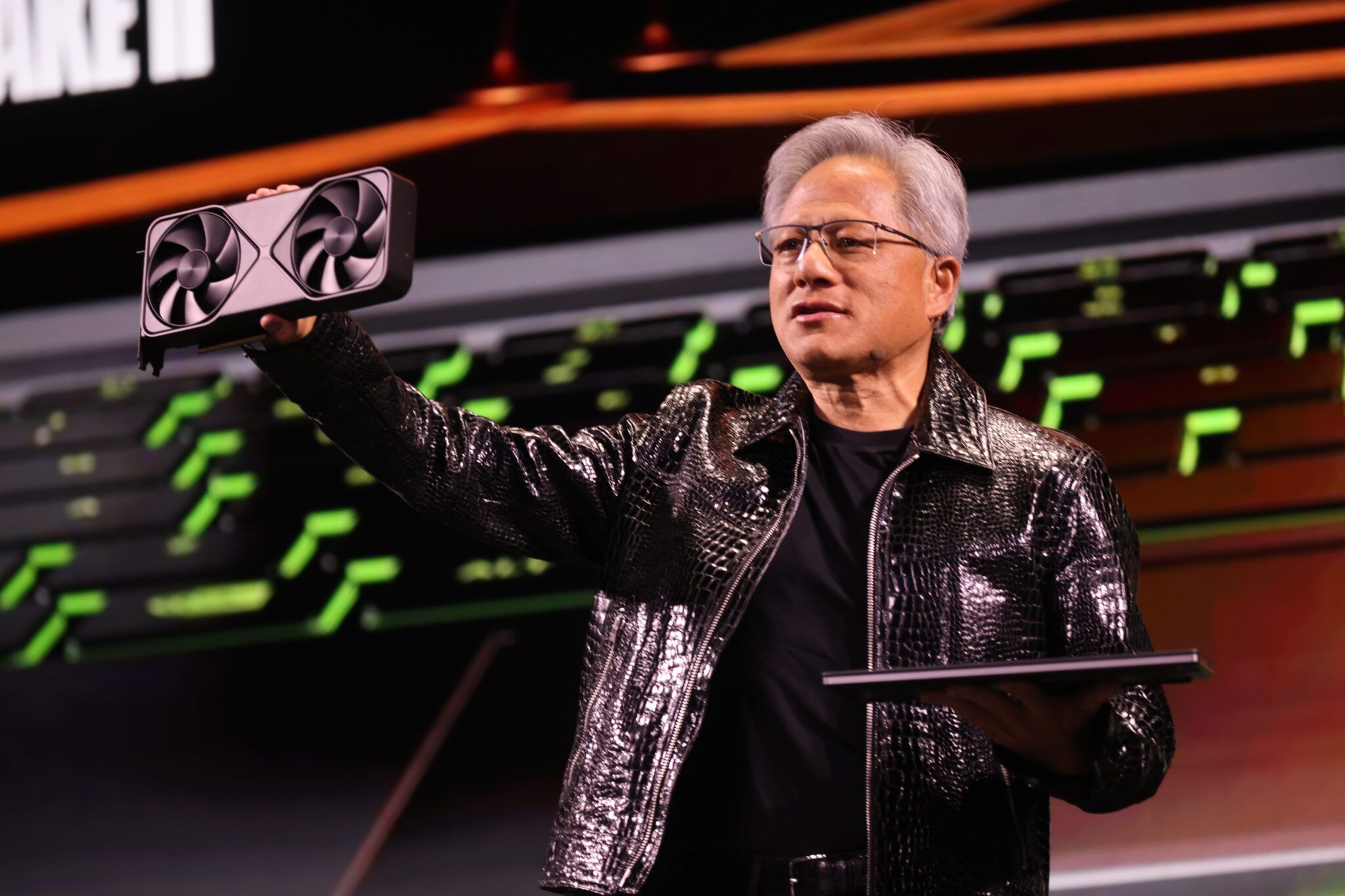
Nvidia earnings Wednesday: Wall Street expects $65.7B revenue, 67% growth— Polymarket traders price a 94.5% chance of an EPS beat. The real focus is FY2027 guidance and any update on China chip sales.
Anthropic lines up $5-6B employee share sale at ~$350B valuation — Outside investors will buy insider shares in one of the largest secondary transactions for a private AI company. A textbook example of how pre-IPO liquidity programs work at scale.
Cerebras confidentially files for U.S. IPO — The AI chipmaker withdrew its previous filing last year amid a national security review. A listing could come as early as April, adding another name to the growing 2026 IPO pipeline. Hat tip to The Information for getting this scoop.
Venture secondaries crossed $106.3B in 2025 — PitchBook's annual report shows U.S. venture secondary volume more than doubled from the $50B estimated at the start of the year. Institutional adoption is accelerating, with Goldman, Morgan Stanley, and Schwab all making major acquisitions in the space.
📊 Data point of the day
822 points
Monday's Dow decline, driven in part by Citrini’s hypothetical scenario about AI disruption. The selloff extended a run of AI-linked volatility that has now erased roughly $2 trillion from software stocks since mid-January. As one investor told the WSJ: "The pricing of AI-related disruption is all happening sooner than most folks anticipated."
Quick Take
Shopify Q4 revenue up 31% but stock drops 6%+ — Even companies beating estimates are getting punished in this environment. Since the earnings announcement on Wednesday the stock is still down but has yo-yo’d around. A reminder that market sentiment can override fundamentals in the short term, and investors seem confused on how to value SaaS infra right now.
📊 Data Point of the Day
25%+
The estimated share of companies currently classified as unicorns that may no longer be worth $1 billion, according to PitchBook's new valuation framework. The top 10 unicorns now account for roughly 52% of total unicorn value — the highest concentration in a decade. The unicorn label increasingly tells you less about a company than it used to.
🎓 Manual
Section 122 (Trade Act of 1974)
A rarely invoked provision allowing the president to impose tariffs of up to 15% for a maximum of 150 days to address balance-of-payments emergencies. After the Supreme Court struck down IEEPA-based tariffs last week, President Trump invoked Section 122 as an alternative authority—marking its first significant use in modern trade policy. The new 15% global tariff took effect today.
What We're Watching
- Nvidia earnings Wednesday. Not just the numbers—the commentary. How Jensen Huang frames AI demand in the context of Monday's software selloff will set the tone for both public and private AI valuations heading into March.
- OpenAI round closing. If the $100B+ raise finalizes this week at $850B+, it becomes the largest private funding round in history—and the clearest test yet of whether private AI valuations can hold while public AI-adjacent stocks are repricing.
- The 150-day tariff clock. Section 122 duties expire July 24 unless Congress acts. That window overlaps with the expected IPO timelines for SpaceX, Databricks, and Cerebras. If trade policy uncertainty lingers, some companies may wait it out.
- Software earnings season. After Monday's carnage, Q4 reports from enterprise software companies will either confirm or challenge the "SaaSpocalypse" narrative. Watch renewal rates and net revenue retention closely—those are the numbers that will determine whether the AI disruption story is priced in or just getting started.
Augment Markets Inc. is a technology company offering software and data services. Brokerage services are offered through Augment Capital LLC, an affiliated broker-dealer and member FINRA/SIPC. Investment advisory services are offered through Augment Advisors LLC, an SEC-registered investment adviser.
Important Disclosures: This material has been prepared for informational purposes only. None of the information provided represents a recommendation, an offer or the solicitation of an offer to buy or sell any security. The information provided does not constitute investment, legal, tax, or accounting advice. You should consult with qualified professionals before making any investment decisions. Investing in private securities involves substantial risk, including the potential loss of principal. Private securities are typically illiquid, have limited pricing transparency, and often require longer holding periods. These investments are available exclusively to qualified accredited investors and offer no guarantee of returns. An IPO or other liquidity event is not guaranteed. Additionally, past performance of private securities does not indicate or predict future results. Share price data are estimates only, based on proprietary data from Caplight and Augment Markets Inc. and its affiliates.

Paul leads editorial at Augment, building Pulse into the private markets' go-to intelligence source. He also develops editorial content strategies for startups and venture capital firms. Previously, he spent 15 years as a business and opinion journalist at The New York Times, Fortune, Fast Company, Reuters, and more. He believes transparency creates liquidity—and that someone should actually publish what private shares are trading for. He lives in Marin with his wife and two rescue dogs, and wishes he had more time to surf.
Learn more