Musk lost in 2 hours. OpenAI litigation overhang eases; appeal and IPO timing still in focus




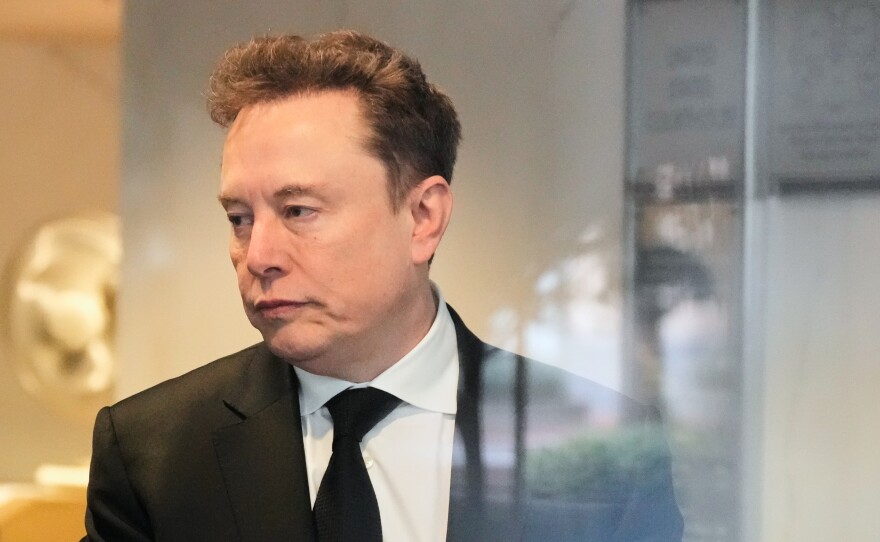

A federal jury rejected every claim in Elon Musk's lawsuit against OpenAI in under two hours yesterday, removing the most-cited overhang on the company's IPO timeline. Separately, Anthropic acquired Stainless for a reported $300M+ — the SDK-generation startup whose tooling runs inside OpenAI, Google, and Cloudflare. The frontier labs at scale are now M&A buyers.
The Big Story: Musk Loses
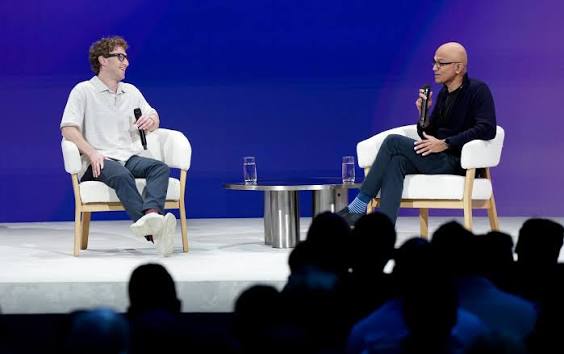
A federal jury in Oakland needed less than two hours yesterday to throw out Elon Musk's lawsuit against OpenAI and Sam Altman, finding every claim time-barred under California's statute of limitations. Musk had sought roughly $134 billion. His attorneys say they'll appeal.
For private markets, the substance of the verdict matters less than the timer it shut off. Every prior tender, secondary print, and analyst note about OpenAI has had to caveat the litigation overhang — the chance that an adverse ruling could complicate the for-profit conversion or stall a path to public markets. That caveat is gone, pending appeal. OpenAI closed its most recent primary at an $852 billion post-money in March; the company is reportedly targeting a $1 trillion IPO valuation. The Forge clearing price has held in the same neighborhood as the primary — currently around $880 billion — implying the market has been pricing a slower path, not a quick liftoff.
The verdict does not itself accelerate an S-1, and any IPO timing remains subject to board, regulatory, market, governance, financial, and operational considerations. However, the ruling may reduce one prominent litigation-related uncertainty, subject to appeal.
Watch the tape this week. If the gap between the primary and the IPO target starts to narrow, the market is beginning to price a more concrete window. If it doesn't, the question becomes whether the discount was ever really about timing — or about valuation.
Sources: IBTimes UK (May 18), Washington Post (May 18), Forge OpenAI page
Anthropic Buys an AI SDK
Anthropic announced Monday it has acquired Stainless, the four-year-old SDK-generation startup whose tooling runs inside OpenAI, Google, and Cloudflare's developer ecosystems. Anthropic didn't disclose terms; The Information pegged the deal above $300 million. Stainless will fold into Anthropic and the hosted SDK-generator product will wind down. Existing customers keep ownership of the SDKs they've already produced.
The point isn't the price — it's the role reversal. Anthropic is now writing checks rather than receiving them. SDK generation is the layer that determines how millions of developers actually call models, and bringing it in-house locks in default-distribution behavior the way Stripe locked in payments primitives a decade ago. Stainless was Sequoia- and Andreessen-backed; the deal is a strategic-acquirer exit rather than an IPO outcome.
For everyone on the dev-tools and AI-infra side of the cap table, this is a new reference point. The list of plausible strategic acquirers at scale just expanded from cloud hyperscalers to the model labs themselves. The transaction may be a notable data point for strategic interest in AI developer-tooling assets, although one acquisition does not establish a durable exit market or valuation benchmark.
Sources: TechCrunch (May 18), Anthropic press release (May 18)
💨 Quick Takes
- Tenstorrent draws early takeover interest from Intel and Qualcomm: Two strategic acquirers at the table for an AI-chip private is a useful tell on the broader infra cluster's M&A optionality.
- Decart raises $300M at ~$4B, Radical Ventures leads with Nvidia joining: The cross-chip portability thesis just picked up a strategic anchor — Nvidia's first time in this name.
- Cursor ships Composer 2.5, built on Kimi K2.5: Cursor's model strategy is to undercut the labs it sits on top of. Reportedly matches frontier-lab coding benchmarks at a fraction of inference cost.
- Sigma Computing reportedly raises $80M Series E at $3B with strategic and venture participation. The financing may be relevant to market participants tracking valuation appetite in BI and analytics infrastructure.
📈 Data Point of the Day
51 gigawatts
That's the amount of contracted data-center power capacity Dominion Energy holds — to Amazon, Microsoft, Alphabet, Meta, Equinix, and CoreWeave — as disclosed in Monday's $67 billion NextEra acquisition filing. It is one of the cleanest single reads on what the AI buildout actually costs at the metered level. For the AI-side cluster of private names, this is the kind of infrastructure figure that determines whether the underlying buildout thesis is valid.
🎓 Manual
Implied Secondary Valuation
The headline market cap implied by extrapolating from share-class transactions in the secondary market — taking the clearing price of common or preferred shares and grossing it up to a fully diluted enterprise value. Unlike a primary mark, which is locked in at a single point in time when a round closes, an implied secondary mark moves with actual transaction activity and can run materially above or below the last priced round. It's the closest thing private markets have to a live price — with all the noise that comes with thin volume.
👀 What We're Watching
- The Musk appeal timeline. Musk's lead counsel Marc Toberoff said after Monday's verdict that the team will appeal. Federal appeals typically run 12–24 months, which could put resolution at or beyond OpenAI's reported Q4 2026 IPO target. The litigation overhang isn't fully cleared until the appellate court rules. (IBTimes UK, May 18)
- Whether lab-led M&A becomes a regime. The Stainless acquisition is the first datapoint that frontier labs at scale are real strategic acquirers; Bloomberg's same-day report that Intel and Qualcomm have circled Tenstorrent is a second M&A signal in the AI-infra cluster in 24 hours. Two or three more announcements in the coming weeks would establish a pattern that changes the exit-path math for every dev-tools and AI-infra private. (TechCrunch, May 18 / Bloomberg, May 18)
- The NextEra–Dominion regulatory review. Monday's $67B all-stock combination would create the world's largest regulated utility, explicitly framed around AI data-center demand. FERC and state-level approval timing — plus any divestiture conditions — will set a precedent for the next wave of utility consolidation tied to compute buildout. (CNBC, May 18)
Augment Markets Inc. is a technology company offering software and data services. Brokerage services are offered through Augment Capital LLC, an affiliated broker-dealer and member FINRA/SIPC. Investment advisory services are offered through Augment Advisors LLC, an SEC-registered investment adviser.
Important Disclosures: This material has been prepared for informational purposes only. None of the information provided represents a recommendation, an offer or the solicitation of an offer to buy or sell any security. The information provided does not constitute investment, legal, tax, or accounting advice. You should consult with qualified professionals before making any investment decisions. Investing in private securities involves substantial risk, including the potential loss of principal. Private securities are typically illiquid, have limited pricing transparency, and often require longer holding periods. These investments are available exclusively to qualified accredited investors and offer no guarantee of returns. An IPO or other liquidity event is not guaranteed. Additionally, past performance of private securities does not indicate or predict future results. Share price data are estimates only, based on proprietary data from Caplight and Augment Markets Inc. and its affiliates.

Paul leads editorial at Augment, building Pulse into the private markets' go-to intelligence source. He also develops editorial content strategies for startups and venture capital firms. Previously, he spent 15 years as a business and opinion journalist at The New York Times, Fortune, Fast Company, Reuters, and more. He believes transparency creates liquidity—and that someone should actually publish what private shares are trading for. He lives in Marin with his wife and two rescue dogs, and wishes he had more time to surf.
Learn more