




Google's Threat Intelligence Group published evidence Monday of the first documented case of criminals using AI to discover and weaponize a zero-day exploit — a two-factor authentication bypass in a popular open-source admin tool. Google says it disrupted the campaign before it scaled. Cerebras raised its IPO range again ahead of pricing Wednesday night, with the offering now teed up at a basic-share market cap of $34.4B (fully diluted closer to $49B) and a book reportedly more than 20 times oversubscribed.
The Big Story — AI Just Crossed the Line from Helper to Weapon
Google's Threat Intelligence Group published a finding Monday that researchers say is the first documented case of a criminal hacking group using an AI model to both discover a previously unknown software flaw andbuild a working exploit for it. The target was a two-factor authentication bypass in a widely deployed open-source web admin tool. Google says it worked with the vendor to quietly patch the issue before the campaign could trigger what researchers describe as a planned mass-exploitation event.
The tell that the exploit was AI-written is, almost comically, an LLM tell. The exploit code carries educational docstrings, a hallucinated CVSS severity score, and a textbook-Pythonic structure of the kind LLMs reproduce from their training data. The attackers, in other words, didn't bother to sand off the model's fingerprints.
John Hultquist, GTIG's chief analyst, framed it plainly: anyone treating AI-assisted vulnerability discovery as a future problem is already behind. "For every zero-day we can trace back to AI, there are probably many more out there."
For private-markets readers, the layer that matters is the read-across to the cybersecurity-defense cohort. The argument that AI-native cyber defense was a feature, not a category, has been running into trouble all year. Today it ran into a wall. The economics of CISO budgets are about to re-rate around an expected-this-year cost of a major AI-augmented breach, not a tail-risk one. Cybersecurity spending was already growing roughly 50% faster than general software, and is projected by Gartner to reach $240B globally in 2026. Public cyber multiples sit at a median ~9x NTM revenue against ~6x for broader SaaS — a roughly 25% premium — per Windsor Drake's Q1 2026 cybersecurity valuation report. The top-tier AI-and-cloud names (CrowdStrike, Cloudflare, Zscaler) trade at 14x–22x; that's the spread the secondary market has been waiting for a catalyst on.
The local proof points landed in the same news cycle. Frame Security, an Israeli startup founded this year by Wiz alum Tal Shlomo and former Team8 CTO Sharon Shmueli, emerged from stealth Monday with $50M, led by Index, Team8, and Picture Capital, with Wiz CEO Assaf Rappaport and Elad Gil participating. Google paid $32B for Wiz two months ago. The cohort that was being asked to justify its valuations is now sitting on a real-world demand signal.
Cerebras Upsizes Again, Two Days Before Pricing
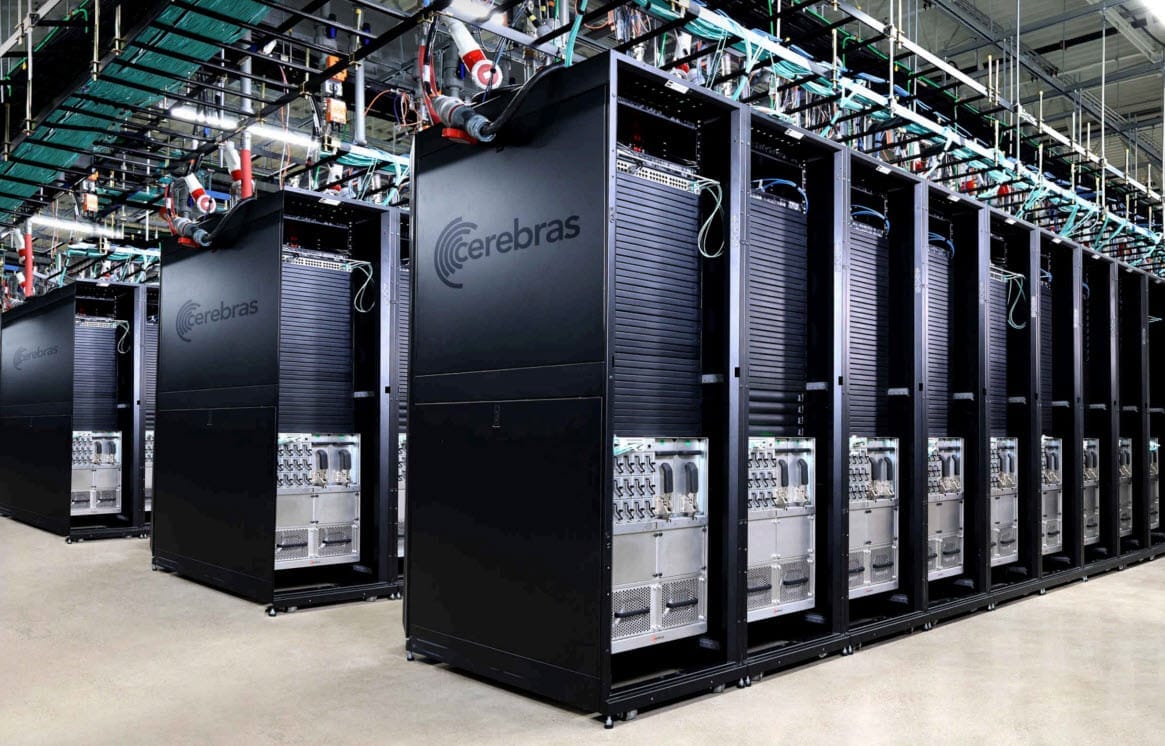
Cerebras filed an updated S-1 Monday morning lifting its price range to $150–$160 per share from $115–$125, increasing the offering from 28 million to 30 million shares, and pricing now scheduled for Wednesday night. First trade Thursday on the Nasdaq under CBRS. At the top of the range, Bloomberg pegs the basic-share market cap at $34.4B; fully-diluted (counting options and the OpenAI MRA warrants), most coverage cites $48.8B. Reuters reports the book is more than 20 times oversubscribed. Morgan Stanley, Citi, Barclays, and UBS lead the syndicate.
The 24-day arc is what matters. The April 17 S-1 targeted $22–$25B. The May 4 amendment moved it to $26.6B. Monday's revision puts the fully-diluted mark at roughly twice that, with no new financial disclosures in between. The book changed. The company didn't.
For Pulse readers the relevant layer is the relationship to the secondary tape. Forge and Hiive desks were quoting Cerebras at $26–$28B through April. Pricing tomorrow night will land the IPO mark roughly 75% above where the same shares were clearing on anonymous secondary platforms three weeks ago. For most of this cycle, IPOs priced to or below the secondary mark — Klaviyo, Reddit, Instacart, Arm. Cerebras is the cleanest case in recent memory of the public bid pulling the offering decisively above the private mark. The greenshoe exercise in the first 30 days will be the cleanest tell of whether the book is genuinely broad or a thin cohort that had to own the largest IPO of 2026.
💨 Quick Takes
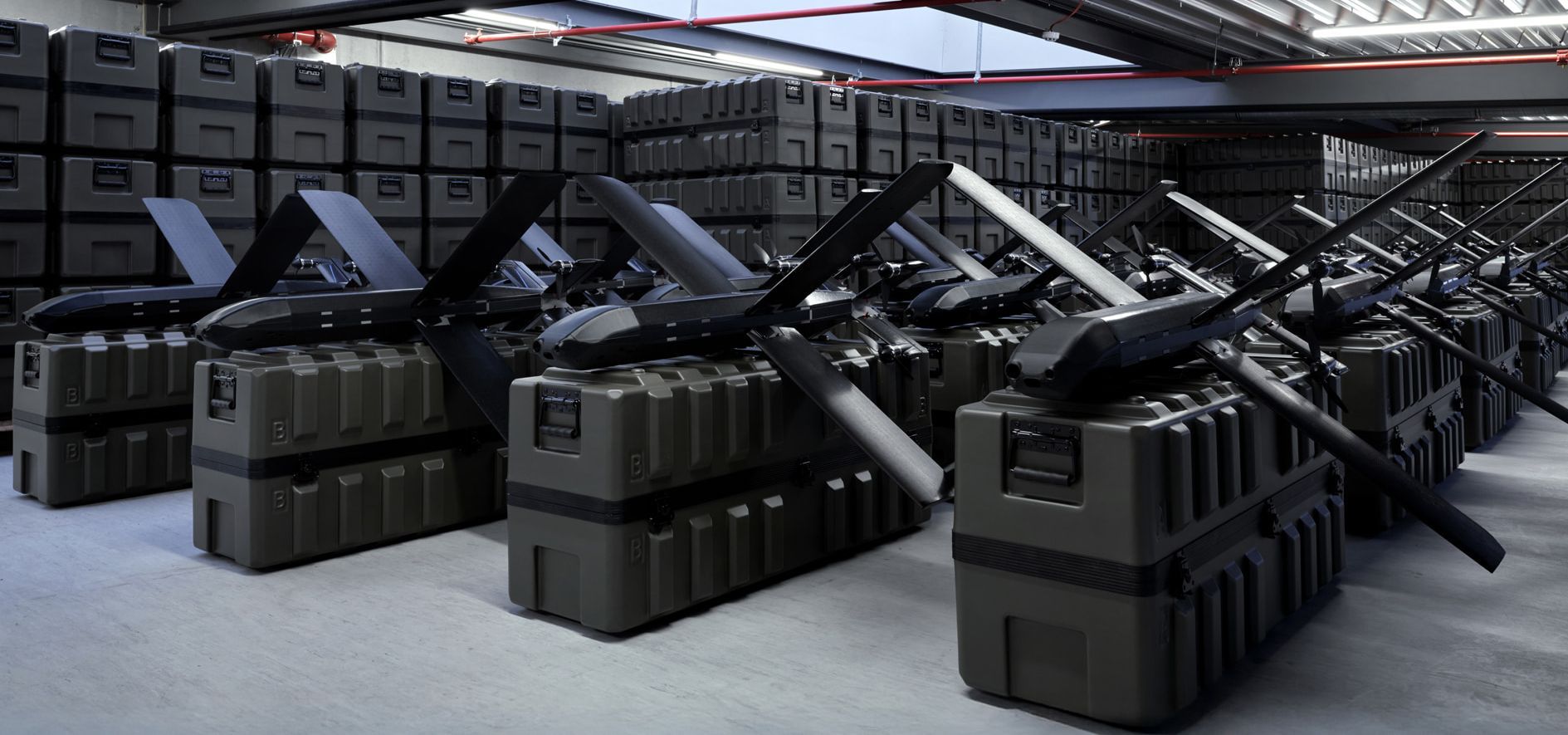
- Helsing reportedly raising $1.2B at $18B, led by Dragoneer and Lightspeed — The Munich defense-AI company would mark up roughly 30% in dollar terms from its June 2025 €12B (~$14B) round. Defense-tech is the cleanest non-AI-pure-play private-market trade of 2026, and Helsing is the European Anduril comp. Watch whether U.S. defense-tech privates re-rate from this print.
- Robinhood files confidentially for RVII — Second publicly traded venture fund, this one targeting early- and growth-stage rather than RVI's late-stage focus. RVI debuted at $21 in March, closed Monday at $43.69 — more than doubled in two months. The retail-access trade for private-company exposure is now its own emerging category.
- OpenAI formally launches Deployment Company, acquires Tomoro — The $4B+ vehicle previewed in last Tuesday's Pulse is now operational. TPG is the lead, with Advent, Bain Capital (the PE firm), and Brookfield as co-lead founding partners; 19 investment firms, consultancies, and system integrators are committed total. The Tomoro acquisition brings roughly 150 AI consulting engineers in from day one. The structural read: frontier labs are now PE-backed services businesses in part, with the same buyer base — TPG, Advent, Brookfield — that has been underwriting carveouts and infrastructure deals for years.
- Cowboy Space raises $275M at $2B — Baiju Bhatt, Robinhood co-founder, rebranded his orbital-data-center company from Aetherflux and pivoted toward building purpose-built rockets to launch its own data-center satellites. Index Ventures led, with new investors IVP, Blossom Capital, and SAIC, alongside existing backers a16z, NEA, Breakthrough Energy, Construct, and Interlagos. First launch reportedly targeted by end of 2028. Files into the same orbital-AI-infrastructure thesis as SpaceX's Terafab pitch, with much earlier-stage execution risk.
- Circle (CRCL) reports first earnings as a public company — Q1 EPS $0.21 beat $0.17 consensus; revenue $694M missed (CoinDesk cites $722M consensus; the Motley Fool earnings transcript cited $715M — the miss holds either way). USDC on-chain volume was $21.5T, up 263% YoY. Shares closed Monday up roughly 16%, lifted by a parallel announcement that Circle raised $222M via the presale of its native Arc token at a $3B valuation. a16z crypto led with $75M; BlackRock, Apollo, ICE, Standard Chartered, General Catalyst, Haun Ventures, and Bullish all participated.
📈 Data Point of the Day
$40 billion
Nvidia's total committed AI-related equity investments year-to-date through May, per CNBC's reporting. That includes roughly $30B into OpenAI, $3.2B into Corning, $2.1B into IREN, and a long tail of smaller positions in CoreWeave and other AI-adjacent names. The takeaway worth carrying into a meeting today: the largest single financier of the AI capital cycle is now the company selling the picks-and-shovels. Nvidia is buying equity in the customers who buy its hardware — and the cohort of AI privates increasingly sits, at the cap-table level, downstream of one supplier.
🎓 Manual
Confidential S-1 Filing
A confidential draft registration statement — sometimes called a "confidential S-1" — is an option the SEC has given emerging growth companies (under $1.235B in revenue) since the 2012 JOBS Act, and extended to all issuers in 2017. The filer submits a full draft S-1 to the SEC, who reviews and provides comments, but the document remains nonpublic. The issuer can iterate with the SEC for months without exposing internal financials, competitive positioning, or risk-factor language to the market. The catch is timing: the company must publicly file the registration statement at least 15 business days before its roadshow begins. SpaceX confidentially filed April 1; its public S-1 window opens this Friday for a planned June roadshow. Robinhood Venture Fund II confidentially filed Monday for its second publicly traded venture vehicle — the same mechanism, applied to a registered investment company rather than an operating business.
👀 What We're Watching
- Cerebras pricing Wednesday night. The cleanest near-term test of whether the upsized mark holds when paper hits the public float. Watch the greenshoe exercise window through June.
- SpaceX's public S-1 window opens Friday. The 15-day pre-roadshow rule narrows the public-filing window to May 15–22 for a June listing. Any business day past Friday tightens the calendar.
- The cybersecurity-private response to today's Google finding.Secondary marks on the cyber-defense cohort — particularly the names that didn't get acquired in this cycle's M&A run — will tell us whether the market is pricing today's news as a one-off or a category catalyst. The clearest tells will be on the names with public-market comps already trading at a premium to private marks.
- The Senate banking committee stablecoin vote Thursday. The committee is set to vote this week on stablecoin legislation, with provisions on yield and rewards still in active debate. Circle's just-released Q1 print — $21.5T in USDC on-chain volume — will be the backdrop. A clean committee vote tees up Senate-floor passage by year-end, which would resolve one of the structural overhangs on stablecoin-adjacent privates.
Augment Markets Inc. is a technology company offering software and data services. Brokerage services are offered through Augment Capital LLC, an affiliated broker-dealer and member FINRA/SIPC. Investment advisory services are offered through Augment Advisors LLC, an SEC-registered investment adviser.
Important Disclosures: This material has been prepared for informational purposes only. None of the information provided represents a recommendation, an offer or the solicitation of an offer to buy or sell any security. The information provided does not constitute investment, legal, tax, or accounting advice. You should consult with qualified professionals before making any investment decisions. Investing in private securities involves substantial risk, including the potential loss of principal. Private securities are typically illiquid, have limited pricing transparency, and often require longer holding periods. These investments are available exclusively to qualified accredited investors and offer no guarantee of returns. An IPO or other liquidity event is not guaranteed. Additionally, past performance of private securities does not indicate or predict future results. Share price data are estimates only, based on proprietary data from Caplight and Augment Markets Inc. and its affiliates.

Paul leads editorial at Augment, building Pulse into the private markets' go-to intelligence source. He also develops editorial content strategies for startups and venture capital firms. Previously, he spent 15 years as a business and opinion journalist at The New York Times, Fortune, Fast Company, Reuters, and more. He believes transparency creates liquidity—and that someone should actually publish what private shares are trading for. He lives in Marin with his wife and two rescue dogs, and wishes he had more time to surf.
Learn more