



Ramp is reportedly raising at a $40B+ valuation — a 25% jump in six months. Goldman Sachs flagged this week that roughly 60% of Alphabet's and Amazon's Q1 "other income," about $49B combined, came from gains on private-company equity stakes. Anthropic's CEO put Q1 growth at 80x annualized. The private market isn't just adjacent to the public one anymore. It's showing up in the earnings reports.
The $49B private-markets tell in public earnings

This week, Goldman Sachs flagged a number worth pausing on. Alphabet and Amazon together booked roughly $53B in "other income" in Q1 — about 60% of their reported quarterly income. Of that, $49B was attributable to gains on equity stakes in private companies, most prominently Anthropic.
That figure is doing a lot of work. It says the largest companies in the public market are now generating most of their reported quarterly income from holding shares in private companies — companies that don't publish financials, don't file with the SEC, and price themselves at irregular intervals through tenders, primaries, and secondaries.
This is new. For most of the post-2008 era, hyperscaler "other income" was rounding-error interest on cash. Now it's the difference between a beat and a miss. The two largest cloud companies in the world have, over the last 18 months, started to look less like pure technology operators and more like private-equity holding companies that also run cloud businesses.
It also reframes a question that's been getting harder to answer: how do you mark a private company's value? Answer: you let Alphabet and Amazon do it for you, every 90 days, in public filings. The private market gets a quarterly auditor it didn't ask for.
For pre-IPO investors, this is a new transmission mechanism. When Alphabet writes up Anthropic, public-market analysts who've never traded a secondary suddenly have an opinion on Anthropic's price. The line between the two markets is becoming mostly procedural. (FT)
Ramp's $40B in six months
Ramp told investors this week it is raising about $750M at a valuation north of $40B, up from $32B in November 2025 — a 25% jump in roughly six months, co-led by Iconiq Capital and GIC. Reporting from the Wall Street Journal indicated the round is in active discussion, not closed.
The interesting part isn't the headline number. It's the cadence. Ramp last raised in November. The corporate-card category, which spent 2023 and 2024 in the doldrums while everyone debated whether Brex would survive its layoffs, has resolved: the leading player has $40B+ on its sticker, and its primary investors are signing up for repeated check sizes most growth funds can't write twice in one year.
The signal for the broader market is that growth-stage capital has unfrozen for category leaders with measurable revenue — and frozen further for everyone else. Ramp's reported revenue trajectory and discipline on burn make it a different proposition from a SaaS company at $40B raising on a multiple of forward bookings. The price gets paid because the capital allocators can underwrite numbers, not narratives.
It's also a quiet vote on the duration of the IPO window. A check that size is consistent with longer-hold private positioning, not near-term IPO underwriting. (WSJ)
Two prediction markets at $37B combined

Kalshi raised $1B at a $22B valuation led by Coatue this week — its third round in seven months. Annualized trading volume on the platform is reportedly near $178B. Polymarket, the larger competitor, is reportedly raising $400M at $15B.
Two prediction markets, both at multi-billion-dollar valuations within weeks of each other, neither of which existed at meaningful scale before the 2024 election. The instinct is to call this a 2024-cycle bubble that should have deflated by now. The instinct is wrong. Volume on these platforms hasn't compressed post-election; it's expanded into sports, macro events, and corporate outcomes.
What it means for private markets: the next regulatory frontier isn't crypto, it's contract markets. CFTC rulings could re-rate either platform's private valuation overnight. (NYT DealBook)
⚡Power 20 Watch: Pre-IPO companies behaving like public ones
The week's Power 20 thread is about pre-IPO companies behaving like they're public.
SpaceX is teeing up an IPO with a balance sheet most public companies would envy and a prospectus claiming a $26.5T AI opportunity (covered in Tuesday's edition). The Wall Street Journal reported this week that the company is preparing massive pre-IPO spending, including a roughly $55B chip foundry — "Terafab" — that the New York Times broke. Semafor flagged that activist investors are already targeting the offering. Pre-IPO companies don't typically attract activist campaigns. SpaceX does.
Anthropic, which Thursday's Pulse covered in detail, gave us its own data point this week: CEO Dario Amodei told the New York Times the company had planned for ~10x growth in 2026 and is instead seeing 80x annualized — too fast, in his words, to handle. The implied trajectory: $9B end-2025 ARR to a roughly $30B run-rate in Q1 2026. This week's tender priced at $350B. Secondary trading has continued to print meaningfully higher than the tender.
The structural read: the Power 20 is increasingly exhibiting public-market dynamics. Liquidity exists. Activist pressure exists. Public guidance happens at developer conferences and in podcast interviews. What hasn't caught up is disclosure, which remains inconsistent and often inaccessible outside the cap table, sometimes not present at all.
What changes when the IPO finally happens? The information asymmetry closes. Some of the rest may not change much. (NYT on Anthropic)
💨 Quick Takes
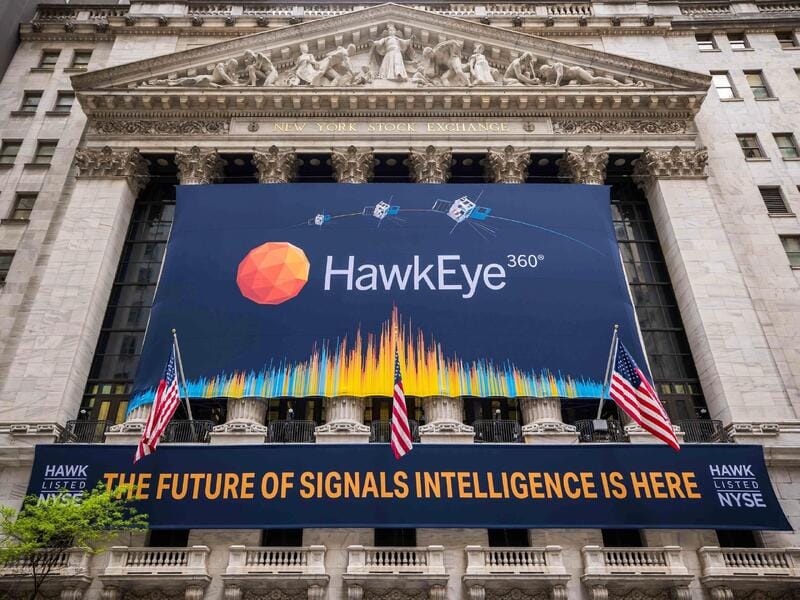
- HawkEye 360 prices IPO at $26, top of range — Geospatial-intelligence company raised about $416M in its NYSE debut, with shares opening Thursday under HAWK. Early tape is this week's read on the IPO window.
- Moonshot AI raises $2B at $20B+ — Beijing's Kimi-maker raised at roughly a triple from its prior round, led by Meituan's venture arm. Reported ARR hit $200M in April. The U.S.–China AI talks Trump and Xi are reportedly setting up next week could re-rate this in either direction.
- OpenAI–Broadcom $18B chip financing snags on Microsoft commitment — Broadcom was prepared to finance the first batch of OpenAI's custom chips, conditioned on Microsoft buying about 40% of the output. The condition is the news. Tuesday's edition covered the broader OpenAI-Microsoft restructuring; this is its operational tail.
- Roche acquires PathAI for up to $1.05B — Swiss pharma takes out the AI diagnostics company, paying $750M upfront. Healthcare-AI exits remain the most reliable M&A sub-category in the sector.
- Kraken parent acquires Reap for $600M — Hong Kong-based stablecoin payments infrastructure. Payward, Kraken's parent, issued stock at a $20B valuation to fund the deal — its own round of price discovery in primary form, ahead of any listing.
📈 Data Point of the Day
$49 billion
That's the share of Alphabet's and Amazon's combined Q1 "other income" attributable to gains on equity stakes in private companies, per Goldman Sachs. The Q1 "other income" total was about $53B — roughly 60% of the two companies' reported income for the quarter. As recently as 2022, "other income" at hyperscalers was largely interest on cash. Now it's mostly marks on Anthropic and a handful of other private holdings. The private market is generating most of public Big Tech's quarterly income.
🎓 Manual
Other Income
"Other income" is the catch-all line on a corporate income statement for revenue and gains that aren't tied to the main business. Historically, that meant interest on cash, foreign-exchange gains, and small one-offs. For hyperscalers in 2026, "other income" increasingly reflects mark-to-market gains (or losses) on equity stakes in private companies — when the underlying private company raises a round at a higher price, the public-company holder books an unrealized gain, even though no shares changed hands. The line item is now where private-market valuations show up in public-market earnings.
👀 What We're Watching
- HawkEye 360's early trading. Pricing said one thing; the first week of tape will say another. The IPO window has been narrow and selective. HAWK is a clean test of whether geospatial-intelligence finds a public bid.
- Circle (CRCL) earnings Tuesday, May 11. The first stablecoin issuer to report as a public company since this week's Coinbase miss. The read across to crypto-adjacent privates — and to AWS's stablecoin partnership with Coinbase and Stripe announced this week — will be unavoidable.
- The Trump–Xi meeting next week. The Wall Street Journal reported the U.S. and China are negotiating recurring talks on AI security risks, with Bessent leading the U.S. side. The Pentagon's earlier Alibaba/Baidu blacklist confusion shows how tangled the policy stance is. Any framework deal could re-rate Chinese AI privates including Moonshot.
- Polymarket's reported $15B round closing. Kalshi just printed at $22B. The size and lead investor on Polymarket's round will set the comp for the prediction-markets category — and signal whether Coatue, a16z, Sequoia, and Morgan Stanley are pricing the category as a duopoly or a winner-take-most.
Augment Markets Inc. is a technology company offering software and data services. Brokerage services are offered through Augment Capital LLC, an affiliated broker-dealer and member FINRA/SIPC. Investment advisory services are offered through Augment Advisors LLC, an SEC-registered investment adviser.
Important Disclosures: This material has been prepared for informational purposes only. None of the information provided represents a recommendation, an offer or the solicitation of an offer to buy or sell any security. The information provided does not constitute investment, legal, tax, or accounting advice. You should consult with qualified professionals before making any investment decisions. Investing in private securities involves substantial risk, including the potential loss of principal. Private securities are typically illiquid, have limited pricing transparency, and often require longer holding periods. These investments are available exclusively to qualified accredited investors and offer no guarantee of returns. An IPO or other liquidity event is not guaranteed. Additionally, past performance of private securities does not indicate or predict future results. Share price data are estimates only, based on proprietary data from Caplight and Augment Markets Inc. and its affiliates.

Paul leads editorial at Augment, building Pulse into the private markets' go-to intelligence source. He also develops editorial content strategies for startups and venture capital firms. Previously, he spent 15 years as a business and opinion journalist at The New York Times, Fortune, Fast Company, Reuters, and more. He believes transparency creates liquidity—and that someone should actually publish what private shares are trading for. He lives in Marin with his wife and two rescue dogs, and wishes he had more time to surf.
Learn more