


ByteDance is reportedly changing hands near a $600 billion secondary valuation while its founder tells staff an IPO is "not on the table" — the clearest sign yet that for the largest private names, the secondary market isn't the waiting room, it can be the destination. Meanwhile the AI buildout is quietly being refinanced through credit markets rather than equity, with SpaceX tapping the bond market days after its IPO, and Qualcomm is reportedly paying ~$4 billion for a chip-software startup it could have bought for $1.6 billion nine months ago.
🪙 A major private-market liquidity story without an IPO
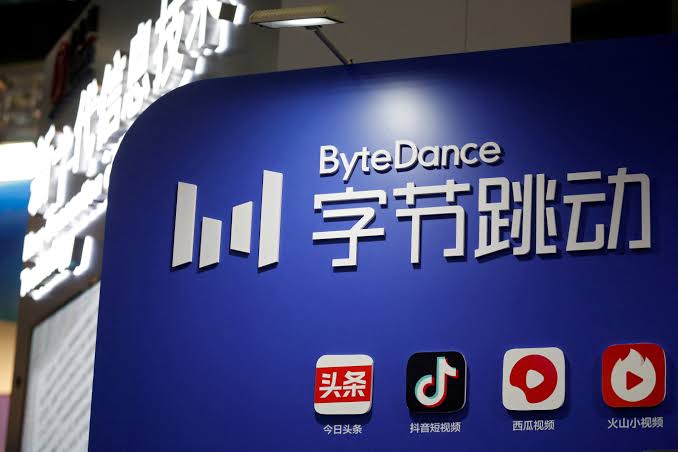
ByteDance is reportedly being valued near $600 billion in recent secondary activity — a February equity sale struck around $550 billion, rising to roughly $600 billion by April — with thinner gray-market quotes reaching roughly $900 billion this week and pointing toward the $1 trillion mark. And its founder, Liang Rubo, reportedly told an all-hands that a public listing is "not on the table at this time." (Nikkei Asia)
Instead of listing, ByteDance is reported to be buying back shares from employees and early investors. Read that again: the most valuable private company on earth is running its own liquidity program rather than handing the job to a stock exchange.
For Augment's audience, this is the thesis stated plainly. The standard mental model treats the secondary market as a holding pattern — a place to wait until the "real" event, the IPO, arrives. ByteDance is the counterexample at the largest possible scale. When a company can satisfy employee liquidity through buybacks, raise what it needs privately, and avoid the disclosure and governance load of a listing, the IPO stops being the destination and becomes optional. The secondary market is where price discovery actually happens for a name like this — which also means the marks are exactly as good, and as imperfect, as the transactions behind them. A $550 billion equity sale is a real reference point. A gray-market quote toward $1 trillion is a much thinner one. The gap between those two numbers is the whole lesson in private-market pricing.
The cleaner the secondary becomes, the less a company like ByteDance ever has to go public. That's the structural shift worth sitting with.
Reported private-company financials and secondary-market indications may be unaudited, incomplete, non-standard, or based on limited transaction activity. They should not be relied upon as fair value, executable pricing, or a basis for any investment decision.
🏗️ The AI buildout is being refinanced as credit
The more interesting AI story this week wasn't a model. It was how the infrastructure is getting paid for.
Morgan Stanley is steering data-center developers toward leveraged loans rather than bonds — a roughly $3.1 billion CoreWeave deal among them — to tap CLO investors, with an estimated $15 billion of such loans projected to sell in 2026. (The Information) Translated: the AI capex wave is becoming a structured-credit asset class, which pulls CLO holders — including plenty who never set out to underwrite AI — into the buildout's risk.
SpaceX is the same story from the demand side. Days after the largest IPO on record, it began its first bond offering — a five-tranche, investment-grade deal reportedly targeting $20–25 billion, much of it to refinance a $20 billion bridge loan taken in March — and the sale reportedly drew roughly $89 billion in orders, with pricing expected today. (Bloomberg) It also disclosed roughly $100.8 billion in cash (CNBC) and keeps signing long-dated compute contracts at its Colossus data center — a deal worth up to $6.3 billion with Reflection AI, on top of reported commitments from Anthropic and Google. (CNBC) The equity has gone the other way: the stock has given back the bulk of its post-IPO gains in a multi-day selloff. That an ~$89 billion order book formed for the debt in the same week the equity sold off is the part private-market readers should sit with. AI infrastructure is increasingly funded like infrastructure: long-term contracts and debt, not just venture equity. When demand is firm, that's efficient. If buildout demand softens, the risk now sits in more places, and with more holders, than it did a year ago.
Reported private-company financials and secondary-market indications may be unaudited, incomplete, non-standard, or based on limited transaction activity. They should not be relied upon as fair value, executable pricing, or a basis for any investment decision.
💨 Quick Takes
The following items reference financings, valuations, offerings, and transactions for market context only and are not recommendations or valuation opinions.
- Bending Spoons, the Vimeo owner, set terms for an early-July Nasdaq IPO — up to $1.62 billion raised, ~$19 billion valuation at the top of the range, well above the ~$11 billion pre-money it carried in a late-2025 round. The serial acquirer (AOL, Evernote, WeTransfer, Vimeo) heads to the public market.
- AppsFlyer raised over $1 billion at a $2.7 billion valuation — with Google, Meta, Unity, and Moloco each taking minority stakes in the ad-measurement firm, which says it still intends to go public eventually.
- Meta is investing $900 million for ~20% of India's Cred — valuing the fintech at $4.5 billion post-money, with founder Kunal Shah moving over to run WhatsApp. Meta takes no board seat and no access to Cred user data.
- Groq raised $650 million led by Disruptive and Infinitum — an internal, pro-rata round to scale its AI inference cloud, roughly six months after Nvidia paid $20 billion to license its chip technology and hire much of its leadership.
- Attention raised a $30 million Series B led by RTP Global — the New York revenue-AI company is pushing from recording sales calls to running them: drafting the follow-up, updating the CRM, executing the next play. With Aglaé, Eniac, and Alven returning, the round is a bet on blurring the line between a system of record and an agent that does the work.
📈 Data Point of the Day
$4 billion
That's what Qualcomm is reportedly in advanced talks to pay for Modular, the AI chip-software startup — up from a $1.6 billion valuation in a funding round just nine months ago. (Reuters via Investing.com) If the talks hold — and reported talks often don't — that's a private name marked up roughly 2.5x inside three quarters, via a strategic-acquirer exit rather than a listing. It's also Qualcomm's second reported AI-chip pursuit this month. The takeaway for private holders isn't the multiple; it's the speed. When a strategic buyer decides it needs a capability, a private mark can reset in quarters, not years — in either direction.
Reported private-company financials and secondary-market indications may be unaudited, incomplete, non-standard, or based on limited transaction activity. They should not be relied upon as fair value, executable pricing, or a basis for any investment decision.
🎓 Manual
The Gray Market
The gray market for private shares is informal trading that happens outside any organized venue or official tender — handshake deals, broker-arranged transfers, and SPV interests that change hands at quoted "indications" rather than cleared prices. It's where the splashiest valuation numbers often come from, because a single optimistic quote can imply a headline figure with very little volume behind it. That's why a gray-market mark and an actual completed secondary transaction can differ by hundreds of billions for a name like ByteDance: one reflects what someone is asking, the other what someone actually paid. For anyone reading private valuations, the question to ask is always which of the two a number represents.
👀 What We're Watching
- A compressing pre-IPO window. SpaceX went from confidential filing to listing in about 74 days, faster than recent comparables. If OpenAI and Anthropic move at a similar pace, secondary holders may have less runway to transact before a liquidity event resets the name — something for desks holding inventory to monitor. (The Information)
- Political risk as a pricing input. A week after the export-control action against Anthropic, the open question is who, if anyone, benefits among rivals and cloud providers — and whether regulatory posture toward a single lab becomes as material to its mark as its revenue. (TechCrunch)
- Continuation vehicles eating the secondary market. GP-led continuation vehicles now make up nearly half of 2025's reported ~$240 billion secondary volume, and one survey flags GP-LP information asymmetry as the top source of LP dissatisfaction. Whether that trust gap slows the structure's growth is worth tracking. (CAIA)
Augment Markets Inc. is a technology company offering software and data services. Brokerage services are offered through Augment Capital LLC, an affiliated broker-dealer and member FINRA/SIPC. Investment advisory services are offered through Augment Advisors LLC, an SEC-registered investment adviser.
Important Disclosures: This material has been prepared for informational purposes only. None of the information provided represents a recommendation, an offer or the solicitation of an offer to buy or sell any security. The information provided does not constitute investment, legal, tax, or accounting advice. You should consult with qualified professionals before making any investment decisions. Investing in private securities involves substantial risk, including the potential loss of principal. Private securities are typically illiquid, have limited pricing transparency, and often require longer holding periods. These investments are available exclusively to qualified accredited investors and offer no guarantee of returns. An IPO or other liquidity event is not guaranteed. Additionally, past performance of private securities does not indicate or predict future results. Share price data are estimates only, based on proprietary data from Caplight and Augment Markets Inc. and its affiliates.

Paul leads editorial at Augment, building Pulse into the private markets' go-to intelligence source. He also develops editorial content strategies for startups and venture capital firms. Previously, he spent 15 years as a business and opinion journalist at The New York Times, Fortune, Fast Company, Reuters, and more. He believes transparency creates liquidity—and that someone should actually publish what private shares are trading for. He lives in Marin with his wife and two rescue dogs, and wishes he had more time to surf.
Learn more