Musk just announced the biggest chip factory in history. Investors should pay attention.





Elon Musk unveiled Terafab on Saturday — a $20-25B joint chip fab between Tesla, SpaceX, and xAI that targets a scale no private company has attempted in semiconductors. Meanwhile, the White House released its national AI policy framework pushing to preempt state AI laws, and Kalshi doubled its valuation to $22B in three months. A busy weekend for private markets.
The Big Story: Terafab and What It Means for the SpaceX IPO

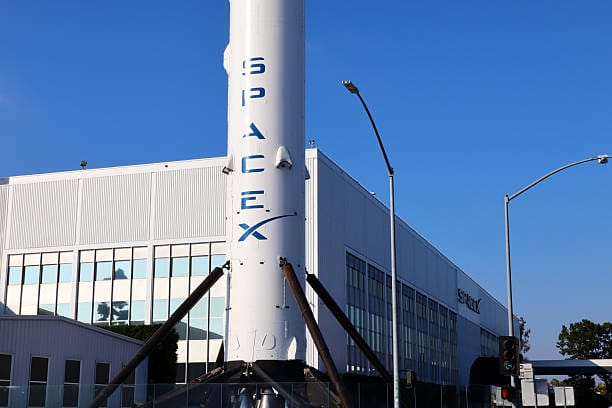
On Saturday night in Austin, Elon Musk took the stage at a defunct power plant and announced what he called "the most epic chip-building exercise in history by far." The project is called Terafab: a joint venture between Tesla, SpaceX, and xAI (which SpaceX acquired in February) that aims to consolidate chip design, fabrication, packaging, and testing under one roof — at a cost of $20-25 billion.
The target output is staggering: 100-200 gigawatts of terrestrial computing annually, plus up to a terawatt of space-based compute for SpaceX's planned orbital data center satellites. For context, the entire global semiconductor industry currently produces roughly 20 gigawatts of AI compute per year. Musk is proposing to build a facility that eventually produces many multiples of that from a single campus adjacent to Giga Texas in Austin.
Two chip types are planned: an edge inference processor for Tesla's vehicles and Optimus robots, and a radiation-hardened chip designed for the space environment.
Why this matters for private markets investors:
Terafab is best understood not as a semiconductor story but as a SpaceX IPO story. SpaceX completed its all-stock acquisition of xAI in early February, creating a combined entity valued at roughly $1.25 trillion. The IPO is reportedly targeting as high as $1.5 trillion — and with that merger, anyone who buys SpaceX shares will also own xAI (Grok, X) and everything Terafab produces.
The orbital data center thesis is central to this valuation. SpaceX has already filed with the FCC to launch up to one million data center satellites. Terafab is the chip supply chain those satellites would run on. It is vertically integrated AI infrastructure — rockets to launch it, Starlink to connect it, xAI models to run on it, and now chips to power it.
The skepticism is legitimate. Tesla has zero semiconductor manufacturing experience. Leading-edge 2nm fabs typically take 3+ years and tens of billions to build. Musk has made ambitious manufacturing promises before that took considerably longer than projected. No construction timeline was given Saturday.
But here's the private markets read: whether Terafab succeeds or not, it signals that the SpaceX entity going public this year is far more complex — and far harder to value — than a rocket company. Investors who are thinking about secondary SpaceX shares should understand they're underwriting a thesis that spans launch services, broadband, AI compute, social media, and now semiconductor manufacturing.
That's a lot to underwrite at $1.5 trillion.
Washington Sets the AI Regulatory Table

The White House released its national AI policy framework last Friday, completing a directive from Trump's December executive order. At four pages, it's a notably concise document for something this consequential.
The core ask: Congress should establish a single federal standard for AI that preempts state laws the administration views as burdensome. The framework specifically calls for states to be prohibited from regulating AI model development or penalizing developers for third-party misuse of their products.
Four states — California, Colorado, Utah, and Texas — have already enacted their own AI-specific legislation. The White House calls this a "patchwork" that threatens American competitiveness.
The investor angle: The tech industry has lobbied for federal preemption for years. If Congress acts, it would reduce the compliance surface area for AI startups building across multiple states — potentially lowering operational costs and legal risk for companies in the private markets universe. The framework also calls for streamlined permitting for data centers and federal dataset access for AI training, both tailwinds for AI infrastructure companies.
A significant carve-out: states retain authority over child safety, data center siting, and state government's own use of AI. The framework also declines to resolve the copyright question around AI training data, leaving that to the courts.
Whether Congress acts this year remains uncertain. The administration said it wants legislation signed "as fast as we can," but the CLARITY Act and other priorities compete for floor time.
Quick Takes

Kalshi raises $1B at $22B valuation — double its December price — The CFTC-regulated prediction market platform, led by Coatue, doubled its valuation in roughly three months. Revenue run rate reportedly around $1.5B annually. The company set a near-record $600M trading day on Thursday during NCAA Tournament play — even as it faces criminal charges in Arizona and a Nevada ban.
Gimlet Labs raises $80M Series A for AI inference infrastructure — The startup's "multi-silicon inference cloud" lets AI workloads run simultaneously across CPUs and GPUs from different vendors. As hyperscalers diversify away from Nvidia dependency, infrastructure that can span hardware types is attracting serious capital.
Isar Aerospace seeking $289M ahead of European launch attempt — The German rocket startup, which has raised more than any other European space company, is targeting a valuation above $2B. A launch is planned for this week.
BlueSky raises $100M Series B led by Bain Capital Ventures — The decentralized social network continues to attract capital as an X alternative. No valuation disclosed; company has now raised roughly $200M total.
📊 Data Point of the Day

53 days
How long it took Starlink to add its most recent million subscribers — going from 9 million to 10 million, a milestone hit in February. For context: it took the company roughly two years to reach its first million (2021–2022). The acceleration reflects a business that looks increasingly like a consumer internet utility: 10 million paying subscribers across 155 countries, generating an estimated $10B in annual revenue, with the last million added faster than the previous million. When Terafab and orbital data centers get the headlines, this is the quiet engine underneath SpaceX's $1.25 trillion valuation.
🎓 Manual
Vertical Integration
A business strategy in which a company controls multiple stages of its own supply chain — from raw inputs to finished product. In private markets, vertically integrated companies can be harder to value because synergies between business units may not be captured in any single comparable. The SpaceX/xAI/Terafab combination is a notable example: launch services, satellite internet, AI models, social media, and now chip manufacturing, all under one entity seeking a single public market valuation.
Augment Markets Inc. is a technology company offering software and data services. Brokerage services are offered through Augment Capital LLC, an affiliated broker-dealer and member FINRA/SIPC. Investment advisory services are offered through Augment Advisors LLC, an SEC-registered investment adviser.
Important Disclosures: This material has been prepared for informational purposes only. None of the information provided represents a recommendation, an offer or the solicitation of an offer to buy or sell any security. The information provided does not constitute investment, legal, tax, or accounting advice. You should consult with qualified professionals before making any investment decisions. Investing in private securities involves substantial risk, including the potential loss of principal. Private securities are typically illiquid, have limited pricing transparency, and often require longer holding periods. These investments are available exclusively to qualified accredited investors and offer no guarantee of returns. An IPO or other liquidity event is not guaranteed. Additionally, past performance of private securities does not indicate or predict future results. Share price data are estimates only, based on proprietary data from Caplight and Augment Markets Inc. and its affiliates.

Paul leads editorial at Augment, building Pulse into the private markets' go-to intelligence source. He also develops editorial content strategies for startups and venture capital firms. Previously, he spent 15 years as a business and opinion journalist at The New York Times, Fortune, Fast Company, Reuters, and more. He believes transparency creates liquidity—and that someone should actually publish what private shares are trading for. He lives in Marin with his wife and two rescue dogs, and wishes he had more time to surf.
Learn more