



SpaceX is scheduled to open its IPO roadshow on June 4 — reportedly targeting as much as a $1.75 trillion valuation and a ~$75 billion raise, with pricing reported for June 11 — and index providers have cleared a fast lane that could pull it into 401(k)s and ETFs within days of listing. The repricing is spreading beyond AI and space — defense-tech maker Mach Industries raised at a reported $1.8 billion, nearly 4x its mark a year ago. Underneath the trophy names, PitchBook counts 220+ "fallen unicorns" — a reminder the same boom lifting the top is freezing the middle.
🚀 The Big Story: SpaceX is about to land in your index funds
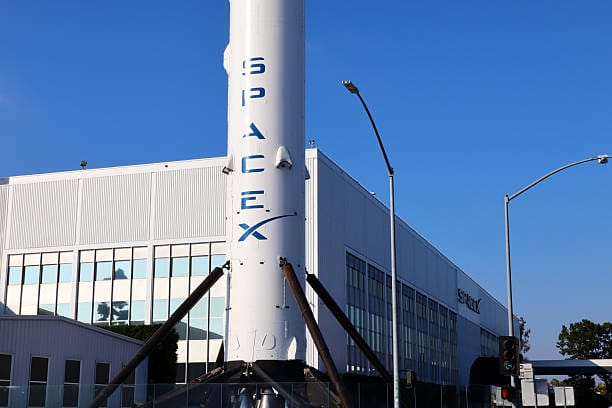
For a decade, owning SpaceX meant being accredited and patient. Shares moved through tender offers and SPVs, rationed to insiders and institutions. In a little over a week, that changes for almost everyone. If the offering proceeds as reported, public-market investors may have a new route to exposure, although access, allocation, and index inclusion remain uncertain.
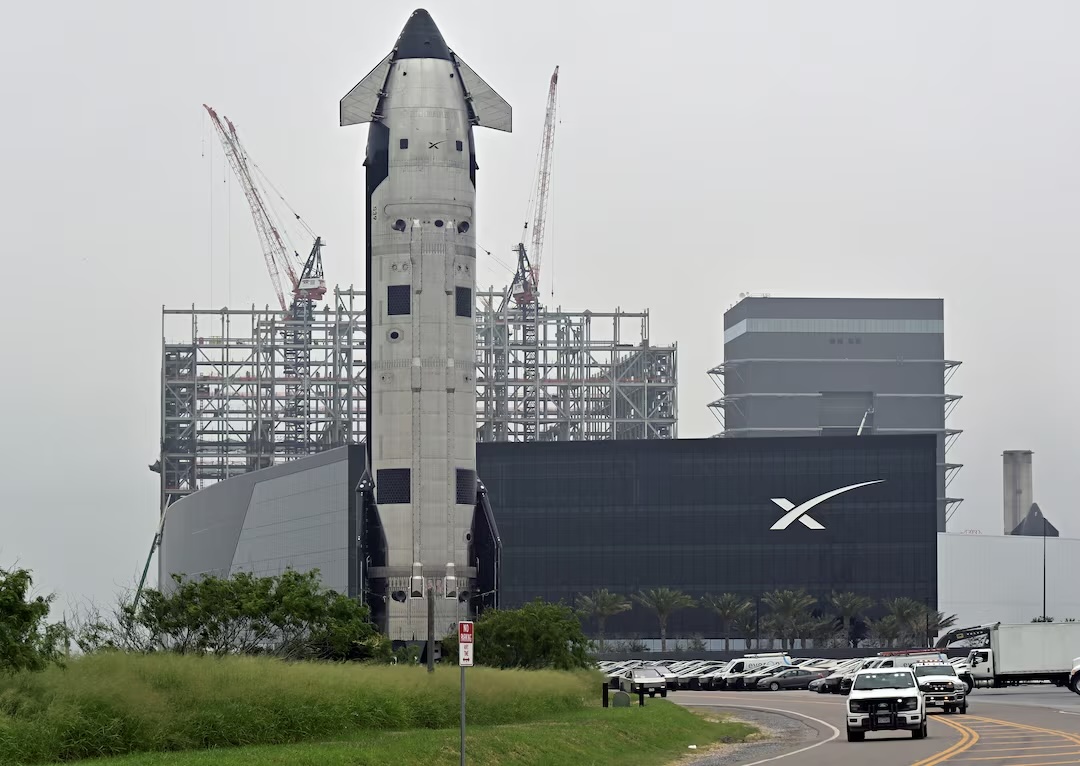
SpaceX is scheduled to open its IPO roadshow on June 4, with a multi-country retail investor event reported for June 11 and a Nasdaq debut under ticker SPCX expected to follow, per CNBC. It is reportedly targeting a valuation as high as $1.75 trillion and a raise near $75 billion — which would be the largest IPO on record. The structure leans toward retail in a way no offering this size has tried: the company has reportedly set aside up to 5% of shares for employees and executives' friends and family, more than 60% of stock reportedly carries an extended lock-up, and by one account roughly a third of the float is earmarked for retail (Outlook Business), well above the mega-cap norm. A space-themed ETF (ticker NASA) that holds SpaceX directly pulled in more than $2.6 billion ahead of the deal.
The part that reaches past the offering itself: index providers cleared a fast lane. FTSE Russell will allow fast-track entry after about five trading days, and Nasdaq may shorten the potential timeline for index eligibility to 15 days from three months — so SpaceX could enter major indexes, and the 401(k)s and ETFs that track them, within days of listing, with analysts estimating $15–30 billion of passive buying to follow. It lands the same week the Labor Department's comment period closed on a rule to let 401(k)s hold private assets directly.
One interpretation worth tracking: the name that defined accredited-only scarcity is becoming the test case for whether retail can absorb supply institutions historically rationed. Final demand and pricing will depend on market conditions and the offering process.
Reported private-company financials and secondary-market indications may be unaudited, incomplete, non-standard, or based on limited transaction activity. They should not be relied upon as fair value, executable pricing, or a basis for any investment decision.
*Subject to final IPO timing, index methodology, and fund-specific holdings.
Sources: CNBC — SpaceX IPO live updates · CNBC — up to 5% set aside for employees and friends · CNBC — the $2.6B NASA ETF trade · Yahoo Finance — SpaceX could hit index funds and 401(k)s in ~5 days · Outlook Business — record retail allocation · DOL — 401(k) alternative-assets proposal
Defense repricing: Mach Industries hits a reported $1.8B

The repricing isn't confined to AI and space. Mach Industries, a three-year-old maker of autonomous defense systems, raised a $300 million Series C at a reported $1.8 billion valuation — nearly 4x the $470 million mark it carried a year ago. The round was led by Infinite Capital and Ribbit Capital, with Bedrock, Sequoia, and Khosla participating, and was reportedly oversubscribed: the company says it set out to raise $200 million and pushed to $300 million on demand. Founder Ethan Thornton, 22, says production is slated to begin next year on several of its systems.
Defense has become one of the few non-AI categories drawing this kind of velocity, as autonomous systems prove out in the field. For private-market observers, a reported 4x step-up in twelve months is a marker of how unevenly capital is repricing right now — concentrated in a handful of hot verticals while much of the 2021 cohort sits stalled, the gap the Data Point below quantifies.
Reported private-company financials and secondary-market indications may be unaudited, incomplete, non-standard, or based on limited transaction activity. They should not be relied upon as fair value, executable pricing, or a basis for any investment decision.
Sources: TechCrunch — Mach Industries hits $1.8B, a 4x jump in a year · Bloomberg — Mach Industries valued at $1.8 billion
💨 Quick Takes
The following items reference financings, valuations, offerings, and transactions for market context only and are not recommendations or valuation opinions.
- Cognition raises $1B at a reported $26B post-money — The Devin maker's mark reportedly rose ~2.5x in eight months, a reported example of rapid valuation step-up in AI developer tools right now.
- Alphabet to raise $80B in equity, with $10B from Berkshire Hathaway — A public-market raise to fund AI capex, and a notable Buffett vote in the buildout.
- Honeywell's Quantinuum upsizes its IPO toward a reported $14.3B valuation — Boosted to ~$1.46B after reportedly drawing strong orders, broadening the pipeline past AI into quantum.
- Anthropic confidentially files draft IPO paperwork — The AI company submitted a confidential draft registration statement, per public reporting; no share count, price, or timeline set.
- Salesforce to acquire Contentful — The content-management company was last valued above $3 billion in 2021 and is exiting via a strategic-acquirer deal rather than an IPO; terms were not disclosed.
📈 Data Point of the Day
220+
That's how many US startups have lost their billion-dollar status and become "fallen unicorns," according to PitchBook data shared with CNBC — and nearly half of all 857 US unicorns reportedly haven't raised fresh capital in three years. Companies that last raised in 2021 are worth a reported 68% less on average today. While SpaceX and the AI leaders reprice upward, a generation of pre-ChatGPT unicorns is being stranded: the data suggest a widening gap between a small set of high-profile issuers and a larger group of private companies facing more difficult financing conditions. The spread between 2021 marks and current clearing prices is among the widest on record.
Reported private-company financials and secondary-market indications may be unaudited, incomplete, non-standard, or based on limited transaction activity. They should not be relied upon as fair value, executable pricing, or a basis for any investment decision.
Source: CNBC — AI is crushing a generation of pre-ChatGPT startups
🎓 Manual
Qualified Purchaser
A “qualified purchaser” is a higher eligibility category than an accredited investor. In general, it includes individuals or family-owned companies with at least $5 million in investments and certain entities with at least $25 million in investments. Private funds relying on Section 3(c)(7) generally limit investors to qualified purchasers, while 3(c)(1) funds are generally subject to a 100-beneficial-owner limit. Specific eligibility depends on the Investment Company Act, SEC rules, and fund structure.
👀 What We're Watching
- Forced passive demand around the SpaceX listing. With FTSE Russell and Nasdaq shortening index-entry timelines, trackers could be required to buy a reported $15–30 billion of SpaceX shortly after it lists. How that interacts with the offering's retail tilt may provide context on post-listing supply and demand. (Yahoo Finance)
- What the DOL and SEC do after June 1. The comment period on private assets in 401(k)s just closed, and the SEC is separately weighing accredited-investor standards. Any next steps, if they come, could reshape the buyer pool for private secondaries. (DOL)
- MiniMax's mainland IPO. The Chinese AI company has reportedly begun preparing a Shanghai STAR Market listing, with reported annualized revenue above $300 million — a reminder that AI liquidity is reaching public markets faster in China than in the US. (Bloomberg)
Augment Markets Inc. is a technology company offering software and data services. Brokerage services are offered through Augment Capital LLC, an affiliated broker-dealer and member FINRA/SIPC. Investment advisory services are offered through Augment Advisors LLC, an SEC-registered investment adviser.
Important Disclosures: This material has been prepared for informational purposes only. None of the information provided represents a recommendation, an offer or the solicitation of an offer to buy or sell any security. The information provided does not constitute investment, legal, tax, or accounting advice. You should consult with qualified professionals before making any investment decisions. Investing in private securities involves substantial risk, including the potential loss of principal. Private securities are typically illiquid, have limited pricing transparency, and often require longer holding periods. These investments are available exclusively to qualified accredited investors and offer no guarantee of returns. An IPO or other liquidity event is not guaranteed. Additionally, past performance of private securities does not indicate or predict future results. Share price data are estimates only, based on proprietary data from Caplight and Augment Markets Inc. and its affiliates.

Paul leads editorial at Augment, building Pulse into the private markets' go-to intelligence source. He also develops editorial content strategies for startups and venture capital firms. Previously, he spent 15 years as a business and opinion journalist at The New York Times, Fortune, Fast Company, Reuters, and more. He believes transparency creates liquidity—and that someone should actually publish what private shares are trading for. He lives in Marin with his wife and two rescue dogs, and wishes he had more time to surf.
Learn more