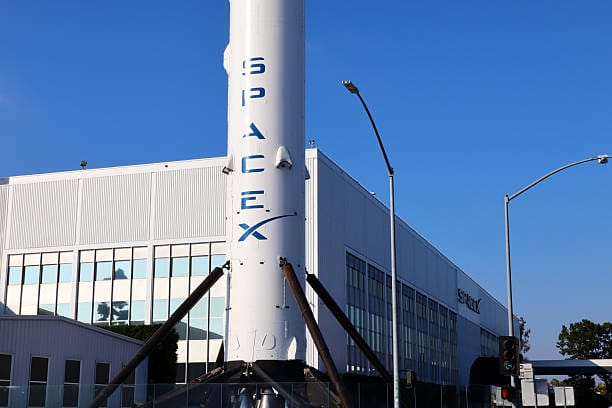




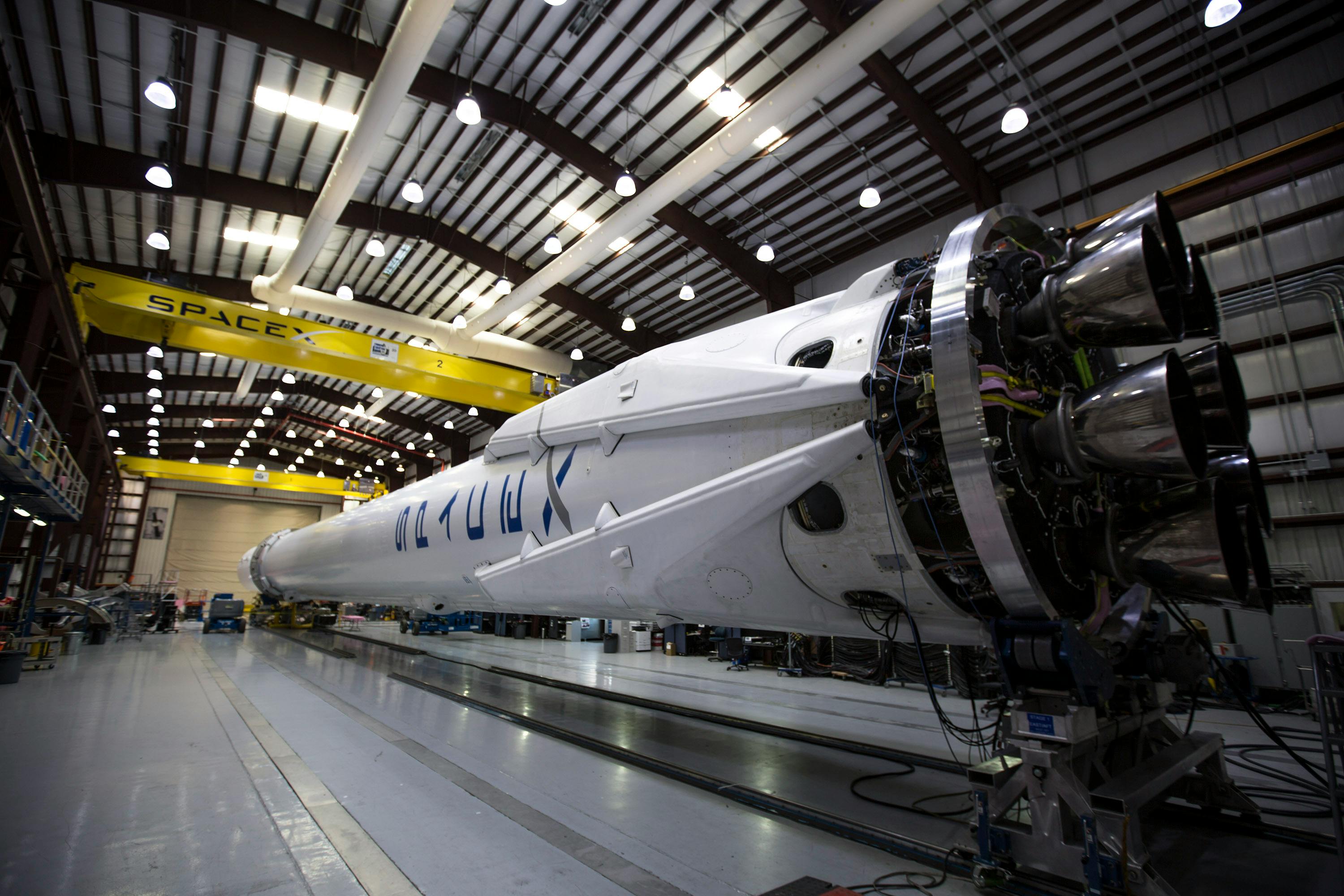

SpaceX has been among the most-traded names on every secondary platform, is set to price Thursday and list Friday — which means the private market is about to lose its most visible and liquid private-company reference point, and the open question is where that demand goes. The timing isn't isolated: with OpenAI confirming its own confidential S-1 on June 8, all three names that anchored private-market demand are now in the IPO pipeline at once. Ramp's fresh $750M round at $44B resets the reference price for one of the other heavily traded private names, and on Forge, SpaceX's secondary mark is now sitting a few dollars under its $135 offer price — the cleanest test yet of whether a private mark survives contact with the public tape.
🚀 The Big Story: The most-traded private stock is about to stop being private
In our view, for two years, one name has done the heavy lifting on every secondary platform's order book. SpaceX has been one of the names that brings buyers in the door — the position employees actually want to sell, the one fund managers build a thesis around. This week it stops being a private stock.
The roadshow began June 4. Pricing is set for June 11, with a Nasdaq debut planned for June 12 under the ticker SPCX, at a fixed $135 per share and a valuation near $1.75 trillion across roughly 555.6 million shares offered — what would be the largest IPO on record. (CNBC) Most coverage will track how the stock opens. The question that matters for anyone holding private paper is quieter: what happens to the rest of the book when the anchor lifts.
Secondary liquidity isn't evenly distributed. A handful of names carry most of the volume, and SpaceX has been the heaviest of them. When the most liquid asset on a marketplace converts to public stock — tradable in size, priced by the minute, no accreditation gate — the demand that used to find SpaceX may rotate to other private names, move to public markets, or remain on the sidelines. There is no public tape yet to say which, which is the reason the next few weeks are worth watching rather than narrating.
There's a second-order point hiding in the calendar, and it got sharper overnight. SpaceX, Anthropic, and OpenAI have been among the most visible names that have anchored private-market demand. All three are now pointed at the public markets inside a ten-day stretch: Anthropic filed a confidential S-1 on June 1, OpenAI confirmed its own confidential filing on June 8 (Fortune· OpenAI), and SpaceX lists this week. The names that absorbed the most secondary capital are heading for the exit together — a notable period in which several of the most watched private issuers appear to be moving toward public-market processes at the same time.
Reported private-company financials and secondary-market indications may be unaudited, incomplete, non-standard, or based on limited transaction activity. They should not be relied upon as fair value, executable pricing, or a basis for any investment decision.
Ramp's $44B round may reset everyone's reference price
Ramp closed a $750 million Series F at a $44 billion valuation on June 4, co-led by Iconiq, GIC, and Ontario Teachers'. (TechCrunch · Ontario Teachers') That's up from $32 billion seven months earlier — a 37% step-up — on reported annualized revenue of roughly $1 billion. The implied multiple is around 44x revenue, a public-software number paid for a private, illiquid asset.
Ramp is one of the more actively traded private names, so the round does something past funding the company: it may reset the mark every secondary buyer and seller now anchors to. This is the mechanism by which primary rounds move secondary prices. A megaround prints a new reference number, and the secondary book re-rates toward it — not because anything changed in the business between Tuesday and Wednesday, but because the last paid price went up. In some private secondary transactions, buyers may place significant weight on the most recent primary round; however, fundamentals, security terms, market conditions, and transaction-specific factors may also materially affect price
Reported private-company financials and secondary-market indications may be unaudited, incomplete, non-standard, or based on limited transaction activity. They should not be relied upon as fair value, executable pricing, or a basis for any investment decision.
💨 Quick Takes
The following items reference financings, valuations, offerings, and transactions for market context only and are not recommendations or valuation opinions.
- Suno raises $400M Series D at $5.4B — the AI music startup more than doubled its $2.45B mark from seven months earlier (led by Bond), even as it fights label litigation over training data.
- AlphaSense raises $350M at $7.5B — nearly double its $4B valuation, reportedly amid IPO discussions, for the market-intelligence platform.
- ZutaCore closes $100M Series C near $600M — liquid-cooling hardware for AI data centers, a quieter way to play the buildout.
- DeepSeek reportedly nearing ~$7B at a $52–59B valuation — what would be the lab's first outside capital; the round reportedly has not closed and terms may change.
📈 Data Point of the Day
$128.90
That's where SpaceX was last indicated on Forge's secondary marketplace as of June 8 — about four dollars under the $135 the company set for its IPO. (Forge) Hiive carried it higher, at $144.92 as of June 9. (Hiive) The gap between two platforms on the same asset is its own lesson in private-market pricing. The headline is the convergence: after a pre-IPO split reconciled the share classes, the secondary indication and the offer price now sit within a few dollars of each other. The test of whether a private mark holds up against a public tape is running on the most-watched name in the market, and reported indications appear near the stated offer price, although indications may not be executable or directly comparable to IPO pricing.
Reported private-company financials and secondary-market indications may be unaudited, incomplete, non-standard, or based on limited transaction activity. They should not be relied upon as fair value, executable pricing, or a basis for any investment decision.
🎓 Manual
Free Float
A company's free float is the slice of its shares actually available to trade in the open market — total shares outstanding minus the blocks locked up by insiders, employees, and pre-IPO investors. A trillion-dollar listing can still have a thin float if most of the stock is restricted, which is why a newly public name doesn't immediately replace the private liquidity it leaves behind: the shares exist, but most of them can't move yet. For pre-IPO holders, free float and the lockup calendar together govern when "public" actually means "sellable."
👀 What We're Watching
- SpaceX pricing June 11, debut planned June 12. The roadshow is underway at a fixed $135. (CNBC) How a single named price behaves when the issuer sets it before demand is collected — rather than building a book toward it — is a structural question the listing would put on public display. Whatever the open looks like, it becomes the first public reference point for the most-held private name.
- The re-rate cycle is compressing. Ramp stepped up 37% in seven months; Suno more than doubled to $5.4B in the same span (Digital Music News); AlphaSense nearly doubled to $7.5B (Tech Startups). PitchBook framed the approaching mega-IPO wave as a reset for the VC secondaries market. (PitchBook) When primary rounds re-rate this fast, secondary marks inherit the move with no public tape to correct it. Whether the cadence holds or cools is worth tracking.
- The other two anchors just started their clocks. Anthropic filed a confidential S-1 on June 1, days after its $965B Series H (KTVU); OpenAI confirmed its own confidential filing on June 8, last valued around $852B, with a listing reportedly possible as early as September (Fortune). With SpaceX leaving the private pool this week, the two names left holding the most secondary volume are both now on a path to a public test of their own marks. Whether either lists this year would depend on market conditions and the offering process.
Augment Markets Inc. is a technology company offering software and data services. Brokerage services are offered through Augment Capital LLC, an affiliated broker-dealer and member FINRA/SIPC. Investment advisory services are offered through Augment Advisors LLC, an SEC-registered investment adviser.
Important Disclosures: This material has been prepared for informational purposes only. None of the information provided represents a recommendation, an offer or the solicitation of an offer to buy or sell any security. The information provided does not constitute investment, legal, tax, or accounting advice. You should consult with qualified professionals before making any investment decisions. Investing in private securities involves substantial risk, including the potential loss of principal. Private securities are typically illiquid, have limited pricing transparency, and often require longer holding periods. These investments are available exclusively to qualified accredited investors and offer no guarantee of returns. An IPO or other liquidity event is not guaranteed. Additionally, past performance of private securities does not indicate or predict future results. Share price data are estimates only, based on proprietary data from Caplight and Augment Markets Inc. and its affiliates.

Paul leads editorial at Augment, building Pulse into the private markets' go-to intelligence source. He also develops editorial content strategies for startups and venture capital firms. Previously, he spent 15 years as a business and opinion journalist at The New York Times, Fortune, Fast Company, Reuters, and more. He believes transparency creates liquidity—and that someone should actually publish what private shares are trading for. He lives in Marin with his wife and two rescue dogs, and wishes he had more time to surf.
Learn more