$725B in capex. The math behind the datacenter buildout.






In the last two weeks, NextEra agreed to buy Dominion Energy for $67 billion to feed data center power demand. Anthropic signed a deal to pay xAI $1.25 billion per month for compute. CoreWeave doubled Q1 revenue but carries $25 billion in debt at 11% interest. And the hyperscalers collectively guided to $725 billion in 2026 capex. Everyone is building as fast as they can — but the demand forecasts justifying all of it rest on assumptions that Goldman Sachs says can swing by hundreds of billions with a single variable change. Today's thesis: the data center capex chain, who's exposed, and what breaks if the projections are wrong.
Deep Dive: The Capex Chain — And What Happens If the Math Is Wrong
Three deals in the last two weeks appear to have contributed to where the data center economy stands right now.
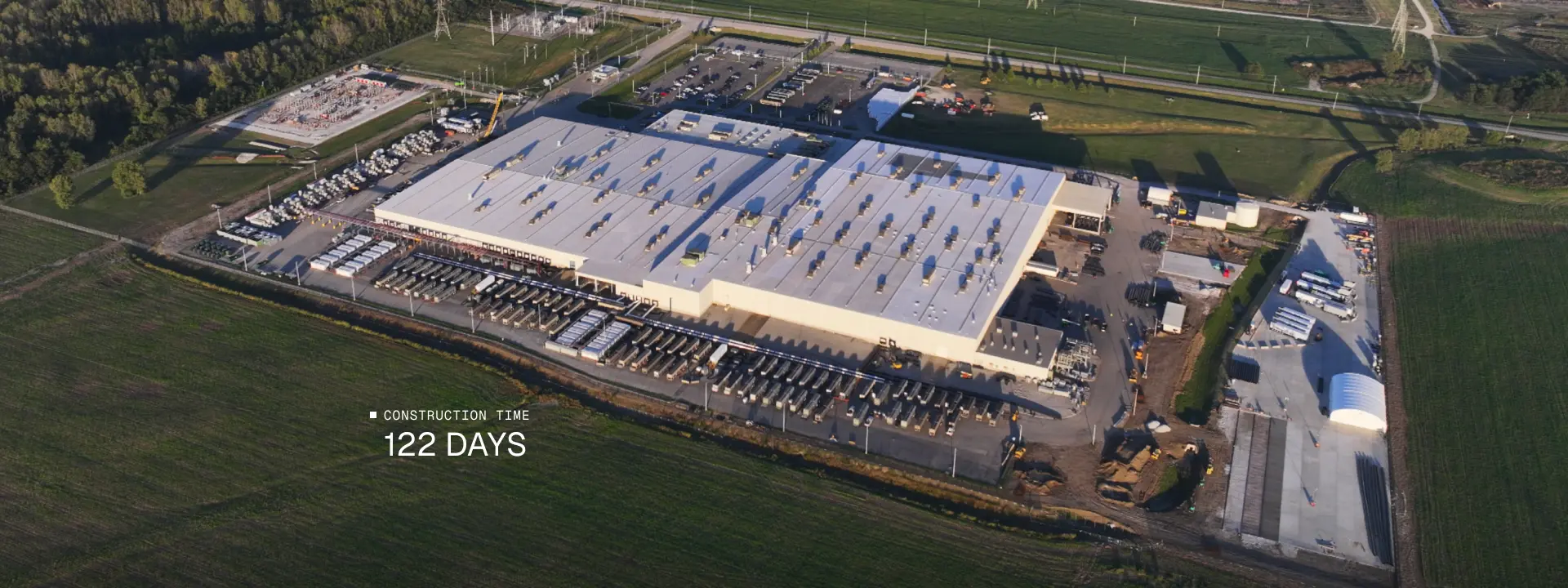
Monday: NextEra Energy agreed to acquire Dominion Energy in a $67 billion all-stock deal — the largest utility merger in history — explicitly to serve data center power demand. The combined company will have over 130 gigawatts of large-load opportunities in its pipeline and serve 10 million customers across four states.
This week: SpaceX's S-1 filing disclosed that Anthropic will pay xAI $1.25 billion per month for exclusive access to Colossus 1 in Memphis — over 220,000 NVIDIA GPUs, 300 megawatts of power capacity. The contract runs through May 2029. Total value: north of $40 billion.
And in the background: CoreWeave reported Q1 earnings, doubling revenue year-over-year but sinking 10% on weak forward guidance. The stock is up roughly 150% since its March 2025 IPO. It also carries $25 billion in debt at a variable rate averaging around 11%, meaning roughly a third of revenue goes to interest payments.
Three very different deals. One shared assumption: that demand for AI compute will be large enough, durable enough, and monetizable enough to justify the most capital-intensive buildout in the history of technology.
A broad market view has emerged that AI demand will require substantial compute, data center, and power investment.
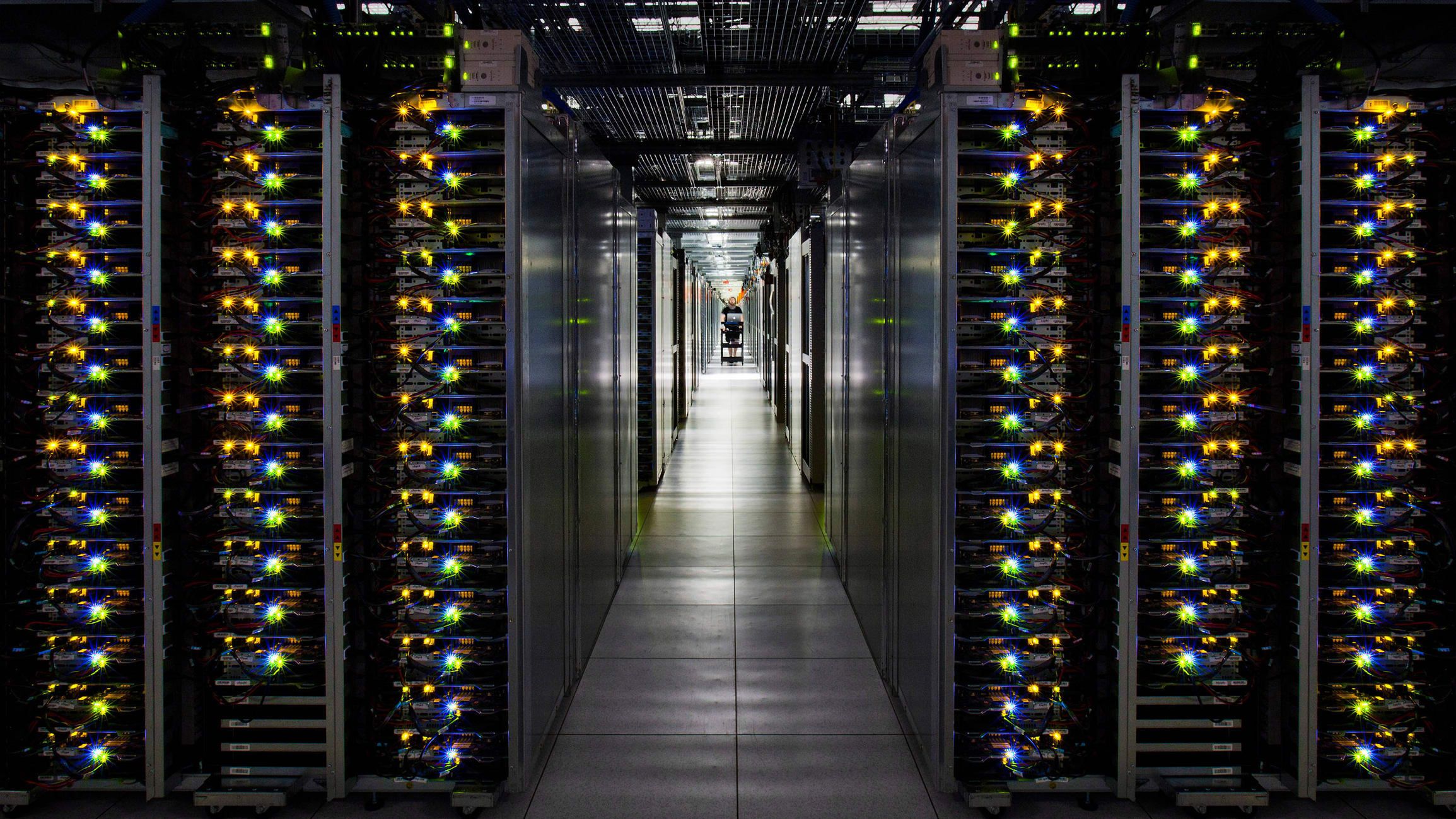
The hyperscalers — Amazon, Alphabet, Meta, Microsoft, Oracle — have collectively guided to approximately $725 billion in 2026 capital expenditure, with roughly 75% directed at AI-specific infrastructure. Amazon alone announced $200 billion in planned capex for 2026 — the largest single-year corporate investment commitment ever made. Meta is tracking toward capex equal to 54% of sales. Microsoft is at 47%. Alphabet is at 46%. These are ratios previously seen only in industrial utilities and regulated telcos — companies with guaranteed rate-of-return models. The hyperscalers have no such guarantees.
Goldman Sachs' Global Institute published "Tracking Trillions" earlier this month, projecting $7.6 trillion in cumulative AI capital expenditure between 2026 and 2031 — covering chips, data centers, and power infrastructure. Annual spending is expected to more than double from $765 billion this year to $1.6 trillion by 2031.
The money is not debating whether data centers matter. That question is settled. The question nobody seems comfortable answering is: what if the demand forecasts are even slightly off?
(Forecasts and capex estimates are based on third-party reports and company guidance believed reliable but not independently verified. Actual spending, demand, revenue, and utilization may differ materially.)
The evidence, deal by deal. Start with NextEra-Dominion. This is a $67 billion transaction predicated on the belief that data center power demand will grow fast enough and last long enough to justify creating the world's largest regulated utility. Dominion sits on top of Northern Virginia — the densest data center market on the planet. NextEra CEO John Ketchum framed the rationale this way: "Electricity demand is rising faster than it has in decades. We are bringing NextEra Energy and Dominion Energy together because scale matters more than ever." The combined entity will serve the very hyperscalers spending that $725 billion.
Now look at the Anthropic-xAI contract — and why it exists. On the Dwarkesh Podcast in February, Dario Amodei was unusually candid about the forecasting problem at the heart of all of this. He said Anthropic planned its business for 2–3x growth, with 10x as the outlier scenario. What actually happened? They 80x'd the business. Demand so far exceeded infrastructure that users hit rate limits, outages piled up, and the company was forced to go shopping for compute capacity it hadn't planned for.
That's how you end up signing a $1.25 billion-per-month contract with your closest competitor's infrastructure arm. Anthropic reportedly hit a $30 billion revenue run rate — but the xAI contract commits $15 billion a year through 2029. Roughly half of Anthropic's current publicly reported annualized revenue committed to a single multi-year infrastructure contract is a capital structure worth examining closely.
And Amodei knows the risk runs both directions. On the same podcast, he said: "The way you buy these data centers, if you're off by a couple years, that can be ruinous." He went further: if the growth rate turns out to be 5x a year instead of 10x, "you go bankrupt." That's the CEO of what may be one of the most prominent AI companies on the planet, stating plainly that a forecasting error of 2x — not 10x, not 100x, but 2x — is existential.
The deal also includes stated interest in developing orbital compute capacity with SpaceX — a hedge against exactly the terrestrial constraints (land, power, cooling, permitting) that are already delaying 40% of US data center projects due this year, according to satellite analytics firm SynMax.
Then there's CoreWeave — the most visible public proxy for GPU-as-a-service infrastructure. The stock is around $101, up roughly 150% from its $40 IPO price in March 2025. Revenue doubled in Q1. The backlog stands at roughly $99 billion. But the balance sheet tells a different story: nearly $25 billion in debt at a weighted average interest rate of around 11%, and Q1 interest expense of $536 million against a GAAP net loss of $740 million. In 2024, 62% of revenue came from a single customer — Microsoft (though the OpenAI direct deal has since brought Microsoft below 50% of committed future revenue). The bear case isn't that demand doesn't exist. It's that CoreWeave's capital structure leaves essentially zero margin for error if a single anchor contract slips or reprices.
The distinction that matters: Amodei's forecasting dilemma isn't unique to Anthropic. It's the defining risk for every inference provider and AI model company in the private market — and it cuts in both directions simultaneously.
Underestimate demand, and companies can't serve their customers. That's what happened to Anthropic at 80x. It's also why OpenAI is building with Oracle in Shackelford County, Texas, why CoreWeave raised $20 billion in capital this year alone, and why Stargate's first complex in Abilene is being built as eight buildings, each with capacity in the tens of thousands of GB200s. For compute-constrained providers, each day without capacity could mean lost revenue and market share conceded to competitors.
Overestimate demand, and the math inverts. You're locked into long-term infrastructure commitments — lease obligations, power purchase agreements, GPU depreciation schedules — while revenue falls short. CoreWeave's $25 billion in debt doesn't care whether the backlog materializes on time. Anthropic's $1.25 billion monthly payment to xAI doesn't adjust if enterprise adoption takes an extra year to hit scale.
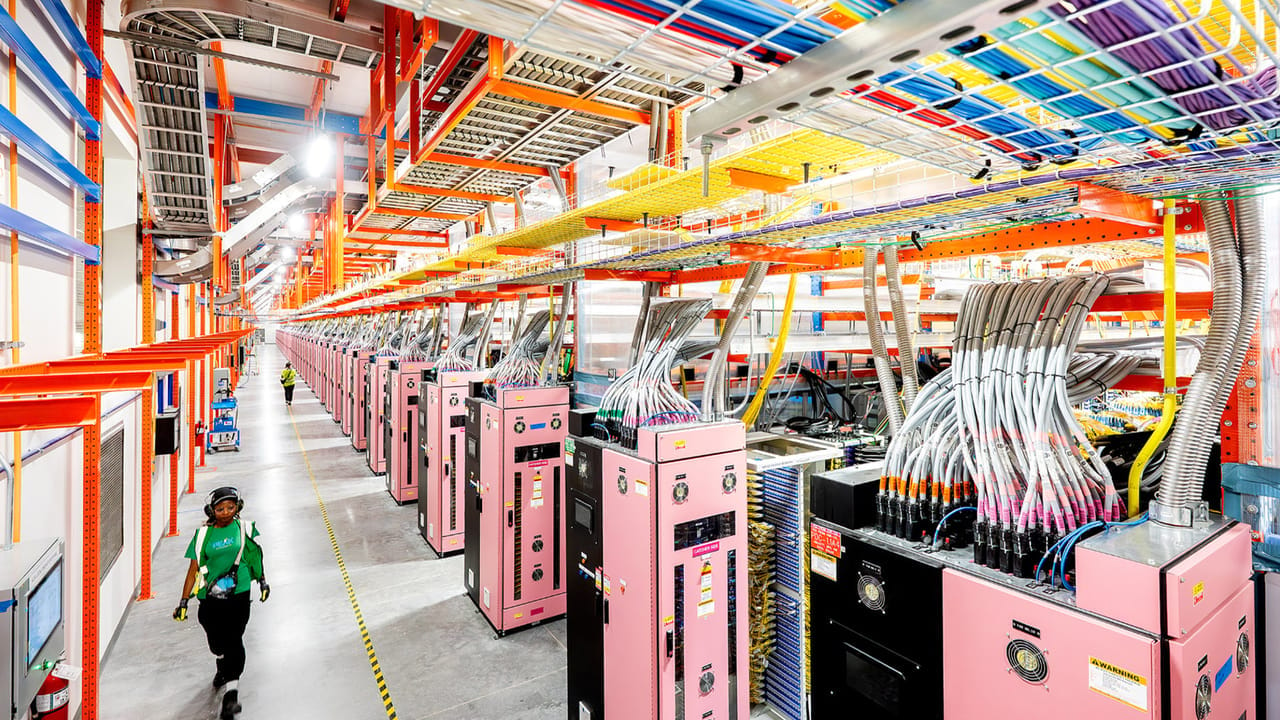
Goldman's "Tracking Trillions" report quantifies how narrow the margin is. The $7.6 trillion baseline through 2031 assumes NVIDIA maintains 75% compute share, chip economic lifespans of five years, power-usage effectiveness of 1.2, and data center construction costs of $15 million per megawatt. Shortening chip economic lifespan from five years to three — a plausible scenario given the pace of architecture transitions — increases annual depreciation costs by nearly $1 trillion. That single variable change reprices every company in the supply chain.
The capex chain's specific vulnerability: each layer is pricing in the growth of the layer above it. Utilities are merging to serve data centers. Data centers are leveraging up to serve hyperscalers. Hyperscalers are spending to serve AI model companies. AI model companies are pre-paying billions for compute to serve enterprise customers. But trace the revenue to its source. How much is real recurring demand versus buildout-phase commitments that may not renew at the same rates? Anthropic 80x'd its business — extraordinary. But the xAI contract is structured as if 80x is the new baseline, not the outlier it actually was.
The private markets angle. For secondary market participants, the data center capex chain has created a layered risk profile that may require position-level clarity.
Layer one — power and land — is being repriced as permanent infrastructure. The NextEra-Dominion deal values power delivery to data centers the way markets value toll roads: durable, regulated, essential. Some market observers have drawn parallels to the reclassification Blackstone applied when it IPO'd BXDC last week at a $1.75 billion raise — packaging data center assets as stabilized infrastructure priced on cap rates rather than growth multiples. Private companies in grid infrastructure, modular nuclear, and behind-the-meter power could face similar valuation dynamics.
Layer two — compute infrastructure — may carry the highest leverage risk. CoreWeave is the public example, but private GPU cloud companies face the same dynamic: massive upfront capital requirements, long payback periods, and customer concentration. If hyperscaler capex-to-revenue ratios start compressing — which is the eventual sign of a maturing cycle — the GPU-as-a-service layer could face pressure between falling prices upstream and slowing demand downstream.
Layer three — the software and data layer — is where the growth multiples live. Vast Data's $1 billion Series F at a $30 billion valuation — tripling from $9.1 billion in late 2023 — is priced on the assumption that AI workloads will generate sustained demand for its data infrastructure. Starcloud's $170 million Series A at a $1.1 billion valuation is priced on the assumption that terrestrial constraints will push compute into orbit. Both could be right. But both reflect valuations that appear to assume a demand curve that hasn't been fully validated at the revenue level yet.
The counterargument is that the skeptics have been wrong at every turn. Hyperscaler revenue is growing. Google Cloud surged in Q1 on AI-driven demand. Microsoft's Azure backlog continues to extend. Amazon's AWS is absorbing the $200 billion capex commitment without investor revolt. The data center construction delays could actually be read as evidence that demand is outstripping supply — which is the opposite of an overbuilding signal.
And Goldman's own observation cuts both ways: FOMO has proven a stronger incentive than poor stock performance. Hyperscalers are spending because they believe the cost of being wrong on the downside (missing the AI transition) is higher than the cost of being wrong on the upside (overspending on infrastructure that depreciates). That's a rational framework, not a bubble mentality — even if the spending numbers look irrational in isolation.
The honest answer is that nobody knows whether $725 billion a year in capex will look prescient or reckless in hindsight. What we do know is that the capital structure supporting it — $25 billion in CoreWeave debt, $40 billion in Anthropic compute commitments, $67 billion in utility mergers — has no historical parallel to benchmark against. The capex chain is building its own weather.
📈 Data Point of the Day
80x.
Anthropic planned for 2–3x growth. It got 80x. That single forecasting miss — in the right direction — forced the company into a $40 billion+ compute contract with a competitor's infrastructure and prompted its CEO to publicly acknowledge that being off on timing by even a year or two could be "ruinous." The number captures the central tension of the entire data center capex cycle: the demand is real, the question is whether anyone can forecast it accurately enough to size the infrastructure correctly.
🎓 Manual
Capex-to-Revenue Ratio
A company's capital expenditure divided by its revenue, expressed as a percentage. In mature industries, this ratio typically runs 5–15%. The hyperscalers are currently tracking 45–57% — levels historically associated with regulated utilities that have guaranteed returns. The difference: utilities have rate cases. Hyperscalers have forecasts. When this ratio starts compressing, it could indicate either that revenue is catching up to investment or that companies are pulling back on spending — two very different scenarios with different implications for the supply chain. It's a metric worth tracking as the cycle matures.
Augment Markets Inc. is a technology company offering software and data services. Brokerage services are offered through Augment Capital LLC, an affiliated broker-dealer and member FINRA/SIPC. Investment advisory services are offered through Augment Advisors LLC, an SEC-registered investment adviser.
Important Disclosures: This material has been prepared for informational purposes only. None of the information provided represents a recommendation, an offer or the solicitation of an offer to buy or sell any security. The information provided does not constitute investment, legal, tax, or accounting advice. You should consult with qualified professionals before making any investment decisions. Investing in private securities involves substantial risk, including the potential loss of principal. Private securities are typically illiquid, have limited pricing transparency, and often require longer holding periods. These investments are available exclusively to qualified accredited investors and offer no guarantee of returns. An IPO or other liquidity event is not guaranteed. Additionally, past performance of private securities does not indicate or predict future results. Share price data are estimates only, based on proprietary data from Caplight and Augment Markets Inc. and its affiliates.

Paul leads editorial at Augment, building Pulse into the private markets' go-to intelligence source. He also develops editorial content strategies for startups and venture capital firms. Previously, he spent 15 years as a business and opinion journalist at The New York Times, Fortune, Fast Company, Reuters, and more. He believes transparency creates liquidity—and that someone should actually publish what private shares are trading for. He lives in Marin with his wife and two rescue dogs, and wishes he had more time to surf.
Learn more