




Anthropic announced its revenue run rate has crossed $30 billion — up from roughly $9 billion at year-end 2025, a 3x gain in about 90 days. The announcement landed on the same day The New Yorker published an 18-month investigation into Sam Altman's character, sourced from 100+ insiders and 200+ pages of internal documents, including Dario Amodei's private notes calling Altman's words "almost certainly bullshit." The juxtaposition is not accidental: Anthropic is the company Dario founded after leaving OpenAI. Meanwhile, OpenAI's CFO — who just closed the largest private round in history — now reports to the head of applications instead of the CEO.
The New Yorker Just Made OpenAI's IPO Story More Complicated
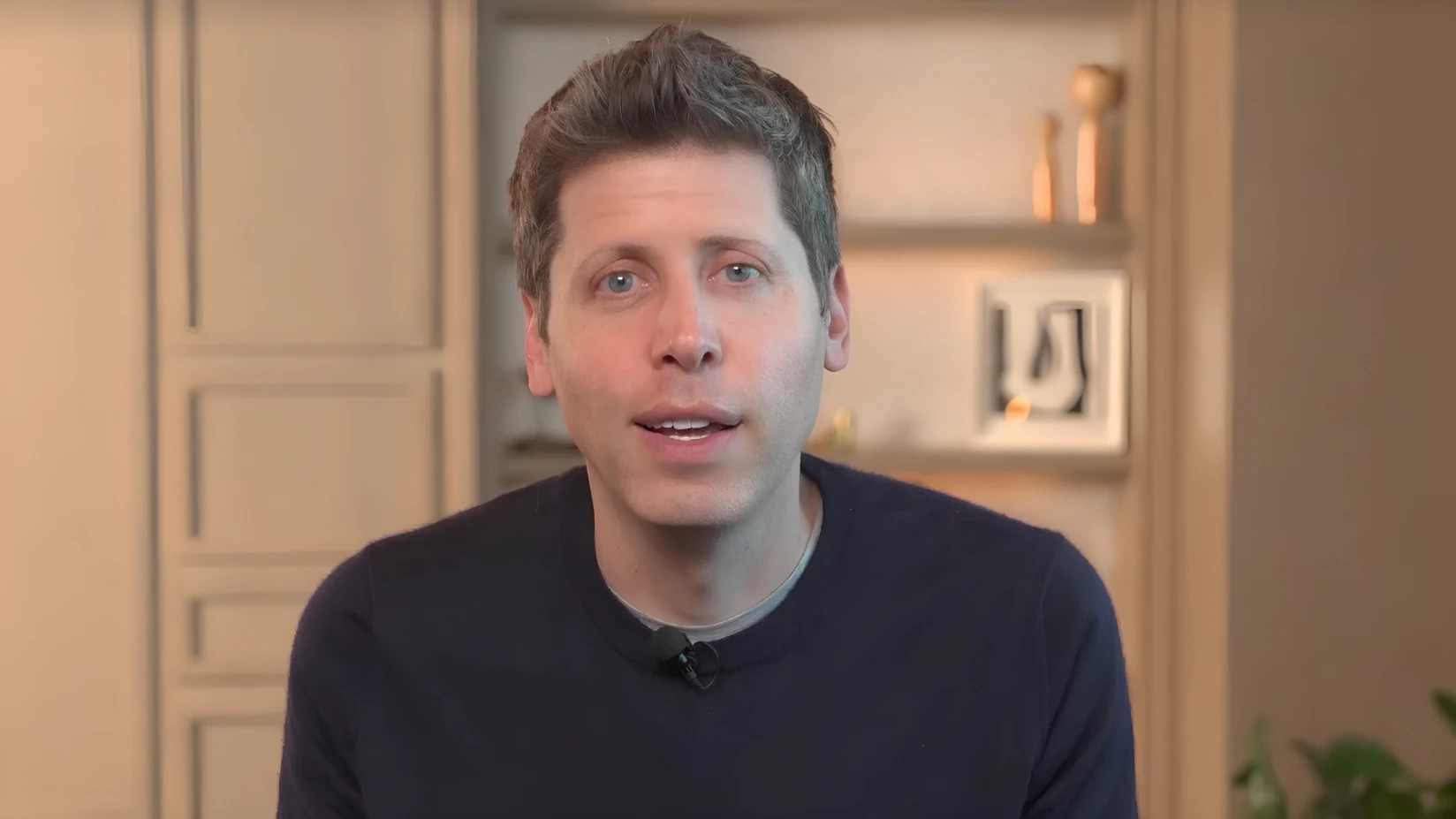
Ronan Farrow and Andrew Marantz spent 18 months reporting on Sam Altman and OpenAI. Their investigation — published Monday in The New Yorker — draws on more than 100 interviews and 200+ pages of previously undisclosed internal documents. The picture they paint is of a leader with what internal memos describe as "a consistent pattern of" behavior, starting with "Lying."
The most significant documents: a 70-page report compiled by Ilya Sutskever in 2023, built from Slack messages and HR records — some photographed on a cellphone to avoid detection on company devices. And years of private notes kept by Dario Amodei before he left to found Anthropic, in which he writes that Altman's "words were almost certainly bullshit." More than 200 pages of related documents have reportedly circulated in Silicon Valley without public disclosure until now.
The piece lands at a structurally inconvenient moment. OpenAI is reportedly targeting a 2026 IPO. Its CFO, Sarah Friar — who just closed a $122 billion funding round, the largest in private market history — is now reporting to the head of applications rather than to Altman directly, according to The Information. She reportedly raised concerns about spending levels and whether OpenAI's revenue growth, which has been slowing, would support the company's massive compute commitments. She was subsequently excluded from some meetings by Altman, per reporting.
For private market observers: OpenAI closed its primary round at $852 billion. Governance questions at the world's most valuable private company don't reset that number overnight — but they introduce noise into a narrative that needs to be clean to price an IPO at or above that level. The CFO marginalization story is arguably more consequential than the character piece: it suggests internal disagreement about the financial trajectory at exactly the moment public investors would be doing their diligence.
One counterpoint that matters: when Altman was fired by the board in 2023, the effective trigger for his return was a mass staff revolt — nearly the entire OpenAI team threatened to leave and demanded reinstatement. The team's revealed preference for his leadership is evidence that doesn't fit neatly into the character narrative, even if the memos are damning on their face.
Sources: New Yorker / Ronan Farrow | The Information | Semafor
Anthropic Just Tripled Its Revenue. In 90 Days.

On the same day the New Yorker piece dropped, Anthropic published its own news: its annual revenue run rate has crossed $30 billion, up from approximately $9 billion at year-end 2025. That's a 3x+ gain in roughly one quarter.
The supporting metrics are concrete. More than 1,000 business customers are now spending over $1 million annually — a figure that has more than doubled since February alone. Paired with this: a major compute deal with Google and Broadcom, covering approximately 3.5 gigawatts of TPU capacity expected to come online in 2027. The deal is part of a broader $50 billion commitment Anthropic made to direct U.S. AI computing capacity — and positions the company to absorb sustained workload growth without being dependent on a single infrastructure provider.
For private markets, this is the number that changes the secondary market math. We noted last week that $2 billion in buy-side demand was chasing Anthropic shares with no sellers available, at implied valuations around $600 billion against a $380 billion primary round. A $30 billion revenue run rate — if it sustains — suggests the $380 billion primary valuation was set against fundamentals that are now materially different. The more interesting question is whether sellers will emerge at $600 billion implied, or whether the demand-supply imbalance persists as revenue growth outpaces the market's ability to reprice.
The timing of the announcement alongside the New Yorker piece is hard to read as unintentional. Anthropic was co-founded by Dario Amodei and others who left OpenAI. On April 6, 2026, the company that Altman built crossed $852 billion in private market valuation while its CEO's character became a public debate — and the company Dario built announced it crossed $30 billion in revenue. Secondary markets had already picked a side last week. This week handed them a reason to hold it.
Sources: Bloomberg | Anthropic | CNBC
Quick Takes

Firmus raises $505M at $5.5B valuation — Coatue led the round for the Australian AI infrastructure startup, which has now raised $1.35 billion in six months. AI infrastructure funding is running as hot as the models it supports.
OpenAI unveils superintelligence-era policy agenda — Higher capital gains taxes, a public AI investment fund, expanded social safety nets. Worth noting: the policy paper dropped hours after the New Yorker investigation published. The framing — OpenAI as a responsible steward of transformative technology — lands differently in that context.
Kalshi wins federal appeals ruling on sports contracts — A federal appeals court ruled New Jersey cannot block Kalshi users from sports-related event contracts; CFTC has exclusive jurisdiction. Prediction market platforms are consolidating regulatory footing faster than most observers expected.
AI coding tools are creating a security review crisis — Workers using AI coding assistants are generating code volumes that security teams can't keep pace with. For private market investors in enterprise software: the next wave of cybersecurity spend may be downstream of the AI coding tool wave.
🎓 Manual
Revenue Run Rate
Run-rate revenue is an annualized extrapolation of recent performance — if a company generates $2.5 billion in a month, its run rate is $30 billion ($2.5B × 12). It's a useful shorthand for fast-growing companies where trailing annual figures are stale almost as soon as they're published. The limitation: run rate assumes current momentum holds, which is a significant assumption in markets where pricing, competition, and customer concentration can shift quickly. Anthropic's $30 billion run rate is a striking headline; how much of that is concentrated in a small number of enterprise contracts — and how durable those are — is the question a public market investor would press on first.
👀 What We’re Watching
- OpenAI's IPO narrative and internal coherence. The combination of the New Yorker investigation and the CFO reporting-structure change creates real noise around the company's governance story at the moment it most needs a clean narrative. Neither development changes the underlying economics — $2 billion in monthly revenue is real — but both are the kind of disclosures that complicate roadshow messaging. Watch for OpenAI's response to see whether it addresses the CFO situation directly or lets the silence speak.
- Anthropic's secondary demand curve. With $30B revenue run rate now public, the $380B primary valuation looks increasingly stale. Secondary pricing had already moved to imply ~$600B. The question is whether sellers appear at that level or whether Anthropic's shareholder base — heavy on long-horizon institutional holders — simply refuses to supply. Scarcity of float is its own valuation input.
- The AI infrastructure buildout and its single-customer dependencies. Firmus ($505M), Anthropic's Google/Broadcom deal, CoreWeave's $8.5B debt facility — AI infrastructure is being built at historic scale. The structural risk across all of it: hyperscaler demand concentration. If Meta, Google, or Amazon pull back their external compute spend, the cascade hits private AI infrastructure companies before it shows up anywhere in public markets.
Augment Markets Inc. is a technology company offering software and data services. Brokerage services are offered through Augment Capital LLC, an affiliated broker-dealer and member FINRA/SIPC. Investment advisory services are offered through Augment Advisors LLC, an SEC-registered investment adviser.
Important Disclosures: This material has been prepared for informational purposes only. None of the information provided represents a recommendation, an offer or the solicitation of an offer to buy or sell any security. The information provided does not constitute investment, legal, tax, or accounting advice. You should consult with qualified professionals before making any investment decisions. Investing in private securities involves substantial risk, including the potential loss of principal. Private securities are typically illiquid, have limited pricing transparency, and often require longer holding periods. These investments are available exclusively to qualified accredited investors and offer no guarantee of returns. An IPO or other liquidity event is not guaranteed. Additionally, past performance of private securities does not indicate or predict future results. Share price data are estimates only, based on proprietary data from Caplight and Augment Markets Inc. and its affiliates.

Paul leads editorial at Augment, building Pulse into the private markets' go-to intelligence source. He also develops editorial content strategies for startups and venture capital firms. Previously, he spent 15 years as a business and opinion journalist at The New York Times, Fortune, Fast Company, Reuters, and more. He believes transparency creates liquidity—and that someone should actually publish what private shares are trading for. He lives in Marin with his wife and two rescue dogs, and wishes he had more time to surf.
Learn more