




The hyperscalers reported the largest combined capex quarter on record this week, and the public markets split sharply on whether it's worth it: Alphabet closed its best month since 2004, Meta its worst day since October. OpenAI announced it has hit its 2029 compute target three years early. KKR quietly stood up a $10B+ AI-infrastructure operating company. The build-out is going faster than projected.
The Big Story: AI infrastructure crossed the line from line item to asset class
The four hyperscalers spent close to $130 billion on capex in Q1 alone, and Wednesday's earnings updates raised the 2026 forecast across the group. Meta's full-year guidance moved to a range of $125 billion to $145 billion (Yahoo Finance). Alphabet pushed its number to as much as $190 billion (CNBC). Microsoft now expects to spend roughly $190 billion this year. Amazon held at $200 billion. Add it up and the four are tracking toward something in the neighborhood of $725 billion in 2026 — up around 77% from last year's $410 billion.
The market's verdict came in two flavors. Alphabet wrapped April up 34%, its best month since 2004, on the read that Google Cloud's revenue ramp is finally catching up to the spend (CNBC). Meta dropped 8.5% Thursday — its worst session since October — on the read that the spend is outrunning the revenue.
The demand side validated the spend in real time. OpenAI said this week it has now signed contracts for 10 gigawatts of U.S. AI compute capacity, with more than 3 gigawatts added in the last 90 days — a milestone the company had originally aimed to hit by 2029 (Bloomberg). Pulled forward by three years, and the company isn't even public yet.
Two responses landed the same week. KKR completed a $10B+ raise for Helix Digital Infrastructure, a new platform led by former AWS CEO Adam Selipsky that will design, build, own and operate AI infrastructure in partnership with hyperscalers (Bloomberg). Anchor commitments came from a sovereign wealth fund and two strategic partners. The mandate covers data centers, power generation and transmission, and connectivity. And Meta priced $25 billion of investment-grade bonds against an order book of roughly $96 billion — its second multi-billion bond issuance in seven months, after $30 billion in October (Bloomberg). Risk premiums priced higher than the October round, but the order book held up. The bond market is funding the capex; equity holders are the ones asking the questions.
What's new is the structure on the private side. Helix isn't a fund; it's an operating company with permanent capital. KKR's framing is that the AI build-out is large enough, and lasts long enough, that institutional money can earn an infrastructure return on the gear underneath the models without taking model risk. If that read holds, Helix may be a template rather than a one-off. If it doesn't, the same divergence that hit Meta's stock on Thursday could show up on the private side a year or two later.
Sequoia just funded a $500M AI lab from scratch
Sequoia and Spark Capital led a $75 million round in Standard Intelligence, a new AI lab building general-purpose models trained directly on pixel-level computer use rather than on tokenized text (Sequoia). The Information first reported the round at a roughly $500 million post-money valuation. Standard Intelligence's pitch — that an agent which sees a screen the way a human does will scale further than one that consumes parsed text — places it directly in the path of the computer-use models OpenAI and Anthropic shipped over the past year.
The relevant signal isn't the technical thesis. It's the price. A first institutional check at half a billion post-money, for a model lab that hasn't shipped a product, is now a category — not an outlier. Mira Murati's Thinking Machines reportedly raised at $12B before it had a website. David Silver's Ineffable Intelligence cleared a $5.1B mark earlier this week with Sequoia and Nvidia in the round (Bloomberg).
Three implications worth tracking. First, the Big Five labs (OpenAI, Anthropic, Google DeepMind, xAI, Meta FAIR) are no longer the only buyers of seed-stage AI talent — a $500M post on day one is now a recruiting tool. Second, the secondary market for the next cohort may start to resemble late-stage venture more than growth, because the entry valuations are leaving very little distance to the eventual top-of-stack mark. Third, Sequoia is now writing both the formation check and the late-stage growth check (its $7B AI Expansion fund closed earlier this month) — a vertical-integration move that mirrors what KKR is doing on the infra side (TechCrunch).
The prediction-market reckoning continues
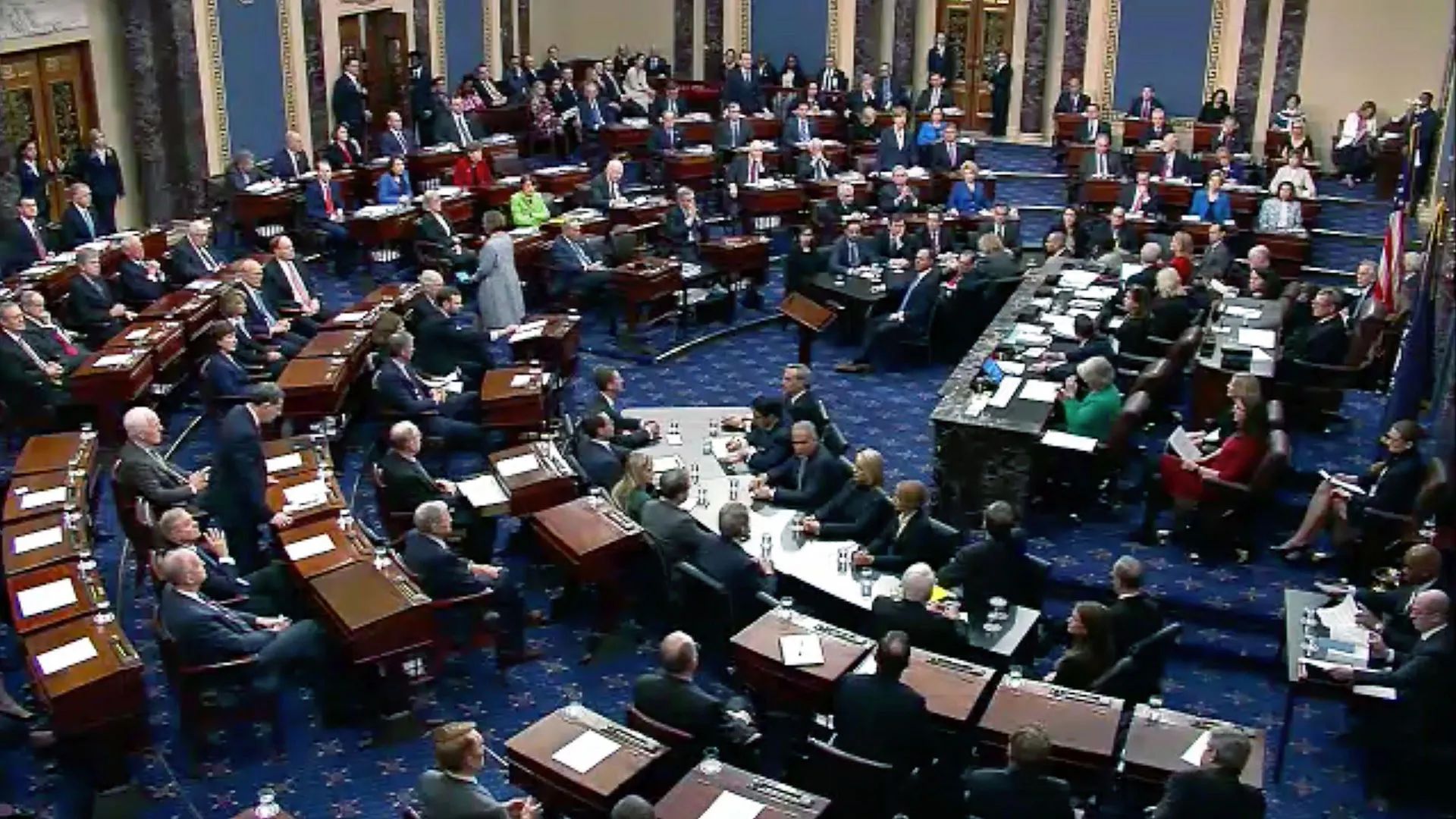
The U.S. Senate unanimously passed a rule on Thursday barring senators and staff from trading on prediction markets, naming Kalshi and Polymarket specifically (CNBC). The vote came after a string of insider-trading episodes — including criminal charges against an Army Special Forces master sergeant who allegedly used classified intelligence to bet on a U.S. military operation in Venezuela, a Kalshi enforcement action against three congressional candidates trading on their own races, and an AP investigation into well-timed bets on a U.S.–Iran ceasefire.
The same day, Polymarket announced a partnership with Chainalysis to deploy a detection model that surfaces trading patterns "consistent with insider knowledge," along with investigative support and evidence-collection systems for law enforcement (CoinDesk). Both companies publicly endorsed the Senate rule. They had to: a self-policing posture is the only path to a federal regulatory framework that survives the next administration, and a federal framework is the only path to the institutional flow that secondary investors are pricing into both cap tables. Polymarket's most recent secondary-implied valuation — and Kalshi's most recent primary — both assumed event-contract volume keeps compounding without a federal-level intervention. The intervention has now arrived in mild form. The question is whether Thursday's rule is the floor of congressional action or the ceiling.
⚡Power 20 Watch: The discipline question runs downhill
This week tested a thesis that's been building since January: that public-market AI exposure was being priced as a single trade, and that any meaningful crack in the trade would force private investors to mark down the whole stack. Thursday's tape said something more interesting. The market disciplined Meta and rewarded Alphabet — different reads on the same capex reality. The discipline is differentiating, not collapsing.
That changes the read on the Power 20. OpenAI spent the week absorbing the Microsoft deal restructure (covered Tuesday and Thursday) — a move that, on paper, clears the path to a public listing — while separately announcing that it has now signed for 10 gigawatts of compute, three years ahead of its 2029 target. CFO Sarah Friar has told insiders the company isn't ready for a Q4 2026 IPO (Morningstar); the two facts together push the implied IPO window from late 2026 toward mid-to-late 2027, on current reporting. SpaceX's confidential S-1 from April 1 is still in SEC review; the public version is expected this month, with a roadshow targeting June (Motley Fool; we covered Reuters’ sneak peak of the filing here). Anthropic is in a sharper bind than at the start of the week: the WSJ reported Thursday that the White House is opposing Anthropic's plan to extend Mythos access to roughly 70 additional companies and organizations, citing both security concerns and worry that broader access would degrade compute available to the NSA, which is currently using the model to find vulnerabilities in Microsoft and other widely-used software (Bloomberg). The federal posture has now moved from blacklist-and-rehabilitate to the government effectively rationing who else can access the company's most valuable model. Databricks and Stripe were quiet. Anduril continued shipping product but didn't price.
The structural read: the divergence that played out in public markets this week may surface on the secondary tape over the next two quarters. The shape to watch is whether the secondary market begins to differentiate between names whose unit economics are independent of compute cost and names whose growth has tracked their infrastructure spend.
💨 Quick Takes

- Netomi raises $110M Series C led by Accenture Ventures — Adobe Ventures and WndrCo joined the round in the AI customer-service platform, alongside a global alliance that puts Netomi in front of Accenture's Fortune 100 client base. Existing customers include United, Delta, Paramount, and DraftKings — a real-revenue read on agentic AI in enterprise.
- 1X opens its Hayward humanoid robot factory — The Norwegian robotics company opened a 58,000-square-foot vertically integrated factory in California Thursday, targeting 10,000 NEO units this year and 100,000 by 2027. The first 10,000 in pre-orders cleared in five days.
- MARA Holdings to acquire Long Ridge Energy for $1.5B — The bitcoin miner is buying a 505-megawatt Ohio gas plant and 1,600 acres from FTAI Infrastructure to anchor an AI data center campus. The deal raises MARA's owned power capacity by 65% and is expected to close in the back half of the year.
- JuliaHub raises $65M Series B — Dorilton Capital led the round in the agentic-engineering platform alongside General Catalyst and former Snowflake CEO Bob Muglia. The product is positioned as a Simulink replacement for industrial systems design, with Fortune 100 customers in aerospace, automotive, and HVAC.
- Featherless.ai raises $20M Series A — AMD Ventures and Airbus Ventures co-led the round in the serverless inference platform, which now hosts more than 30,000 open models. The round is one of the cleanest reads available on demand for non-frontier model serving.
📈 Data Point of the Day
$725 billion
The approximate combined 2026 capex now guided to by Meta, Alphabet, Microsoft, and Amazon (Fortune). That's up roughly 77% from a combined $410B in 2025. For context, $725B is larger than the GDP of every country outside the top 20, and roughly seven times the entire U.S. venture capital deployment in 2025. Most of it lands in three buckets: GPUs, power, and the buildings that house both.
🎓 Manual
Anchor LP
A foundational investor in a new fund or capital vehicle who commits a large check — often in exchange for governance rights, fee discounts, or co-investment access — before other limited partners come in. Anchor commitments are how vehicles like KKR's Helix Digital Infrastructure get off the ground: a sovereign wealth fund and two strategic partners reportedly anchored the $10B raise, which then made the rest of the capital easier to attract.
👀 What We're Watching
- Q2 hyperscaler capex discipline. Thursday's earnings showed the market is now willing to differentiate between names whose AI spend is generating revenue and names whose AI spend is generating questions. Q2 numbers, reported in late July, are the first real test of whether that discipline holds when the sequential capex bills come due.
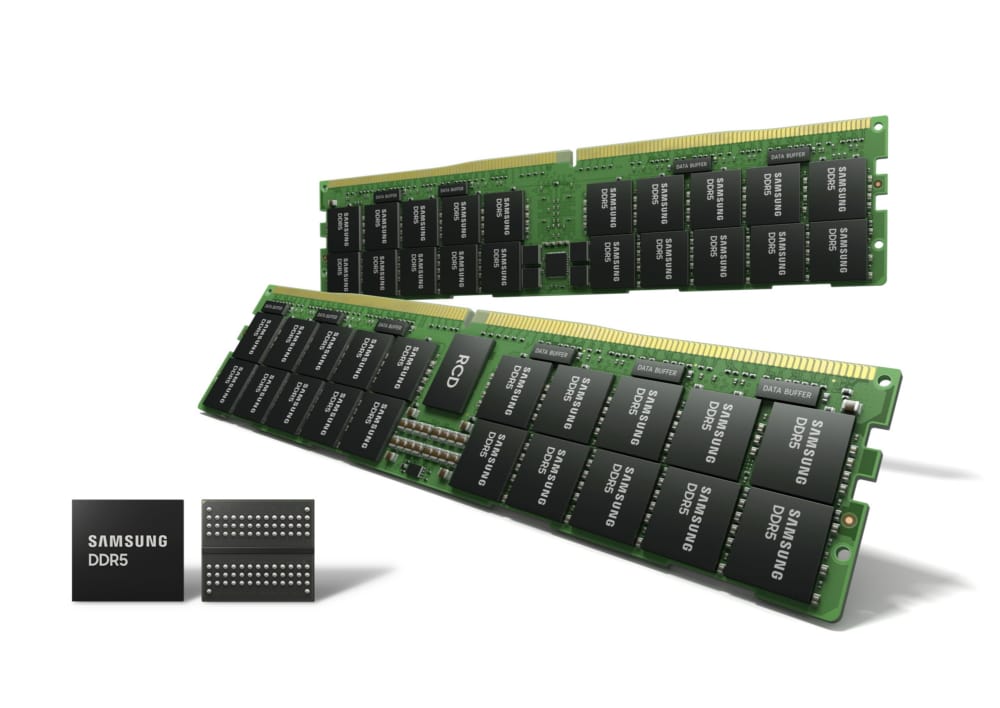
- The memory supply ceiling. Samsung warned this week that the DRAM shortage may worsen into 2027 as customers place 2027 orders a year out, and Sandisk's Q3 revenue was up 251% on price, not shipments (Nikkei Asia). If the supply side breaks before the demand side, the capex math changes — fewer chips per dollar, slower deployment, longer secondary holding periods for the names doing the deploying.
- The sub-billion AI lab cohort. Standard Intelligence is the third $500M+ post-seed AI lab in three weeks. We're watching whether May produces a fourth — and whether the underwriting is starting to stratify between teams pursuing distinct technical theses (computer-use, embodied, multi-agent) or whether Sequoia, Spark, Nvidia, and Google are simply funding the same thesis under different names.
- The CFTC's response to the Senate prediction-markets vote. The Senate rule covers Senate behavior. The harder question — whether event contracts on elections, war, and individual-name news are securities, commodities, or something else — sits with the CFTC. A framework released in the next 60 days could change the secondary calculus for both Kalshi and Polymarket; further delay would leave both companies pricing in a regulatory option they may not be able to exercise.
Augment Markets Inc. is a technology company offering software and data services. Brokerage services are offered through Augment Capital LLC, an affiliated broker-dealer and member FINRA/SIPC. Investment advisory services are offered through Augment Advisors LLC, an SEC-registered investment adviser.
Important Disclosures: This material has been prepared for informational purposes only. None of the information provided represents a recommendation, an offer or the solicitation of an offer to buy or sell any security. The information provided does not constitute investment, legal, tax, or accounting advice. You should consult with qualified professionals before making any investment decisions. Investing in private securities involves substantial risk, including the potential loss of principal. Private securities are typically illiquid, have limited pricing transparency, and often require longer holding periods. These investments are available exclusively to qualified accredited investors and offer no guarantee of returns. An IPO or other liquidity event is not guaranteed. Additionally, past performance of private securities does not indicate or predict future results. Share price data are estimates only, based on proprietary data from Caplight and Augment Markets Inc. and its affiliates.

Paul leads editorial at Augment, building Pulse into the private markets' go-to intelligence source. He also develops editorial content strategies for startups and venture capital firms. Previously, he spent 15 years as a business and opinion journalist at The New York Times, Fortune, Fast Company, Reuters, and more. He believes transparency creates liquidity—and that someone should actually publish what private shares are trading for. He lives in Marin with his wife and two rescue dogs, and wishes he had more time to surf.
Learn more