




OpenAI dropped low hundreds of millions on TBPN, the buzzy tech talk show — its first media acquisition, and one that raises more questions than it answers about editorial independence. Meanwhile, secondary markets are flashing a surprising signal: $600 million in OpenAI shares sitting unsold while buyers line up $2 billion deep for Anthropic. And Q1 2026 just closed as the biggest venture quarter ever recorded — $300 billion, with foundational AI alone doubling all of 2025 in three months. The capital concentration in this market has no precedent.
OpenAI Buys TBPN — and Enters the Media Business
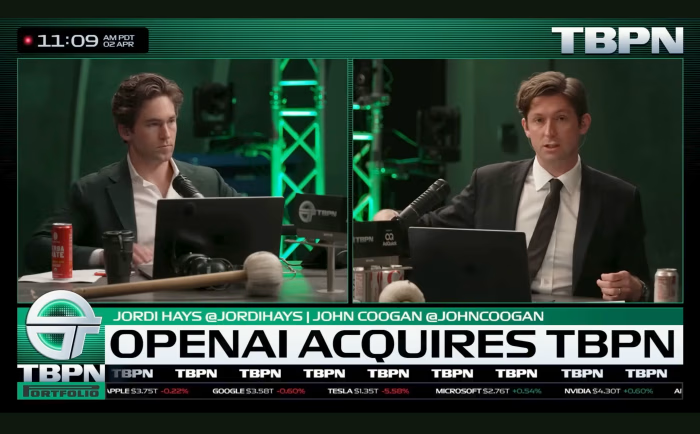
OpenAI acquired TBPN on Wednesday — the Technology Business Programming Network, a daily three-hour live tech talk show hosted by former founders John Coogan and Jordi Hays. The Financial Times reported the price at "low hundreds of millions." It's OpenAI's first acquisition of a media property.
The show, which airs daily on YouTube and X in a format closer to ESPN's SportsCenter than traditional tech journalism, is on track for over $30 million in annual revenue. That number is meaningless against OpenAI's scale — reportedly targeting $280 billion in revenue by 2030. Which raises the obvious question: why buy it?
The structural answer is in the org chart. TBPN will sit inside OpenAI's strategy organization, reporting to Chris Lehane — the company's chief political operative, architect of the crypto super PAC Fairshake, and the man who coined "vast right-wing conspiracy" as a press-deflection tool during the Clinton White House. OpenAI's Fidji Simo said the show will maintain editorial independence and continue to "run their programming, choose their guests, and make their own editorial decisions," calling that "foundational to their credibility."
The skeptics aren't buying it. As media analyst Peter Kafka noted, TBPN doesn't break news — it amplifies messages from tech executives to tech audiences. "OpenAI bought TBPN because they like the idea of owning a talk show that's consistently upbeat about the tech business in general and AI specifically." TBPN's advertising business will reportedly wind down under the new structure, removing the one source of revenue independence the show had.
Place an editorially friendly media property inside a policy shop, remove its ad revenue, and promise editorial independence. The architectural tension there is obvious. For a company simultaneously suing newspapers and licensing deals with publishers, the TBPN acquisition suggests OpenAI's media strategy isn't about content production — it's about narrative infrastructure.
The Great AI Secondary Rotation: OpenAI Out, Anthropic In

Something unusual is happening on secondary trading platforms — and it may say more about AI investor sentiment than any primary round could.
According to Bloomberg, approximately $600 million in OpenAI shares are sitting unsold on secondary markets, with institutional holders — hedge funds, VC firms — struggling to find buyers. Next Round Capital founder Ken Smythe told Bloomberg that a half-dozen institutional investors approached him in recent weeks looking to sell. "Last year, they would have been snatched up within days," he said. "Now, no one's biting."
This comes just days after OpenAI closed a record $122 billion primary round at an $852 billion valuation.
The buyer-side capital hasn't disappeared. It's migrated. Secondary platforms are reportedly seeing $2 billion in buy-side demand for Anthropic shares, which last priced at a $380 billion valuation after February's $30 billion raise. The logic appears to be a valuation-gap trade: at roughly 45% of OpenAI's reported valuation, Anthropic's pricing may look more attractive to buyers weighing relative entry points.
This is a meaningful signal for how secondary markets function as a price-discovery mechanism. Primary rounds set headline valuations; secondary trading reveals whether the market agrees. Right now, secondary activity suggests meaningfully different levels of buyer appetite at these two price points — a divergence worth watching as both companies reportedly move toward public listings.
Augment co-founder Adam Crawley was quoted in the article:
The large gap between OpenAI’s $852 billion valuation and Anthropic’s $380 billion has investors rushing to grab equity in the latter before it rises, according to Augment co-founder Adam Crawley.
“It’s just better risk-reward right now,” he said. “People are betting that Anthropic’s valuation will catch up with OpenAI’s. But if you buy OpenAI shares, it’s less clear what the return will be in the near term.”
$300 Billion in 90 Days: The Quarter That Broke Venture Capital
Q1 2026 didn't just set a record. It obliterated the concept of one.
Crunchbase data shows investors deployed approximately $300 billion into 6,000 startups globally in Q1 — up over 150% year-over-year and representing nearly 70% of all venture capital invested in the entirety of 2025. AI captured 81% of that capital, or roughly $242 billion.
But here's where the structural story gets sharper: foundational AI startups alone raised $178 billion across just 24 deals — double the $88.9 billion that went to foundational AI across 66 deals in all of 2025. The round sizes are getting dramatically larger while the number of recipients shrinks. Four mega-rounds — OpenAI ($122B), Anthropic ($30B), xAI ($20B), and Waymo ($16B) — accounted for $188 billion, or 65% of the entire quarter.
The stage breakdown tells its own story. Late-stage funding hit $246.6 billion (up 205% year-over-year) across 584 deals. Early-stage rose a more modest 41% to $41.3 billion. Seed funding grew 31% in dollar terms, but deal count actually fell 30%. Capital is flowing upward and concentrating.
U.S.-based companies captured $250 billion, or 83% of total global venture, up from 71% in Q1 2025. The geographic concentration mirrors the company-level concentration: a smaller number of American AI firms are absorbing an ever-larger share of global risk capital. For LPs, GPs, and secondary market participants, the structural question isn't whether this is sustainable. It's what happens to portfolio construction when a single quarter reshapes an entire asset class.
Power 20 Watch: The IPO Queue Is Getting Real

Two months ago, the 2026 IPO pipeline was mostly conjecture and banker wish lists. This week, it became a filing calendar.
SpaceX's confidential S-1, reported by Bloomberg on Tuesday, leads the queue with a reported valuation target above $2 trillion according to their sources— a figure that would make it the most valuable company to ever enter public markets. (We walked through a simulated S-1 for SpaceX yesterday.)
X-Energy, the advanced nuclear reactor developer, filed its S-1 on March 20targeting a $300 million Nasdaq listing. And Databricks, valued at $134 billion after December's $4 billion equity round, remains a candidate after CEO Ali Ghodsi told CNBC he wouldn't rule out a 2026 listing.
Behind them: Stripe (employee liquidity pressure building after 15 years private), Canva (Blackbird told LPs second half of 2026), and the twin AI giants — OpenAI and Anthropic — both reportedly eyeing Q4.
The structural question for secondary holders: does this pipeline create a rising tide, or does it create a capital-absorption problem? Public market investors have finite allocation budgets. If SpaceX were to price near its reported target and raise in the range Bloomberg has cited, that could represent a significant draw on institutional capital ahead of subsequent offerings. The sequencing of this queue may matter as much as the companies in it.
Quick Takes
Rebellions raises $400M pre-IPO at $2.3B — The Samsung-backed South Korean AI chip startup closed a pre-IPO round led by Mirae Asset and Korea's National Growth Fund. Rebellions designs inference-optimized chips — the compute layer that matters most as AI shifts from training to deployment. Late-2026 IPO reportedly planned.
9fin hits unicorn status with $170M Series C at $1.3B — The AI-native debt markets platform, founded by a former J.P. Morgan banker, has delivered consecutive years of 100% ARR growth. CPP Investments joined the round as both client and investor — the kind of signal that's hard to manufacture.
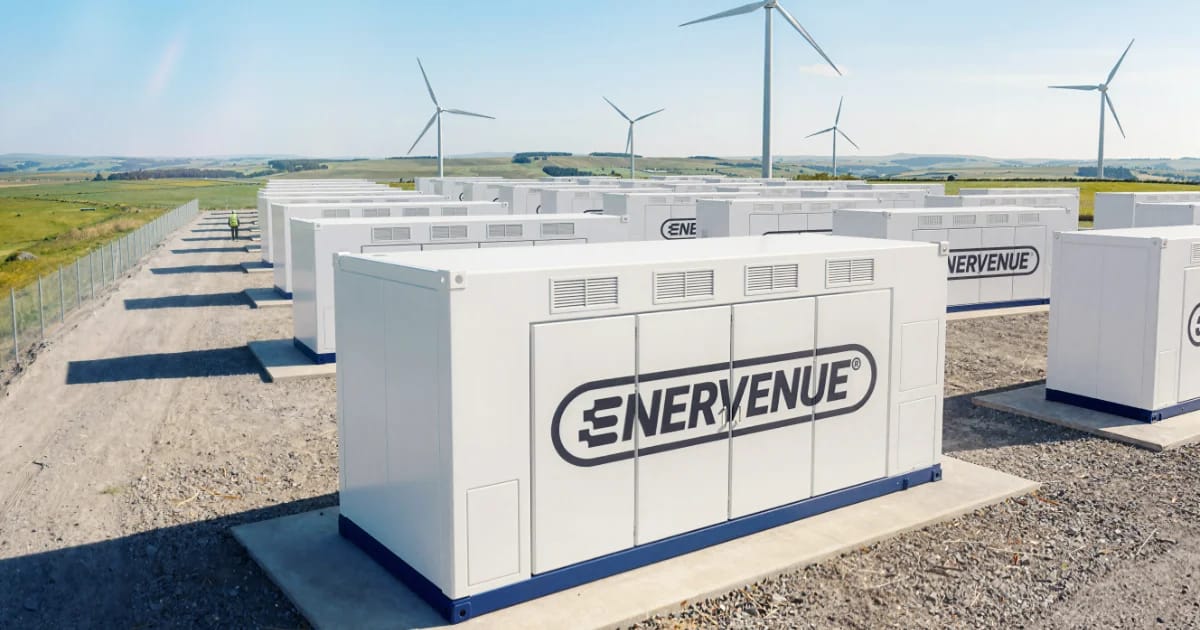
EnerVenue closes $300M for NASA-derived grid batteries — A non-AI mega-round worth noting. EnerVenue is commercializing nickel-hydrogen battery tech originally developed for space applications — cells that reportedly endure tens of thousands of charge cycles versus lithium-ion's few thousand. Led by Full Vision Capital, the Hong Kong-based family office of billionaire Peter Lee Ka-kit.
Klarna touches $12.18 all-time low, down 74% from IPO — The cautionary tale of the cycle. Klarna priced its September 2025 IPO at $40, briefly touched $57, and closed this week near $13. For private market investors watching the IPO queue form: the listing is not the exit. The price six months later is.
📈 Data Point of the Day
Secondary Market Discount
When shares of a private company trade on secondary markets at a price below the company's most recent primary fundraising valuation, the difference is called a secondary market discount. Discounts of 10–30% are common and reflect the illiquidity premium buyers demand for shares that can't be freely traded. However, high-demand names — like Anthropic this week — may trade at par or even at a premium to the last round, which could suggest secondary buyers expect the next primary round to price higher.
🎓 Manual
Secondary Market Discount
When shares of a private company trade on secondary markets at a price below the company's most recent primary fundraising valuation, the difference is called a secondary market discount. Discounts of 10–30% are common and reflect the illiquidity premium buyers demand for shares that can't be freely traded. However, high-demand names — like Anthropic this week — may trade at par or even at a premium to the last round, which could suggest secondary buyers expect the next primary round to price higher.
👀 What We’re Watching
- TBPN's first month under OpenAI. The editorial independence pledge is on the line: will the show cover OpenAI's ongoing litigation with the New York Times, its competitive dynamics with Anthropic and Google, and employee departures with the same candor it showed before the acquisition? The first few weeks will set the tone.
- Anthropic's secondary premium. With $2 billion in reported buy-side demand and a $380 billion last-round valuation, the question is whether Anthropic shares begin trading at or above that mark on secondary platforms — which could imply buyers are pricing in a valuation north of $400 billion before any formal filing.
- SpaceX roadshow timing. Bloomberg reports investor meetings are scheduled "in the coming weeks." The cadence between filing and pricing could reveal demand levels — and whether the $2 trillion target holds, moves higher, or gets walked back.
- Q2 capital deployment pace. Q1's $300 billion was historically anomalous. Whether Q2 sustains that pace or mean-reverts will help clarify if AI funding has reached a new structural plateau or if Q1 was a one-quarter sugar rush driven by a few mega-rounds.
Augment Markets Inc. is a technology company offering software and data services. Brokerage services are offered through Augment Capital LLC, an affiliated broker-dealer and member FINRA/SIPC. Investment advisory services are offered through Augment Advisors LLC, an SEC-registered investment adviser.
Important Disclosures: This material has been prepared for informational purposes only. None of the information provided represents a recommendation, an offer or the solicitation of an offer to buy or sell any security. The information provided does not constitute investment, legal, tax, or accounting advice. You should consult with qualified professionals before making any investment decisions. Investing in private securities involves substantial risk, including the potential loss of principal. Private securities are typically illiquid, have limited pricing transparency, and often require longer holding periods. These investments are available exclusively to qualified accredited investors and offer no guarantee of returns. An IPO or other liquidity event is not guaranteed. Additionally, past performance of private securities does not indicate or predict future results. Share price data are estimates only, based on proprietary data from Caplight and Augment Markets Inc. and its affiliates.

Paul leads editorial at Augment, building Pulse into the private markets' go-to intelligence source. He also develops editorial content strategies for startups and venture capital firms. Previously, he spent 15 years as a business and opinion journalist at The New York Times, Fortune, Fast Company, Reuters, and more. He believes transparency creates liquidity—and that someone should actually publish what private shares are trading for. He lives in Marin with his wife and two rescue dogs, and wishes he had more time to surf.
Learn more