


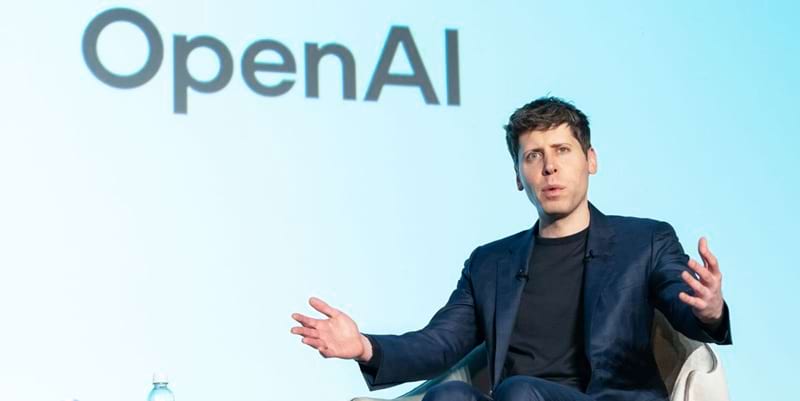

The Big Story: OpenAI Buys Astral — and the Coding War Gets Personal
OpenAI announced this morning it will acquire Astral, the startup behind three of the Python ecosystem's most widely adopted open source tools: uv (dependency management), Ruff (linting and formatting), and ty (type checking). The deal hasn't closed yet and terms weren't disclosed, but the strategic intent is clear: Astral's team is joining OpenAI's Codex group.
Codex, OpenAI's AI coding platform, has more than 2 million weekly active users and has seen both user growth and usage triple since January. The Astral acquisition is designed to push it beyond code generation into something closer to a full development environment — an agent that can plan changes, modify codebases, run tests, and maintain software over time.
The acquisition fits a broader OpenAI M&A pattern that's been accelerating in recent months. The company has also purchased cybersecurity startup Promptfoo, healthcare tech firm Torch, and — most notably — Jony Ive's AI hardware startup io for $6.4B last May.
Why it matters for private markets investors: The coding assistant market is shaping up to be one of the highest-margin, highest-retention software categories of this decade. The competitive lines are clear: OpenAI's Codex versus Anthropic's Claude Code, with Cursor as the scrappy independent. That competitive positioning has kept Cursor stock a closely watched name among AI-coding investors. Notably, Anthropic acquired the Bun JavaScript runtime in December 2025 — a move with a similar shape. Both companies appear to be building moats not just in model quality, but in developer tooling infrastructure that locks in daily workflows. That kind of defensibility tends to be what separates durable enterprise software from commoditized AI wrappers. For investors watching this shift, interest in OpenAI stock has grown alongside the company's expanding developer footprint.
Read the announcement on OpenAI.com
Microsoft vs. OpenAI vs. Amazon: The $50B Cloud Dispute
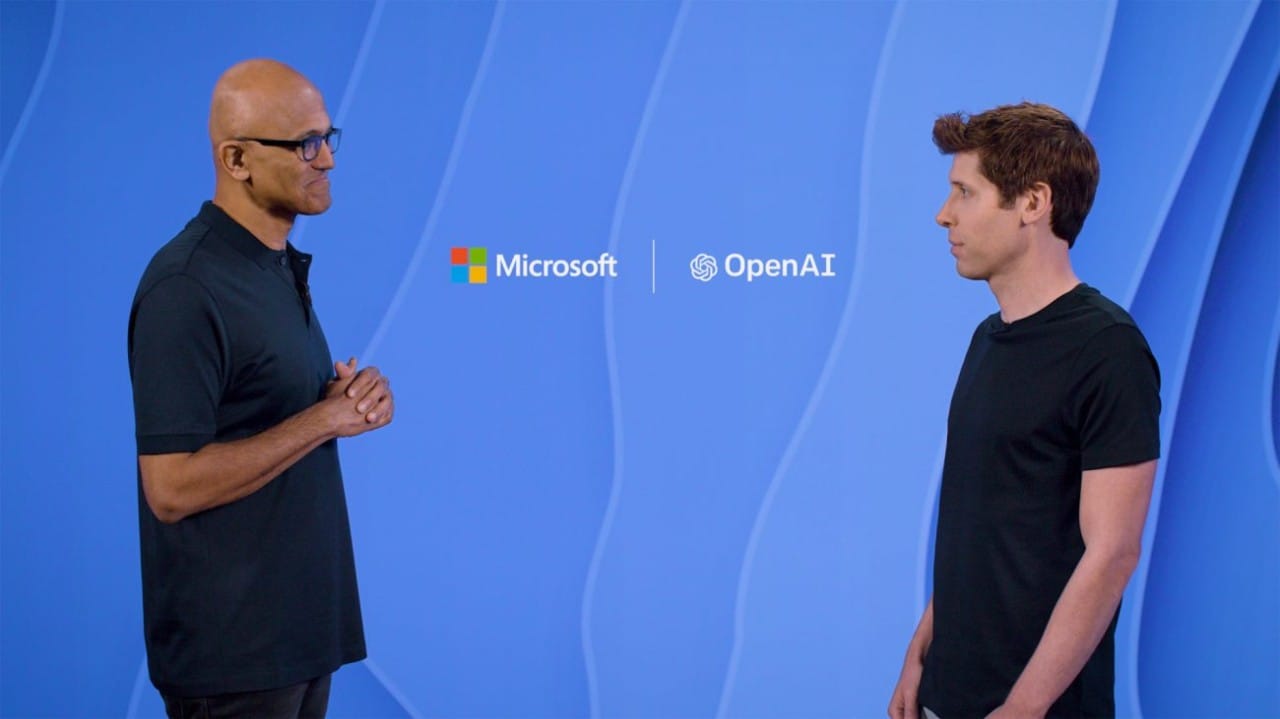
The week's other major story involves a different kind of power move. Microsoft is reportedly weighing legal action against both OpenAI and Amazon over a $50B cloud deal the software giant believes violates its exclusive rights to host OpenAI's models.
The dispute centers on Frontier, OpenAI's enterprise platform for building and running AI agents, which launched in early February. As part of a separate agreement with Amazon, AWS became the exclusive third-party cloud provider for Frontier — meaning enterprise customers who want to deploy the platform through a cloud provider go through Amazon, not Microsoft's Azure.
Microsoft's position: that arrangement violates the spirit (and possibly the letter) of its exclusive agreement with OpenAI. OpenAI's position: the two deals are compatible. Both companies appear to be hedging regardless — Microsoft has been developing its own AI models and recently began offering Anthropic's Claude inside Office 365, while OpenAI has diversified its cloud relationships to include AWS and Oracle.
The structural read: This dispute is less about this specific contract and more about the unraveling of the original Microsoft-OpenAI partnership structure. Microsoft invested $13B into OpenAI over several years, with Azure exclusivity as the economic core of that arrangement. As OpenAI's footprint grows — and as its IPO becomes a possibility — the incentive to renegotiate or work around that structure increases. How this resolves will likely set the template for how the industry structures AI cloud partnerships going forward.
Power 20 Watch
The PitchBook Question No One Wants to Answer
A new analyst note published this week by PitchBook's VC Research groupasks what may be the most important question in private markets right now: if SpaceX, OpenAI, and Anthropic all go public in 2026, could they crowd out the rest of the IPO class?
The math is striking. SpaceX is reportedly targeting a raise of $50B to $75B on its own. OpenAI and Anthropic combined could raise another $50B. Together, that's roughly equivalent to the total raised by all US VC-backed company IPOs over the past decade. With that much capital being absorbed by just three listings, the concern is that investors' IPO allocation budgets — and underwriter bandwidth — simply won't stretch to accommodate a broader class of unicorn listings.
The note identifies two scenarios. In the catalyst scenario, strong listings from the mega three signal that public markets will back high-growth, cash-burning companies, which pulls more unicorns toward the window and validates AI valuations broadly. In the distraction scenario, these listings absorb the capital and attention that would otherwise go to tech IPOs, the lockup periods create post-listing volatility, and the window effectively closes for everyone else — extending the liquidity drought for GPs and LPs into 2027.
One data point worth noting: in 2025, 14 of 17 unicorns that went public listed below their peak private market valuation. The track record for newly public companies has been mixed at best.
The secondary market angle: PitchBook's note explicitly flags that a large gap in secondary market volume may open if these companies go public, since SpaceX, OpenAI, and Anthropic have each been significant sources of secondary transaction activity through regular tender offers. If that supply moves onto public exchanges, it creates both a gap and an opportunity — more secondary volume will need to migrate toward other names.

Sources: PitchBook Analyst Note; Axios; StrictlyVC
Quick Takes
Anthropic capturing 73% of first-time enterprise AI spend — Up from roughly even split with OpenAI just 10 weeks ago, per Axios. Enterprise adoption is moving faster than most expected, and Anthropic's share of new spending is accelerating.
Xbow raises $120M at $1B+ valuation for AI-powered security testing — The AI security startup uses automated attack techniques to continuously test applications for vulnerabilities. DFJ Growth and Northzone led; Sequoia, Altimeter, and Alkeon also participated.
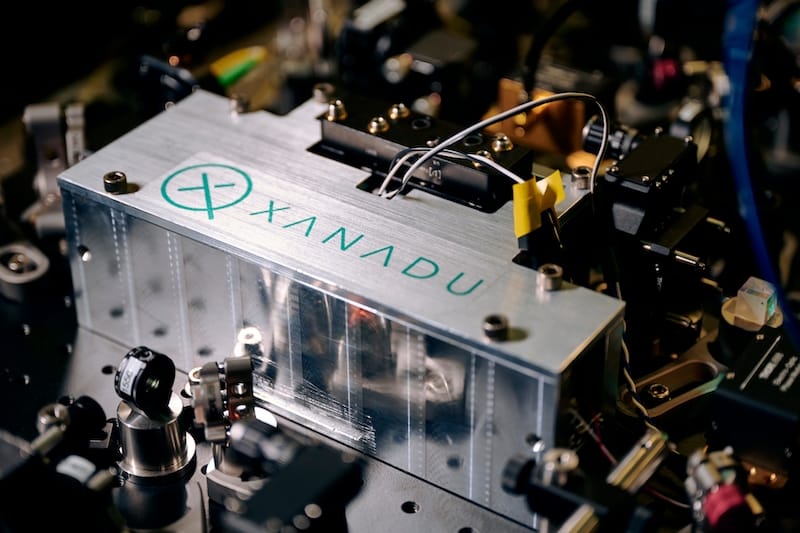
Xanadu Quantum plans SPAC merger targeting $3B valuation — The Toronto-based quantum computing startup is merging with Crane Harbor Acquisition and targeting a $455M raise to build quantum-powered data centers. The merger vote is set for this week.
Kraken pauses IPO plans after confidential SEC filing — The crypto exchange filed its S-1 confidentially in November but has paused plans as weaker crypto markets reduce investor appetite. Another IPO in the wait-and-see posture.
SEC issues "token taxonomy" clarifying which digital assets are securities — The guidance labels stablecoins, digital collectives, and digital commodities as non-securities, and establishes that digital securities remain subject to SEC regulation. Chair Paul Atkins: "We're not the securities and everything commission anymore."
Data Point of the Day
$1.22 trillion
Total exit value created by all US VC-backed IPOs since 2015 — including SPACs — per PitchBook. SpaceX alone is targeting a listing that could generate more exit value than that entire decade-plus of public listings combined. If accurate, it would be the single largest wealth creation event in venture capital history.
🎓 Manual
Lockup Period
A contractually required window — typically 90 to 180 days following an IPO — during which insiders, early investors, and employees are prohibited from selling their shares. Lockup expirations often create short-term selling pressure as those holders gain liquidity. For the mega IPOs anticipated this year, the scale of locked-up shares could make expiration dates some of the most closely watched events in the public market calendar.
👀 What We’re Watching
- OpenAI's M&A cadence — Astral is the third acquisition announced in roughly six weeks (after Promptfoo and Torch). The pace suggests a corporate development function running at full speed ahead of an IPO, building vertical integration rather than relying solely on model improvements.
- The Microsoft-OpenAI endgame — Whether this dispute resolves quietly or escalates toward litigation will be a significant signal about the stability of the underlying AI partnership economy. Many large AI deals have similar exclusivity structures.
- SpaceX confidential filing timing — PitchBook's note suggests a March confidential filing may be in the works. If that happens, the IPO calendar for the second half of 2026 starts to take concrete shape — with significant implications for secondary market pricing across Power 20 names.
- Delve —

- Cursor —


Augment Markets Inc. is a technology company offering software and data services. Brokerage services are offered through Augment Capital LLC, an affiliated broker-dealer and member FINRA/SIPC. Investment advisory services are offered through Augment Advisors LLC, an SEC-registered investment adviser.
Important Disclosures: This material has been prepared for informational purposes only. None of the information provided represents a recommendation, an offer or the solicitation of an offer to buy or sell any security. The information provided does not constitute investment, legal, tax, or accounting advice. You should consult with qualified professionals before making any investment decisions. Investing in private securities involves substantial risk, including the potential loss of principal. Private securities are typically illiquid, have limited pricing transparency, and often require longer holding periods. These investments are available exclusively to qualified accredited investors and offer no guarantee of returns. An IPO or other liquidity event is not guaranteed. Additionally, past performance of private securities does not indicate or predict future results. Share price data are estimates only, based on proprietary data from Caplight and Augment Markets Inc. and its affiliates.

Paul leads editorial at Augment, building Pulse into the private markets' go-to intelligence source. He also develops editorial content strategies for startups and venture capital firms. Previously, he spent 15 years as a business and opinion journalist at The New York Times, Fortune, Fast Company, Reuters, and more. He believes transparency creates liquidity—and that someone should actually publish what private shares are trading for. He lives in Marin with his wife and two rescue dogs, and wishes he had more time to surf.
Learn more