



Microsoft and OpenAI restructured their partnership Monday, ending Microsoft's revenue share to OpenAI, capping OpenAI's payments back to Microsoft, and stripping the exclusivity that had bound OpenAI's models to Azure — a structural shift that, per Wedbush and PitchBook, clears OpenAI's path to a public listing reportedly targeted for late 2026.
The Big Story — OpenAI Just Cut Three Cords. The IPO Is the Reason.
Three weeks ago, we reverse-engineered SpaceX's S-1 from public filings and Microsoft and OpenAI announced an amended partnership Monday afternoon that does three things at once. Microsoft will no longer pay a revenue share to OpenAI. OpenAI will continue to pay Microsoft a 20% revenue share through 2030 — but that obligation is now subject to a fixed cap, independent of OpenAI's technology progress. And the IP license Microsoft holds on OpenAI's models, previously exclusive and tied to the elastic concept of "AGI achievement," is now a non-exclusive license with a hard 2032 expiration.
The combined effect is a clean reset of the most-watched commercial relationship in AI. Azure remains OpenAI's "primary cloud partner," and OpenAI products will continue to ship first on Azure unless Microsoft opts out. But OpenAI is now free to serve all of its products to customers on AWS, Google Cloud, and Oracle — which retroactively cleans up the $50 billion AWS commitment OpenAI signed earlier this year and which had been sitting in legal limbo against Microsoft's exclusivity claim.
Read this against the secondary-market backdrop and the framing changes. OpenAI stock has been trading on the secondary market in the $850–880B range — only a few percentage points above its $852B March primary mark, while Anthropic ran from ~$120B last October to a reported $1T implied. Caplight's seller-to-buyer ratio for OpenAI shares ran 5:1 in Q1. The market was pricing the structural overhang: an exclusivity contract that capped OpenAI's strategic optionality, and an "AGI clause" that gave Microsoft an open-ended call on OpenAI's IP.
Both are now retired. PitchBook reads the restructure as the precondition for OpenAI's IPO push; the Wall Street Journal reported in January that the company is laying groundwork for a Q4 2026 listing. The question for secondary participants is no longer whether OpenAI can go public — it's whether Monday's reset is already priced into the gap between OpenAI's secondary mark and Anthropic's, or whether that gap closes from here. Secondary prints over the next 72 hours will be the cleanest near-term read.
Vinted's €8B Secondary, and Why Europe Showed Up Today

While the Microsoft news was crossing wires, Vinted — the 16-year-old Vilnius-based secondhand fashion marketplace — quietly closed an oversubscribed €880M ($1.0B) secondary share sale at an €8B equity valuation, up 60% from the €5B it cleared in 2024. The round was led by EQT (increasing its stake), with new investors Ontario Teachers' Venture Growth and Schroders Capital joining, alongside BlackRock, Lombard Odier, Pinegrove Opportunity Partners, and Baillie Gifford.
Three things make it worth pulling out of the European-tech bucket. The structure: Vinted received zero proceeds. The full €880M went to early investors and longtime employees selling existing shares — a textbook secondary share sale, not a primary capital raise. The cohort: this is a profitable, 16-year-old consumer business outside the AI/Power 20 trade. And the buyer mix: a Canadian pension's late-stage venture vehicle, a UK asset manager's private-equity arm, BlackRock, Lombard Odier, and Pinegrove (the Brookfield-Sequoia secondaries platform), with Baillie Gifford increasing its position.
Read the buyer list as the story. Q1 secondary headlines were Stripe's tender, Anthropic's tender, and the AI infrastructure trade. Vinted is the cleanest 2026 datapoint that the same institutional pools — pensions, sovereigns, large asset managers — are allocating into structured liquidity events for non-AI names, when the company is profitable and the round is oversubscribed.
💨 Quick Takes
- China blocks Meta's $2B Manus acquisition — The NDRC ordered the deal unwound after a months-long review, exit bans on the founders, and an internal Beijing debate about handing strategic AI talent to a US rival. Manus had relocated to Singapore in mid-2025 and was acquired in December — the relocation didn't save it. Benchmark led the May 2025 round; the unwind mechanics are unclear.
- Qualcomm pops 7% on OpenAI smartphone-chip report — Per Ming-Chi Kuo, OpenAI is co-developing a phone processor with Qualcomm and MediaTek, with Luxshare on system co-design; mass production targeted for 2028. Reads alongside Monday's Microsoft restructure as the same idea twice: OpenAI is building its own surface area at every layer of the stack, from cloud distribution to consumer hardware.
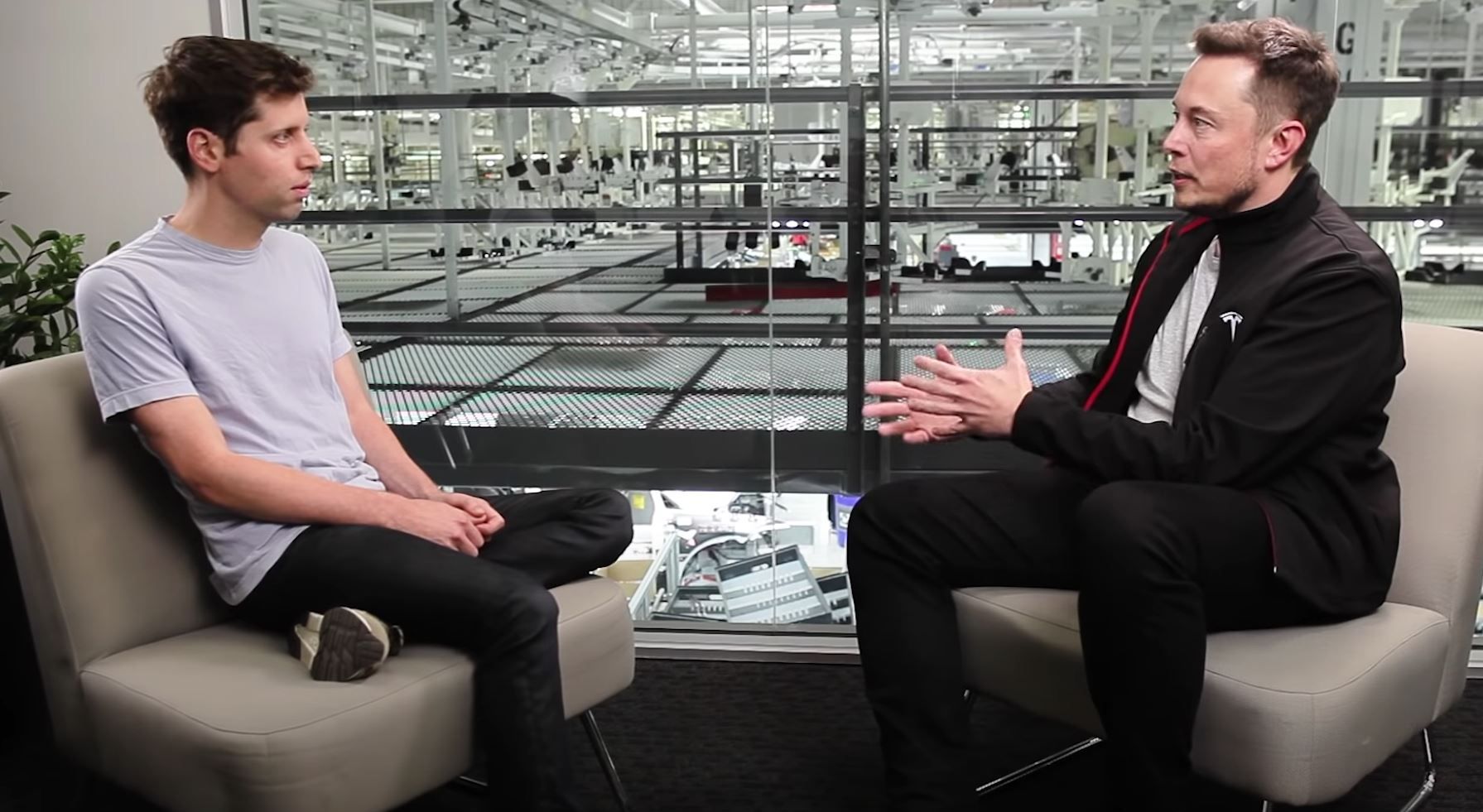
- Musk v. Altman opens today in Oakland — Nine-person jury seated Monday; the $134B suit alleges OpenAI breached its nonprofit charter. Liability and remedies phases will run separately. A finding for Musk could put OpenAI's corporate structure back on the table just as the IPO path opens.
- Ineffable Intelligence raises $1.1B seed at $5.1B — Europe's largest seed ever, founded by ex-DeepMind principal scientist David Silver to build "AI superlearners." When pre-product seed rounds reach mid-single-digit billions on team alone, history has produced few winners. Whether reinforcement-learning talent scarcity makes this time different is the question for the rest of the cohort.
- SEC cuts the minimum tender-offer period in half — 20 days to 10 — The April 16 exemptive order applies to issuer-led private-company tenders and certain public-company all-cash deals. Third-party tenders stay on the 20-day clock. Practical effect: company-run liquidity programs got a structural execution-time advantage over outside tender venues.
📈Data Point of the Day
0
euros Vinted received from the €880M deal. (Missed it? Scroll back up.)
🎓 Manual
Capped Revenue Share
A revenue share obligation that's bounded by a fixed dollar ceiling rather than running open-ended — once the cap is reached, the payments stop, regardless of what happens to revenue afterward. The structure shows up in commercial agreements where one party wants to limit its long-term obligation while preserving the other's near-term economics.
Monday's OpenAI–Microsoft amendment is a textbook case: OpenAI keeps paying Microsoft 20% of revenue through 2030, but only up to a capped total, after which the obligation extinguishes. Caps are how you convert an unbounded liability into a knowable one — useful in M&A and partnership structuring, and a precondition for a clean IPO disclosure.
👀 What We're Watching
- OpenAI secondary marks this week. Whether the partnership reset narrows the gap between OpenAI's ~$880B secondary mark and Anthropic's reported $1T. Post-announcement secondary prints over the next 72 hours will be the cleanest near-term read.
- The Manus unwind. Beijing has ordered Meta and Manus to cancel a closed deal in which the team had already moved into Meta's offices, with Benchmark presumably distributed to LPs. There is no obvious procedural template for this. Whether Meta walks, escalates, or finds a Singapore workaround will set the precedent for how cross-border AI-talent deals get structured for the rest of the year.
- Cerebras pricing in mid-May. Secondary desks are quoting Cerebras in the $26–28B range against an IPO target of $22–25B. Whatever clears will become the comp for every other pre-IPO AI infra name — Groq, SambaNova, Etched, Tenstorrent — currently held in secondaries against reference points that don't yet exist.
Augment Markets Inc. is a technology company offering software and data services. Brokerage services are offered through Augment Capital LLC, an affiliated broker-dealer and member FINRA/SIPC. Investment advisory services are offered through Augment Advisors LLC, an SEC-registered investment adviser.
Important Disclosures: This material has been prepared for informational purposes only. None of the information provided represents a recommendation, an offer or the solicitation of an offer to buy or sell any security. The information provided does not constitute investment, legal, tax, or accounting advice. You should consult with qualified professionals before making any investment decisions. Investing in private securities involves substantial risk, including the potential loss of principal. Private securities are typically illiquid, have limited pricing transparency, and often require longer holding periods. These investments are available exclusively to qualified accredited investors and offer no guarantee of returns. An IPO or other liquidity event is not guaranteed. Additionally, past performance of private securities does not indicate or predict future results. Share price data are estimates only, based on proprietary data from Caplight and Augment Markets Inc. and its affiliates.

Paul leads editorial at Augment, building Pulse into the private markets' go-to intelligence source. He also develops editorial content strategies for startups and venture capital firms. Previously, he spent 15 years as a business and opinion journalist at The New York Times, Fortune, Fast Company, Reuters, and more. He believes transparency creates liquidity—and that someone should actually publish what private shares are trading for. He lives in Marin with his wife and two rescue dogs, and wishes he had more time to surf.
Learn more