




SpaceX priced its record IPO at a reported $135 — and its exit sharpens a question for private-share holders. Secondaries hit a reported $106B in 2025, but the top 20 names were ~86% of it and just 70 new names traded all year. De-concentration is a forecast; concentration is a fact.
Deep Dive: When the Giants Leave the Tape
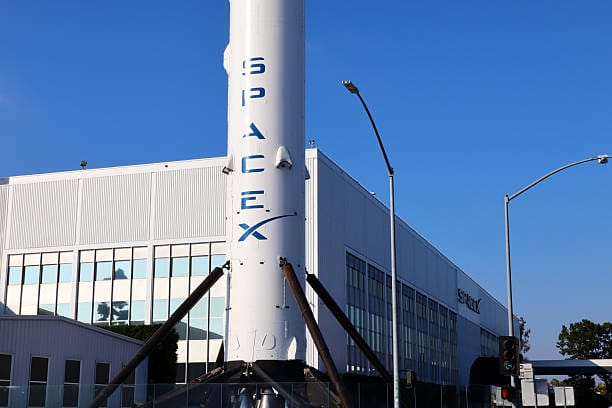
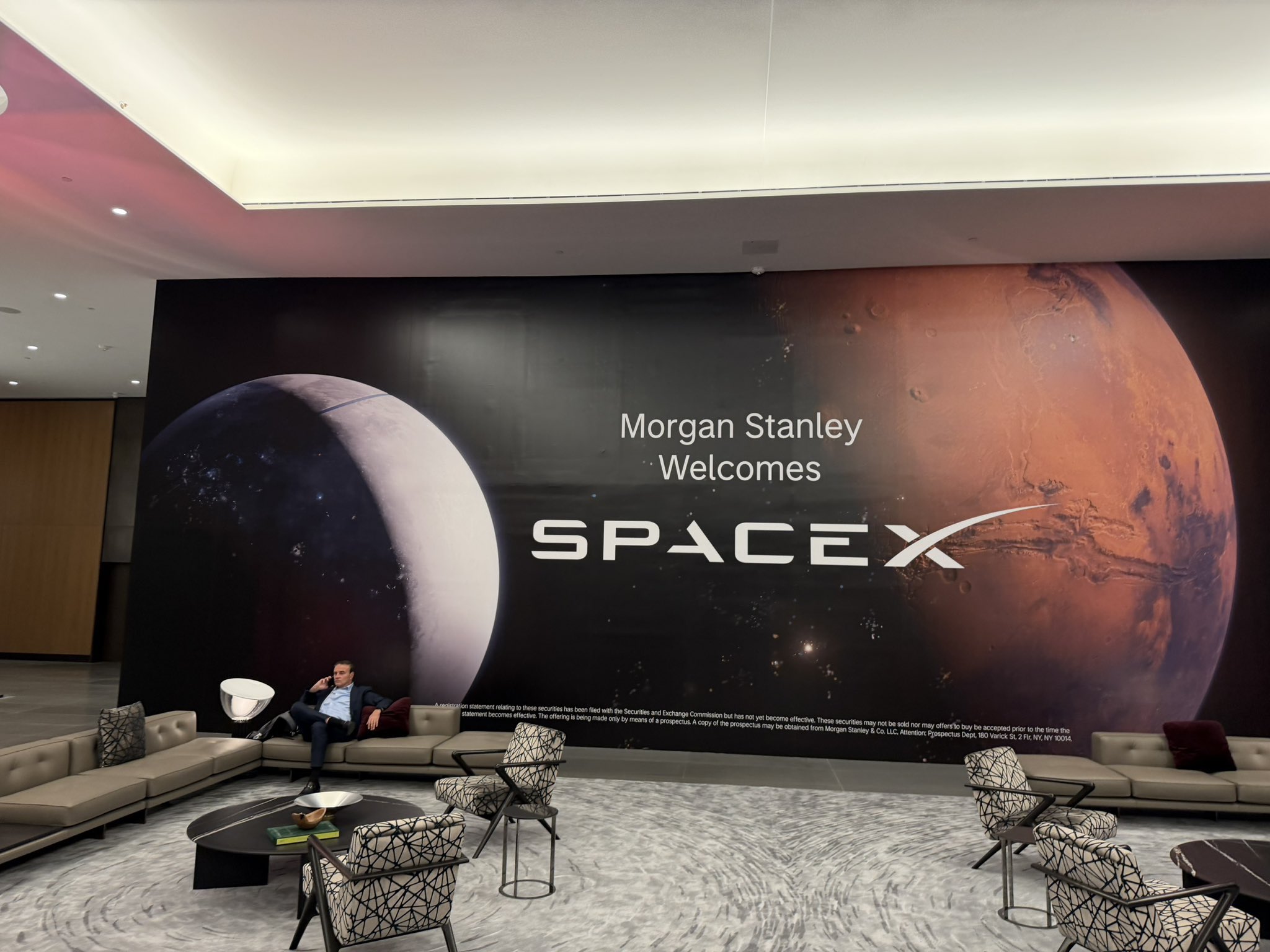
SpaceX is expected to price its IPO after the close on June 11 (today) and begin trading on June 12, according to its filings and Reuters reporting; timing, pricing, share count, and valuation remain subject to change. However the latest reports indicate that roughly 556 million shares have been priced $135, a reported $75 billion raise at a $1.75 trillion valuation If priced as reported. It would be the largest IPO on record. Today's question is narrower and, for anyone who trades private shares, more durable: what happens to the secondary market when one of the names that is the secondary market stops being private?
The Setup
The consensus read on the secondaries boom is a growth story, and the top-line supports it. US venture secondaries traded a reported $106.3 billion in 2025 — $91.7 billion in direct deals plus $14.6 billion GP-led — according to PitchBook's 2025 Annual US VC Secondary Market Watch. That put secondaries within range of the two traditional exit channels for the first time: acquisitions at $140.7 billion, public listings at $119.6 billion. A market that barely existed as an institutional category five years ago is now the third pillar of venture liquidity.
The story everyone tells from there is breadth: secondaries have matured into a real, standing market, open at both ends of the cycle, here to stay. The structural-not-cyclical framing is probably right.
But "big" and "broad" are different claims, and the second one doesn't hold up.
The Evidence
The same data that makes secondaries look like a deep market shows a market leaning almost entirely on a handful of names. On Hiive, the top 20 companies accounted for a reported 86.4% of secondary trading value in Q4 2025. The top five alone were 55.6%. On Augment's own platform, SpaceX was the single most actively traded name — about 12.5% of total platform activity.
Concentration at the very top is even starker when you look at single transactions. OpenAI's reported $6.6 billion tender last year was, by itself, an estimated 6.2% of the entire year's secondary volume. PitchBook estimates that SpaceX, OpenAI, and Anthropic together represent 30–40% of current secondary volume.
Augment and/or its affiliates hold a position in Anthropic. References to Anthropic and other named issuers are for illustrative market-commentary purposes only and are not recommendations or investment opinions.
Now set the replacement rate against that. In all of 2025, just 70 companies saw their first secondary trade — totaling a reported $492 million. Against a $106 billion market, the entire class of new entrants is a rounding error. The tape is deep where it's already deep and thin everywhere else.
Reported private-company financials and secondary-market indications may be unaudited, incomplete, non-standard, or based on limited transaction activity. They should not be relied upon as fair value, executable pricing, or a basis for any investment decision.
Why This Matters
Here's the part the growth story misses. An IPO doesn't delete a price from the system. It publishes one.
When SpaceX moves from the private tape to a public ticker, the volume it represented doesn't vanish into the listing — it converts into something the private market didn't have before: a daily, observable, public mark for the most-traded private name of the last two years. In principle, that public price may give market participants a fresher reference point for how comparable late-stage names are discussed, though any such read-across may not be executable or representative of fair value, and the companies involved differ in business mix, cost structure, capital commitments, and disclosure quality.
So there are two ways to read what's about to happen, and they point in opposite directions. One observation worth tracking: if the three biggest names list, the market mechanically loses 30–40% of its volume, and with only $492 million of new names entering last year, there's little underneath to replace it — concentration doesn't broaden, it just shrinks the market. A second interpretation worth tracking: public benchmarks reduce the bid-ask problem that has kept the long tail illiquid, and fresher price discovery could, over time, draw more buyers and sellers to names below the top 20. PitchBook leans toward the second over the medium term. The honest answer is that both can be true in sequence — a near-term air pocket, then a wider market — and which one dominates the next few quarters is unresolved.
The Private Markets Angle
For anyone holding or trading pre-IPO shares, the concentration number is the one to sit with, because it cuts against the prevailing comfort. The long tail — the roughly 13.6% of volume outside the top 20 — is exactly where price discovery is weakest, information asymmetry is widest, and the risk of adverse selection is highest. "The market is deep" is true for SpaceX and a dozen names like it. It is not true for most of the cap tables it's used to justify.
This matters more now because of who is being invited in. SpaceX is reportedly discussing allocating up to 30% of its IPO to retail investors — several times the typical 5–10% — and a wave of publicly listed venture funds is repackaging the same top-20 names for retail buyers. The structural point isn't about any single vehicle. It's that the part of the private market with the best price discovery is the part that's already public-adjacent, and the part being sold hardest as "access" is often the part where the mark is least reliable. As liquidity reorganizes around fewer benchmarks, the gap between a name with a public comparable and a name without one may widen, not close.
Reported private-company financials and secondary-market indications may be unaudited, incomplete, non-standard, or based on limited transaction activity. They should not be relied upon as fair value, executable pricing, or a basis for any investment decision.
The Counterargument
The bull case on breadth deserves a fair hearing, and it rests on history: this market grew through the 2021 access boom and grew again through the 2022–2024 liquidity drought. A market that expands at both extremes of the cycle has a real demand underneath it, and tender offers becoming the default liquidity mechanism could, in some cases, formalize and widen access rather than gate it. If even a fraction of the capital freed by these IPOs rotates down-market, 70 new names a year could become 200.
But it's worth holding the limitation honestly. None of that is visible in the data yet — the new-entrant count is tiny, the dry powder aimed at secondaries ($11.8 billion as of June 2025) is still under 4% of primary venture, and formalized tender programs can just as easily narrow access as broaden it, since you get into a company-run tender because you're invited, not because you found a willing seller. The de-concentration case is a forecast. The concentration is a fact. That asymmetry is the whole thesis.
Sources: PitchBook, 2025 Annual US VC Secondary Market Watch (Feb 20, 2026); The State of Venture, "The $106 Billion Secondaries Market" (Feb 27, 2026); Reuters (June 3, 2026); SpaceX Form S-1 (May 20, 2026) and S-1/A (June 1, 2026).
📈 Data Point of the Day
70
The number of companies that saw their first-ever secondary trade in 2025, for a combined reported $492 million — against a $106.3 billion market. The entire incoming class of new tradable names was less than half a percent of the year's volume, which is one of the clearest single measures of how narrow this market still is beneath the headline.
Reported private-company financials and secondary-market indications may be unaudited, incomplete, non-standard, or based on limited transaction activity. They should not be relied upon as fair value, executable pricing, or a basis for any investment decision.
🎓 Manual
Price Discovery
The process by which buyers and sellers arrive at a price through actual transactions. In public markets it happens continuously; in private secondaries it may happen rarely and unevenly, since a name might trade only a few times a quarter — or not at all. When a private company lists, its shares gain continuous public price discovery, which in some cases may give market participants fresher reference points for comparable private names, though those indications may not be executable or representative of fair value.
Augment Markets Inc. is a technology company offering software and data services. Brokerage services are offered through Augment Capital LLC, an affiliated broker-dealer and member FINRA/SIPC. Investment advisory services are offered through Augment Advisors LLC, an SEC-registered investment adviser.
Important Disclosures: This material has been prepared for informational purposes only. None of the information provided represents a recommendation, an offer or the solicitation of an offer to buy or sell any security. The information provided does not constitute investment, legal, tax, or accounting advice. You should consult with qualified professionals before making any investment decisions. Investing in private securities involves substantial risk, including the potential loss of principal. Private securities are typically illiquid, have limited pricing transparency, and often require longer holding periods. These investments are available exclusively to qualified accredited investors and offer no guarantee of returns. An IPO or other liquidity event is not guaranteed. Additionally, past performance of private securities does not indicate or predict future results. Share price data are estimates only, based on proprietary data from Caplight and Augment Markets Inc. and its affiliates.

Paul leads editorial at Augment, building Pulse into the private markets' go-to intelligence source. He also develops editorial content strategies for startups and venture capital firms. Previously, he spent 15 years as a business and opinion journalist at The New York Times, Fortune, Fast Company, Reuters, and more. He believes transparency creates liquidity—and that someone should actually publish what private shares are trading for. He lives in Marin with his wife and two rescue dogs, and wishes he had more time to surf.
Learn more