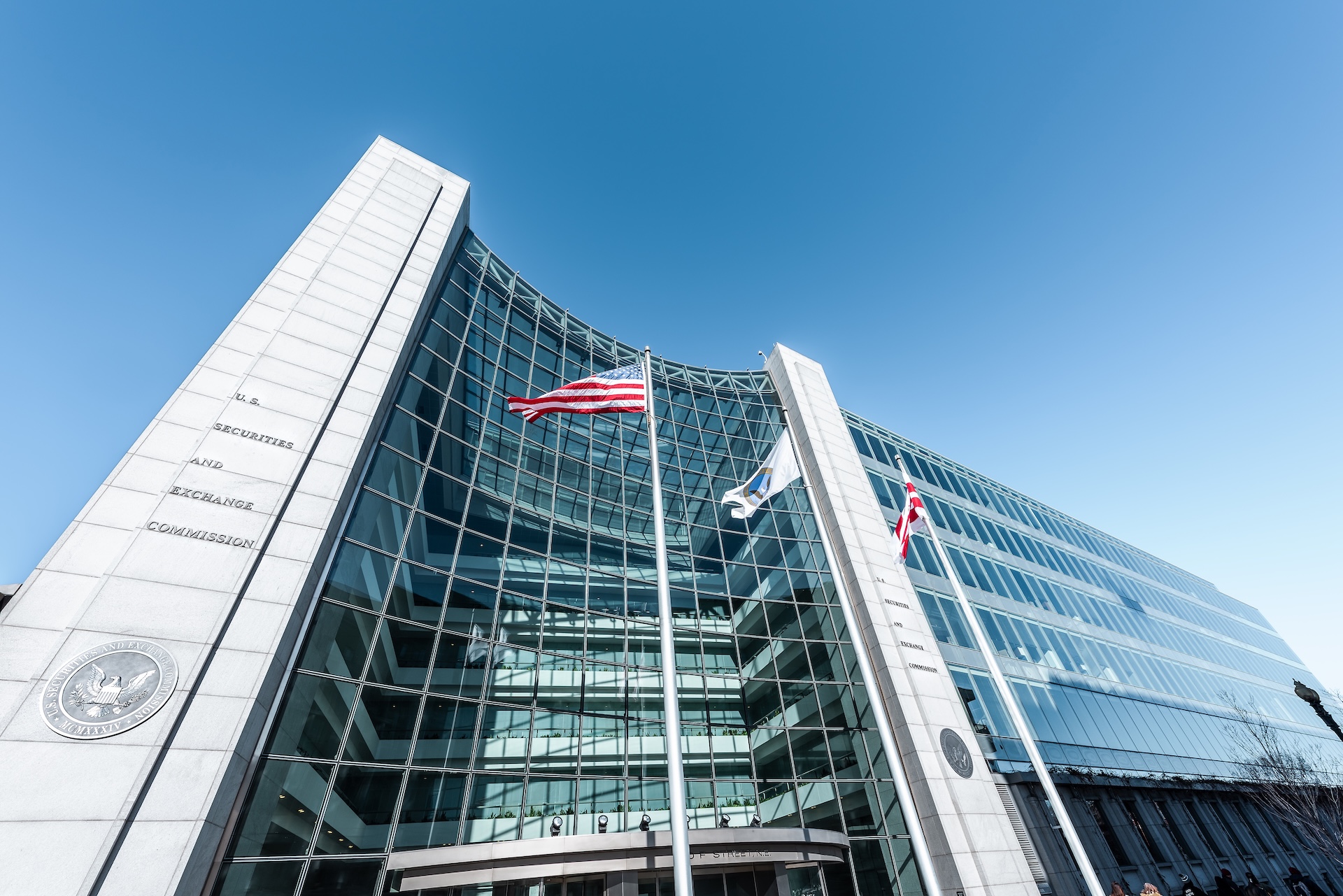







SpaceX's S-1 dropped this week with a number that reframes the filing entirely: $26.5 trillion in TAM from AI, out of $28.5 trillion total. Thoma Bravo is handing Medallia to its creditors — a $5.1 billion equity wipeout that lands as the largest PE-software unwind of this cycle. Cognition is in talks at $25 billion, 2.5x its September mark. And the OpenAI/Anthropic secondary-market split kept widening: Claude's implied valuation on Forge Global reportedly hit $1 trillion the same day OpenAI shipped GPT-5.5.
SpaceX Files, and 93% of the Pitch Is AI
Three weeks ago, we reverse-engineered SpaceX's S-1 from public filings and tender-offer data. The real filing landed this week, and the first number that matters is bigger than anything we modeled: a $28.5 trillion total addressable market, of which $26.5 trillion — 93% — is attributed to AI, per Reuters' review of the S-1.
"We believe we have identified the largest actionable TAM in human history," the filing reads.
Read that sentence and this is no longer a rockets-and-satellites S-1. Starlink is still the cash-generative core — roughly 8 million subscribers and the revenue engine that made SpaceX the most-traded name in the Power 20through Q1. But the way the filing positions the company to public-market investors is as an AI enterprise, with the satellite network as distribution and roughly $22.7 trillion of the TAM earmarked for "AI for businesses."
The S-1 also discloses the company will "manufacture our own GPUs," citing substantial capex tied to in-house chip and computing infrastructure, per Reuters' reporting. Tesla's separate SEC filing this week referenced a $2 billion AI hardware commitment, and the Terafab joint venture (SpaceX, xAI, Tesla, Intel) has been public since March. SpaceX has now wrapped the entire stack — Starlink cash flow, xAI compute, in-house silicon — into a single regulatory narrative.
The private-markets read here isn't the TAM number itself. TAMs in S-1s are marketing. It's the positioning. SpaceX is filing at a moment when Power 20 pricing has split cleanly between "AI" and "not AI" on the secondary market. By claiming the AI lane in its own filing, SpaceX is offering public-market investors the framework that private-market buyers on Augment have been building for a year: that the combined stack is an AI full-stack story, not a launch-services one. Whether public markets accept that framing is the question the roadshow will answer.
Thoma Bravo's $5.1 Billion Medallia Wipeout
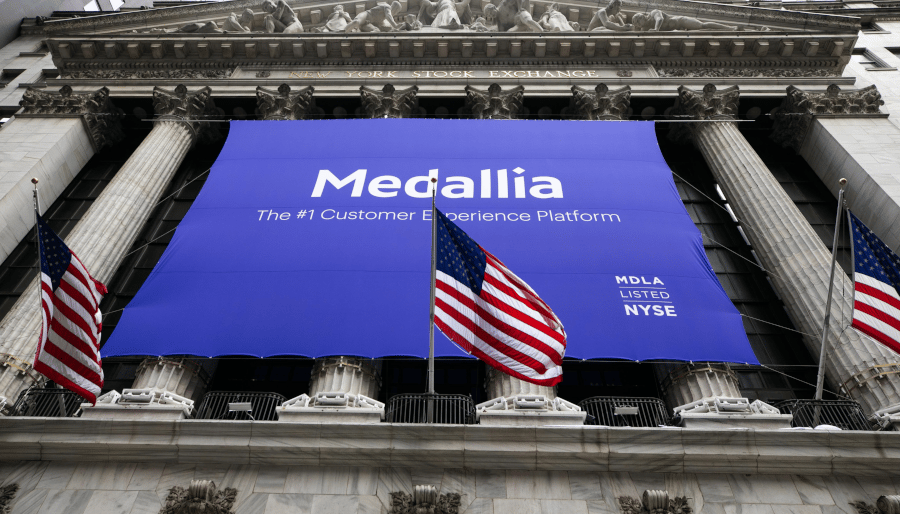
The same week AI valuations hit another high-water mark, a different corner of the private markets produced its largest single-deal equity loss of the cycle. Thoma Bravo is nearing an agreement to hand customer-experience software firm Medallia over to its creditors — Blackstone, KKR, Apollo, and Antares Capital — wiping out $5.1 billion of equity, per Reuters.
Thoma Bravo bought Medallia for $6.4 billion in 2021, at the peak of the near-zero-rates software buyout cycle. By early 2026, Medallia's annual debt-servicing costs had reportedly climbed to roughly $300 million, running well ahead of an estimated $200 million in annual earnings. The restructuring passes ownership to creditors holding roughly $3 billion in the company's debt.
Medallia is the cautionary counter to the week's headline AI rounds. The PE-backed software rollup thesis that dominated 2020–2022 — buy recurring-revenue software at 20x with cheap debt, cut costs, re-lever, sell — is being tested against a materially different rate and demand environment. Medallia is not the first such unwind, but at $5.1 billion it may be the largest, and the creditor list includes names that are themselves private-market participants. Yahoo Finance noted that business development companies now trade at their widest discounts to NAV in more than five and a half years.
One way to read the week: secondary-market-traded venture software (the Augment lane — Stripe, Databricks, Canva, Rippling) and PE-backed, leverage-financed private software (the Medallia lane) have fundamentally different risk profiles and are now moving in opposite directions. The category error is treating them as one asset class. The dispersion we covered Thursday inside the Power 20 has a quieter companion outside it: dispersion between venture secondaries and PE-software equity, playing out in real time.frontrun and secondaries to reprice.
Cognition's $25B Round and the AI-Coding Cohort

Cognition, maker of the autonomous coding agent Devin, is in early talks to raise hundreds of millions at a $25 billion valuation, per Bloomberg. That is a 2.5x step-up from the $10.2 billion round it closed seven months ago — and a 12.5x step-up from the $2 billion mark 14 months back.
The cadence is the story. Cognition priced at $2B in February 2025, $4B in March 2025, $10.2B in September 2025, and is now talking to investors at $25B in April 2026. The pattern — a new step-up every four to seven months, each priced off usage or productivity benchmarks rather than a financial waterfall — is becoming characteristic of the AI-coding sub-cohort.
Taken alongside Tuesday's Factory round ($150M at $1.5B) and Thursday's Freshfields–Anthropic co-development agreement, the through-line is clear: AI coding and AI-native legal workflows are splitting into their own private-market cohorts with their own pricing curves. Freshfields reported Claude usage inside the global law firm has increased roughly 500% in the six weeks since rollout, across 5,700 employees and 33 offices. Commercial proof points like that are what pulls valuations forward between primary rounds.
OpenAI Is Shipping — And the Anthropic Gap Is What It's Chasing
Thursday's Pulse laid out the Q1 dispersion: OpenAI down 22% on the secondary market while Anthropic ran up 59%. This week made clear that OpenAI has read the scoreboard — and the product cadence out of Mission Bay is the clearest tell.
On Thursday, OpenAI shipped GPT-5.5 and a next-generation Codex — just six weeks after GPT-5.4. The company pushed the release to ChatGPT Plus, Pro, Business, and Enterprise tiers simultaneously, with a separate GPT-5.5 Pro variant for paid users, per TechCrunch. Greg Brockman framed it publicly as "a new class of agentic computing." In practice: this is the most aggressive release tempo OpenAI has ever run.
The lanes OpenAI are attacking map almost one-for-one to the lanes Anthropic has owned through Q1. GPT-5.5 is described as stronger on agentic coding — the Claude Code lane. Codex gets rolled into the same product surface as ChatGPT and a coming AI browser, pointing toward what the company calls a "super app" framework. NVIDIA GB200 NVL72 is the disclosed serving infrastructure, a signal that compute is no longer the bottleneck.
The watch from here is whether the shipping pace closes the secondary-market gap. Anthropic's implied valuation on Forge Global reportedly hit $1 trillion this week — against OpenAI's $880 billion on the same platform, per Business Insider. That is a 13-digit round number sitting on top of a 500% Claude-usage increase at Freshfields, a $100B AWS commitment, and three months of primary-round momentum. OpenAI's response is to ship faster. The question for Q2 is whether faster product cadence is enough to retire Anthropic's commercial-traction lead in the eyes of secondary-market buyers — or whether the Q1 split is now a structural feature of Power 20 pricing rather than a transient one.
💨 Quick Takes

- DeepSeek targeting $20B raise with Tencent and Alibaba in talks — The FT and The Information both reported DeepSeek is fundraising to retain researchers defecting to higher-valued rivals. If it prints, this would be the first Chinese AI lab to reach a primary valuation comparable to the leading US names' secondary marks.
- Bain Capital to sell 40%+ stake in Bridge Data Centres at $5B — Citigroup and JPMorgan are running the sale of the Singapore-headquartered operator; ByteDance is the anchor tenant in Malaysia. Asian data-center infrastructure is now among the most contested PE asset classes. Indicative bids due mid-May.
- X-energy prices Nasdaq IPO at $23, $4 above range — Upsized offering raises ~$1.02 billion for the small-modular-reactor company, with Ark Invest anchoring. Trades on Nasdaq as "XE" starting today. First nuclear IPO of the 2026 cycle.
- Pudu Robotics raises ~$150M at $1.5B+ — Shenzhen-based service-robotics firm pivots from hospitality to industrial applications. Part of a Chinese-robotics cohort that has quietly reached unicorn status with limited US-fund participation.
- Lyft to acquire Gett's UK business — Third international bolt-on for Lyft this cycle. The signal isn't the deal size — it's that public ride-hailing is rolling up international private operators before their own IPO windows reopen.
📈Data Point of the Day
500%
Reported growth in Claude usage at Freshfields in the six weeks since the law firm's internal rollout — across 5,700 employees and 33 offices, per Freshfields' own release. Enterprise adoption curves like this are the leading indicator secondary-market buyers cite when pricing Anthropic ahead of its primary marks.
🎓 Manual
Total Addressable Market (TAM)
The revenue a company could theoretically capture if it owned 100% share of every potential customer in every market it competes in. TAMs are directional, not diagnostic — useful for framing ambition, less useful for modeling near-term revenue. SpaceX's S-1 this week claims a $28.5 trillion TAM — the largest reported in any public filing — with $26.5 trillion attributed to AI.
For comparison, TSMC's 2020 investor materials pointed to a TAM near $600 billion; NVIDIA calculated in 2019 that their TAM would be roughly $250 billion by purchasing ARM, a proposal they later withdrew. How much of a disclosed TAM is "real" depends on how wide a category line is drawn. The more useful number for S-1 readers is usually the serviceable addressable market (SAM): the portion the company can plausibly reach given its current distribution, product, and sales motion.
👀 What We're Watching
- Stripe Sessions (April 29–30, San Francisco). Stripe has used Sessions in prior years to introduce agents, infrastructure changes, and financial metrics that reprice the Power 20's most-cited comp. With Stripe one of the most-traded names on Augment at quarter-end, any product or financial disclosure could be a Tuesday story.
- Whether GPT-5.5 shows up in secondary pricing. The cleanest test of Thursday's dispersion thesis: does shipping GPT-5.5 re-tighten the OpenAI/Anthropic gap on Forge and Augment in the weeks ahead, or does the Q1 split persist regardless of product cadence?
- SpaceX roadshow timing. With the S-1 now on file, the watch isn't whether SpaceX goes but at what price public markets accept the "$26.5T AI TAM" framing. Roadshow start date is the most important unpublished number in private markets right now.
- Whether Medallia triggers other PE-software handovers. At $5.1 billion of wiped equity with a well-known creditor set, Medallia is the largest 2021-vintage PE software loss to resolve publicly. The open question is whether peers in the same vintage begin to negotiate similar handovers ahead of 2027 debt maturities.
Augment Markets Inc. is a technology company offering software and data services. Brokerage services are offered through Augment Capital LLC, an affiliated broker-dealer and member FINRA/SIPC. Investment advisory services are offered through Augment Advisors LLC, an SEC-registered investment adviser.
Important Disclosures: This material has been prepared for informational purposes only. None of the information provided represents a recommendation, an offer or the solicitation of an offer to buy or sell any security. The information provided does not constitute investment, legal, tax, or accounting advice. You should consult with qualified professionals before making any investment decisions. Investing in private securities involves substantial risk, including the potential loss of principal. Private securities are typically illiquid, have limited pricing transparency, and often require longer holding periods. These investments are available exclusively to qualified accredited investors and offer no guarantee of returns. An IPO or other liquidity event is not guaranteed. Additionally, past performance of private securities does not indicate or predict future results. Share price data are estimates only, based on proprietary data from Caplight and Augment Markets Inc. and its affiliates.

Paul leads editorial at Augment, building Pulse into the private markets' go-to intelligence source. He also develops editorial content strategies for startups and venture capital firms. Previously, he spent 15 years as a business and opinion journalist at The New York Times, Fortune, Fast Company, Reuters, and more. He believes transparency creates liquidity—and that someone should actually publish what private shares are trading for. He lives in Marin with his wife and two rescue dogs, and wishes he had more time to surf.
Learn more