




Physical Intelligence is raising $1 billion at an $11 billion valuation — doubling in four months — as robotics AI becomes the next major capital destination. Meanwhile, legal AI platform Harvey closed $200 million at $11 billion, with Sequoia leading for the third time. The pattern: AI capital is migrating from foundation models to domain-specific applications with clear enterprise moats.
The Big Story: Robotics AI Gets Its Billion-Dollar Moment
Physical Intelligence, a two-year-old San Francisco robotics startup founded by former Google DeepMind researchers, is in talks to raise $1 billion at a valuation north of $11 billion, according to Bloomberg. Founders Fund is set to lead, with Lightspeed Venture Partners also in discussions alongside returning backers Thrive Capital and Lux Capital.
The company's pitch: general-purpose AI models that can power any robot to perform physical tasks — folding laundry, assembling components, peeling vegetables. Co-founder Sergey Levine has described it as "ChatGPT, but for robots."
Four months ago, Physical Intelligence was valued at $5.6 billion. Before that, it raised $400 million in November 2024 from investors including Jeff Bezos. If this round closes, the company will have raised over $1.4 billion total — for software that doesn't yet have a widely deployed commercial product.
This follows a pattern. Pittsburgh-based Skild AI raised $1.4 billion at $14 billion in January for its own "universal robot brain." Between the two companies, that's nearly $2.5 billion in robotics AI capital in the first quarter of 2026 alone.
The private markets angle is straightforward: robotics AI companies are now raising at foundation-model scale, but with far earlier revenue trajectories. Whether the valuations are justified depends on how quickly "general-purpose robot intelligence" translates to enterprise contracts — a timeline that remains unclear.
Harvey's $11B Valuation Shows Where AI Moats Actually Form
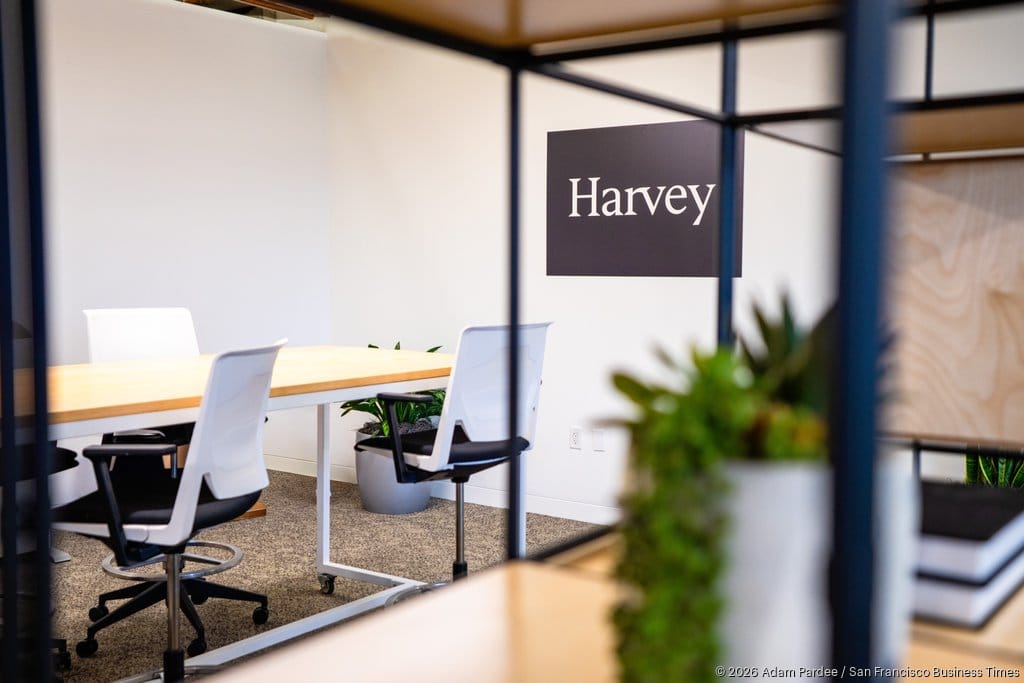
Harvey, the legal AI platform, raised $200 million at an $11 billion valuation — co-led by returning investors GIC and Sequoia. It's the third time Sequoia has led a Harvey round, which partner Pat Grady called "the ultimate sign of conviction."
The numbers tell a clearer enterprise story than most AI companies can. Harvey now works with the majority of the AmLaw 100 law firms, over 500 in-house legal teams, and 50 asset management firms across 60 countries. The valuation jumped from $8 billion just three months ago.
What makes Harvey interesting isn't that it's an AI company — it's that it operates in a domain with high switching costs, zero tolerance for error, and deep compliance requirements. As Thursday's Pulse explored with Thoma Bravo's thesis, these are precisely the software categories that may prove durable against AI disruption. Harvey isn't being disrupted by AI — it is the AI, embedded in workflows where getting it wrong carries real legal liability.
Quick Takes

Reflection AI eyes $2.5B at $25B valuation — The Nvidia-backed startup, founded by ex-DeepMind researchers, has tripled its valuation since October. Notable: JPMorgan's Security & Resiliency Initiative is reportedly exploring participation — the same vehicle that co-led Shield AI's $2B round covered in Friday's Pulse.
Starcloud hits unicorn status in 17 months — The space-based data center startup raised $170 million in a Series A led by Benchmark and EQT Ventures at a $1.1 billion valuation. Fastest YC company to reach unicorn status. The thesis: compute demand is outpacing Earth-based infrastructure capacity.
Anthropic's Claude paid subscribers more than doubled in 2026 — Claude's mobile app reportedly went from $125K/day to $1.5M/day in revenue in three months. But a leaked Coatue presentation from January projected Anthropic losing $14B in EBITDA on $18B in revenue this year — context worth holding alongside the growth numbers as IPO talk heats up.
Zipline adds $200M to Series H, pushing round to $800M — Fidelity and Paradigm participated at a $7.6 billion valuation. Drone delivery volume is reportedly beating forecasts, with expansion into at least four new U.S. states this year.
Mistral raises $830M in debt to build Nvidia-powered data centers — The French AI lab's first-ever debt financing, backed by seven European banks, funds a 13,800-GPU facility near Paris. Revenue reportedly 20x'd last year. The capital structure is notable: debt, not equity — a sign that AI infrastructure financing is diversifying beyond venture rounds.
🎓 Manual
Pre-Money vs. Post-Money Valuation
When a company raises at an "$11 billion valuation," the number could mean two different things. Pre-money valuation is the company's implied worth before new capital comes in; post-money includes the fresh investment. A company raising $1 billion at an $11 billion pre-money valuation would be worth $12 billion post-money. The distinction matters for calculating ownership dilution — and for secondary market pricing, where shares typically trade based on the most recent post-money figure.
👀 What We’re Watching
- JPMorgan's Security & Resiliency Initiative as a new capital source. JPMorgan has committed up to $10 billion to venture-backed companies through this program, which co-led Shield AI's round and is reportedly exploring Reflection AI's. If a major bank starts showing up as a lead investor in growth-stage AI and defense rounds, it changes the capital formation dynamics for late-stage private companies — and potentially the secondary market liquidity picture.
- Robotics AI valuation discipline. Physical Intelligence and Skild AI have collectively raised nearly $2.5 billion in Q1 2026 for general-purpose robot intelligence — a category with limited commercial deployment. The gap between capital raised and revenue generated is wider here than in enterprise software AI. How quickly that gap closes may determine whether these valuations hold in a secondary market context.
- SpaceX IPO retail allocation taking shape. Reuters reported that Morgan Stanley's E*Trade is in talks to lead SpaceX's retail share distribution — potentially cutting out Robinhood and SoFi. Musk is reportedly considering reserving up to 30% of shares for retail investors, roughly 3x the typical allocation for major U.S. listings. The S-1 still hasn't dropped, but the retail infrastructure is already being negotiated.
Augment Markets Inc. is a technology company offering software and data services. Brokerage services are offered through Augment Capital LLC, an affiliated broker-dealer and member FINRA/SIPC. Investment advisory services are offered through Augment Advisors LLC, an SEC-registered investment adviser.
Important Disclosures: This material has been prepared for informational purposes only. None of the information provided represents a recommendation, an offer or the solicitation of an offer to buy or sell any security. The information provided does not constitute investment, legal, tax, or accounting advice. You should consult with qualified professionals before making any investment decisions. Investing in private securities involves substantial risk, including the potential loss of principal. Private securities are typically illiquid, have limited pricing transparency, and often require longer holding periods. These investments are available exclusively to qualified accredited investors and offer no guarantee of returns. An IPO or other liquidity event is not guaranteed. Additionally, past performance of private securities does not indicate or predict future results. Share price data are estimates only, based on proprietary data from Caplight and Augment Markets Inc. and its affiliates.

Paul leads editorial at Augment, building Pulse into the private markets' go-to intelligence source. He also develops editorial content strategies for startups and venture capital firms. Previously, he spent 15 years as a business and opinion journalist at The New York Times, Fortune, Fast Company, Reuters, and more. He believes transparency creates liquidity—and that someone should actually publish what private shares are trading for. He lives in Marin with his wife and two rescue dogs, and wishes he had more time to surf.
Learn more