



Tim Cook is stepping down as Apple CEO on September 1, with hardware chief John Ternus taking over a year earlier than most insiders had modeled — and inheriting the company's still-unsettled AI strategy. Meanwhile, Amazon added up to $25 billion to its Anthropic position and locked the lab into a $100 billion-plus AWS commitment.
The Big Story: Apple's $4 Trillion Handoff Lands on a Hardware CEO
Tim Cook will move to executive chairman on September 1, with John Ternus — Apple's SVP of hardware engineering — becoming only the third Apple CEO this millennium. The board approved it unanimously. Cook stays on to run policy and government relations. Arthur Levinson steps up to lead independent director.
The numbers under Cook are staggering. Apple went from roughly $350 billion in market cap to $4 trillion. Every iPhone since the 4S. Apple Watch, AirPods, Vision Pro, and the full Intel-to-Apple-silicon transition. A services line that grew into a $100 billion-a-year business. Sam Altman's reaction on X landed in one sentence: "Tim Cook is a legend."
What makes this interesting for private markets is the timing. Most analysts had 2027 penciled in for the handoff. Pulling it a full year forward — and installing a 51-year-old hardware engineer who's 15 years younger than Cook — says something about what the board thinks the next era needs. Creative Strategies' Carolina Milanesi caught the sharpest implication: "Now Ternus will be the one to introduce the first foldable iPhone. The most consequential hardware moment in years belongs to a hardware engineer from day one."
Ternus spent 25 years at Apple. His second job out of college. His public philosophy is telling: "We never think about shipping a technology. We always think about how can we leverage technology to ship amazing products." Read that as a signal for where AI lives on Apple's 2 billion active devices: on-chip, not in the cloud. Apple also expanded Johny Srouji's role to lead Hardware Engineering, keeping the Apple Silicon architect in the seat that drives the chip roadmap.
The private-markets read: every AI company with a dependency on Apple's ecosystem — Siri partnerships, App Store distribution, developer tools — is now negotiating with a hardware-first CEO whose instincts favor silicon over APIs. That shifts the calculus for startups that assumed cloud-model access to Apple's users was the long game. Shares were down 2.5% today. TechCrunch has more.
The Anthropic-AWS Loop Gets $25 Billion Bigger
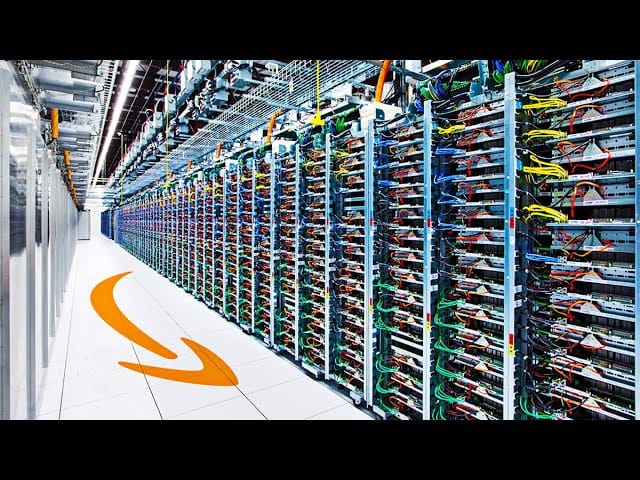
Amazon said Monday it will add up to $25 billion to its Anthropic investment, on top of the $8 billion already committed. Five billion funds now. The other $20 billion is gated on "commercial milestones." As part of the same deal, Anthropic has committed to spend at least $100 billion on AWS over ten years.
On paper: hyperscaler funds frontier lab, lab buys compute from hyperscaler. In practice: the dollars move in a tight loop. Mukund on X summed up the reaction: "This is insanely circular. Why are the SEC and FTC not all over this?" Corey Quinn asked: "How much of Amazon's investments in these AI labs is in the form of AWS credits?"
Set aside the accounting debate. The capacity math is what matters for the pre-IPO names. Anthropic has now locked up roughly 5 gigawatts from Amazon plus another 3.5 gigawatts from Google and Broadcom. Four months ago OpenAI executives were reportedly calling Anthropic's compute stance a "strategic misstep." That critique no longer fits. And as we wrote last week,Bloomberg reported that Anthropic is fielding investor offers at roughly $800 billion — more than 2x the $350 billion February round — and is resisting. If any round eventually prints near that level, AI infrastructure comps on the secondary market get repriced overnight. TechCrunch on the Amazon investment.TechCrunch on the $800B offers.
Quick Takes
- Polymarket raising $400M at $15B — Additive to ICE's $600M at the same $15B post-money earlier this year. Combined round could reach $1B. Still short of competitor Kalshi's $22B mark from March — the gap between the two is the story.
- Project Prometheus closing in on $10B at $38B — The Bezos-co-founded physical-simulation AI lab is bringing in JPMorgan and BlackRock. Five months old. A reminder that the most capitalized rounds of this cycle are not building chatbots.
- Morningstar joins Nasdaq and S&P in index revamp talks — All three are exploring how to admit pre-public-cycle giants like SpaceX post-listing. Any change to the rules shifts passive-flow incentives for private sellers ahead of time.
- Factory raises $150M Series C at $1.5B — Khosla Ventures led, with Sequoia, Insight, Blackstone and NEA also in. Hundreds of thousands of developers at Nvidia, Adobe, and EY reportedly use Factory's "Droids" daily. AI coding is becoming its own venture cohort.
- Google's strike team to catch Anthropic on coding agents — Sergey Brin and CTO Koray Kavukcuoglu reportedly directly involved. Brin's memo: "To win the final sprint, we must urgently bridge the gap in agentic execution." Read alongside the Amazon-Anthropic deal and the competitive pressure sharpens.
🎓 Manual
Tranched Investment
A tranched investment is capital committed upfront but released in stages, with each stage gated on a milestone — revenue, product, regulatory, or otherwise. Amazon's new $25 billion Anthropic commitment is structured exactly this way: $5 billion funded now, $20 billion contingent on "commercial milestones." The structure lets the lead manage risk while giving the company a larger headline number to cite. It also means the announced round size and the actually-deployed capital are two different numbers. On every large AI round going forward, it's worth reading the tranche language before taking the valuation at face value.
👀 What We’re Watching
- Apple's five-month transition. Cook-to-Ternus is a long handoff inside a company with live AI partnership negotiations, EU and India regulatory cases, and an unshipped foldable. Private companies in Apple's orbit — particularly those with AI dependencies — should read every Ternus public appearance carefully. The philosophical shift from services-first to silicon-first is real.
- Whether Anthropic accepts the $800B round. Turning down investor demand at more than 2x a two-month-old mark is a posture available to very few companies. If a deal eventually prints at or near that level, it resets the AI infrastructure comp curve.
- The Morningstar-Nasdaq-S&P index question. The three largest index families are all at the table on how to handle eventual SpaceX-scale listings. Passive inclusion is how massive IPOs get bid up post-listing. If any of them loosens requirements first, the capital flows into pre-IPO secondaries shift well before the ringing of the bell.
Augment Markets Inc. is a technology company offering software and data services. Brokerage services are offered through Augment Capital LLC, an affiliated broker-dealer and member FINRA/SIPC. Investment advisory services are offered through Augment Advisors LLC, an SEC-registered investment adviser.
Important Disclosures: This material has been prepared for informational purposes only. None of the information provided represents a recommendation, an offer or the solicitation of an offer to buy or sell any security. The information provided does not constitute investment, legal, tax, or accounting advice. You should consult with qualified professionals before making any investment decisions. Investing in private securities involves substantial risk, including the potential loss of principal. Private securities are typically illiquid, have limited pricing transparency, and often require longer holding periods. These investments are available exclusively to qualified accredited investors and offer no guarantee of returns. An IPO or other liquidity event is not guaranteed. Additionally, past performance of private securities does not indicate or predict future results. Share price data are estimates only, based on proprietary data from Caplight and Augment Markets Inc. and its affiliates.

Paul leads editorial at Augment, building Pulse into the private markets' go-to intelligence source. He also develops editorial content strategies for startups and venture capital firms. Previously, he spent 15 years as a business and opinion journalist at The New York Times, Fortune, Fast Company, Reuters, and more. He believes transparency creates liquidity—and that someone should actually publish what private shares are trading for. He lives in Marin with his wife and two rescue dogs, and wishes he had more time to surf.
Learn more