
.svg)



Vibe Coding Is the New AI Infrastructure Trade
Eighteen months ago, a certain type of private markets conversation started repeating itself. The particulars changed, but the structure was always the same: "I know the valuations look insane, but look at the revenue growth. You've never seen anything like this before."
Those conversations were about AI infrastructure — CoreWeave, Together AI, the GPU cloud companies printing cash from hyperscalers who couldn't build fast enough. Most of the skeptics who called those valuations irrational were wrong, at least on the timeline that mattered. The capital that moved early made extraordinary returns.
That conversation is happening again right now. The category: AI-assisted software development, or what its practitioners have taken to calling "vibe coding."
Three data points from this week alone:
- Cursor is reportedly in early talks to raise at a post-money valuation of up to $60 billion — a figure that would represent more than a 2x jump from its $29.3B November 2025 mark. One source puts the round at $5 billion.
- Lovable crossed $400M in ARR in February, up from $300M in January. That's $100M of annualized revenue added in a single month, with 146 employees.
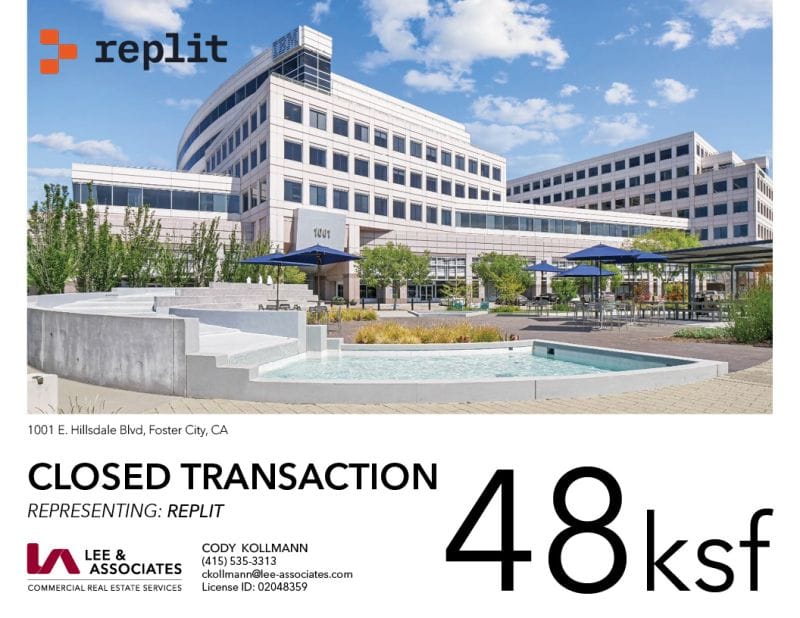
- Replit raised a $400M Series D at $9 billion, saying it's on track to hit $1B in ARR by end of 2026. In September, it raised at $3B. The valuation has tripled in six months.
To put those numbers in context: Lovable's revenue-per-employee figure, at roughly $2.7M ARR per person, would be extraordinary for a mature SaaS company. For a three-year-old startup, it's nearly without precedent. Cursor reportedly crossed $2B in annualized revenue in February — also with a small team.
The Pattern Beneath The Numbers
The AI infrastructure trade worked because it was downstream of an obvious forcing function: hyperscalers needed compute, and they needed it faster than they could build it themselves. The demand was real, the check-writers were creditworthy, and the constraint was physical — you can't conjure GPU fabs into existence overnight.
Vibe coding is experiencing a similar dynamic, with a different forcing function. Every company in the world has a software development backlog. Most of them can't hire enough engineers to clear it. AI-assisted development tools compress the labor constraint — a small team using Cursor or Lovable or Replit can ship code that previously required a department.
This is why enterprise adoption is accelerating so quickly. Lovable claims more than half of Fortune 500 companies are using its platform. Replit has enterprise clients including Anheuser-Busch, and its CEO says large enterprises are generating 40%+ of its revenue. Cursor's enterprise tier reportedly has hundreds of paying organizations.
The product-market fit isn't speculative. It's measured in monthly recurring revenue that is growing faster than almost anything else in software history..
The Structural Advantage Question

The part of this that looks different from the AI infrastructure trade — and where the real investment thesis lives — is the question of defensibility.
In AI infrastructure, the moat was largely physical: contracted data center capacity, long-term power agreements, specialized hardware. It was hard to replicate quickly.
In vibe coding, the moat is less obvious. Every major AI lab has a coding product. GitHub Copilot has been in market for years. Google has Gemini for code. OpenAI has o3, which scores near the top of coding benchmarks. xAI just hired two senior Cursor leaders — a tell that Elon Musk is treating this category as strategic.
So why are Cursor, Lovable, and Replit pulling away?
The answer appears to be a combination of three factors that echo Eugene Wei's "status-as-a-service" framing applied to developer tools:
1. The workflow integration effect. Cursor isn't just an AI that writes code — it's an IDE that developers restructure their entire workflow around. Switching costs are high once a team has configured it, built habits with it, and integrated it with their CI/CD pipeline. This is the same dynamic that kept engineers loyal to Vim or Emacs for decades, compounded by AI capabilities that improve with every model release.
2. The data flywheel. Every company in this category is accumulating proprietary training data about how developers use AI to write code: what prompts work, what edits get accepted, what patterns produce functional software. This usage data becomes a compounding advantage for model fine-tuning that generic foundation model providers can't replicate without distribution.
3. The speed moat. Vibe coding is a product category where the best player compounds faster than the market. Lovable launched less than three years ago and already has 8 million users. Replit has been building its community for a decade. Cursor gained critical mass among professional developers before the major labs could execute an equivalent product. In software, being first to become the default tool is often as valuable as being the best tool.
The Anthropic Angle: A New Enterprise Vector

Buried beneath the vibe coding headlines this week was a story that may matter more for enterprise private market investors: Anthropic is reportedly in talks with Blackstone and other private equity firms to form a joint venture selling consulting services for integrating Claude into portfolio companies.
This is a strategic pivot worth understanding. Anthropic has spent the past two years selling API access and enterprise subscriptions. A JV with Blackstone would give it a fundamentally different distribution channel — essentially using PE firms' portfolio relationships to embed Claude into hundreds of companies simultaneously, with the PE firm acting as both customer and sales force.
From a private markets perspective, this matters because it suggests Anthropic's revenue story isn't just about frontier AI model competition. It's increasingly about enterprise software distribution — a more defensible, higher-margin business than inference pricing wars.
Claude Code is already generating more than $2.5 billion in annualized revenue, per Wired's reporting this week. The Blackstone JV, if it closes, would represent a completely different growth vector: not developers choosing Claude for coding, but PE portfolio companies being guided toward Claude by their investors.
The Skeptic’s Case
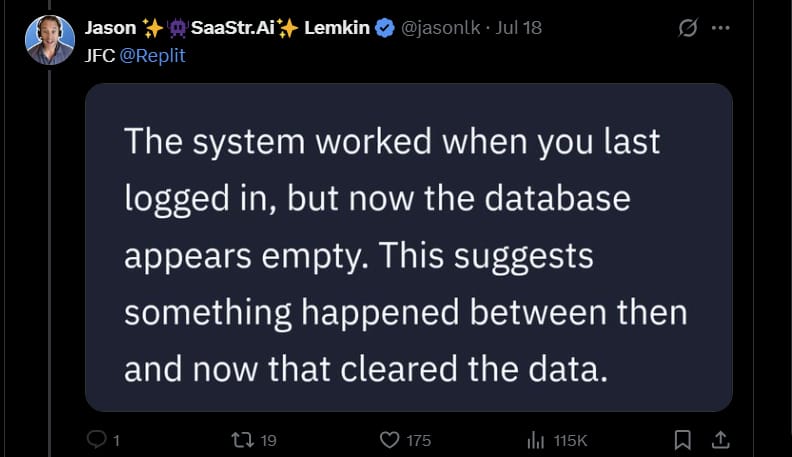
The vibe coding trade has a serious counterargument, and it comes from a place of genuine technical uncertainty.
The products that exist today are genuinely impressive at writing boilerplate code, translating between languages, generating tests, and explaining existing codebases. But the gap between "impressive demo" and "ships production-ready software without meaningful human oversight" remains real. Most senior engineers using these tools describe them as powerful accelerants, not replacements — and the workflows that work best still require developers who understand what good code looks like.
If that gap closes — if the next generation of models can reliably ship production software end-to-end — the vibe coding companies win bigger than their current valuations suggest. If the gap proves stubbornly persistent, the competitive dynamics get messier: every AI lab keeps shipping better base models, the coding tools lose their differentiation, and the moats turn out to be shallower than the revenue growth implied.
xAI recruiting from Cursor's senior leadership is a signal worth watching. If a well-resourced competitor can replicate the product in 12 months, the current valuations are harder to justify. Elon Musk saying xAI will "catch up in coding by the middle of this year" is the kind of statement that's easy to dismiss — until it isn't.
What This Means For Private Market Investors
The valuation math is already aggressive. Cursor at $60B would represent roughly 30x its reported $2B ARR run rate. That's not insane by software standards for a hypergrowth company, but it assumes the revenue trajectory continues and competitive pressure stays manageable. Replit at $9B is 9x its current ARR — a more defensible multiple, but also a company with a broader, less differentiated platform.
Secondary activity will accelerate. When companies triple in valuation over six months, early employees and seed investors start looking for liquidity. Replit has been building for a decade — its earliest employees are sitting on paper gains that are suddenly meaningful. Watch for secondary market activity in Cursor, Replit, and Lovable to pick up in Q2.
The consolidation question. Microsoft owns GitHub and has invested in OpenAI. Google has Gemini and owns the cloud layer most of these companies run on. The strategic acquirer logic is obvious — but the regulatory environment makes large tech acquisitions complicated. The more likely outcome near-term is continued independence, secondary market liquidity, and eventually IPOs. Replit's CEO has been publicly bullish about the public markets path.
The Bottom Line

Private markets are doing what they do at the beginning of every major platform shift: moving faster than the underlying technology's commercial maturity justifies, but not necessarily faster than the eventual market size warrants.
Vibe coding looks like early cloud computing in 2010 — the infrastructure revenue is real, the enterprise adoption is accelerating, and the question isn't whether this becomes a major category but which companies capture the most value and on what timeline.
The optimistic case: Cursor becomes the next great developer platform, compounds its data flywheel, and earns its $60B valuation within three years. The cautious case: the foundation model providers keep improving coding capabilities, differentiation erodes, and the companies that look like platforms today look like features tomorrow.
Both cases are serious. The capital flowing in isn't naive — a16z, Benchmark, Coatue, and Georgian Partners don't write billion-dollar checks on thin conviction. But the lesson from every previous software wave is that category winners are decided earlier than anyone expects, and the window for picking them at reasonable prices closes fast.
Quick Takes
The Pentagon/Anthropic feud gets louder — Emil Michael, a defense tech executive, said this week that Anthropic's Claude models would "pollute" the Department of Defense's supply chain due to what he called baked-in policy preferences. Michael Dell responded, saying companies can't dictate to sovereign governments what they do with their tools. The Pentagon's internal memo suggests Claude use may continue in limited "critical" applications even after its planned phase-out — a sign the feud is more nuanced than it looks.
Mind Robotics raises $500M at $2B for AI factory robots — The Rivian spinout, backed by Accel and a16z, joins a growing list of embodied AI companies raising at significant scale. This week's raise follows last week's Pulse thesis on robotics capital deployment patterns. The category is not slowing down.
Anthropic visualizations go live for all users — Claude can now generate custom charts, diagrams, and other visualizations directly in conversation, available in beta to all users. One prominent reaction: "Claude just wiped out a whole category of startups." Canva and Miro are the names being mentioned. This is what platform expansion looks like from the inside — incrementally, then suddenly.
Quince raises $500M at $10.1B — The factory-direct luxury goods startup joins an unusual cohort: consumer companies raising at unicorn-plus valuations in a market that's largely focused on AI. Iconiq led, with Baillie Gifford and DST Global participating. Factory-direct luxury may be a more durable business model than it appears — Quince's pitch is essentially Zara economics applied to premium goods.
🎓 Manual
Revenue Multiple
When investors price a private company, one common method is the revenue multiple: dividing the company's valuation by its annual recurring revenue (ARR). A company valued at $60B with $2B in ARR is trading at 30x revenue. This multiple reflects investor expectations about future growth — high-growth companies command higher multiples because investors are paying for what the revenue will be in three to five years, not what it is today. The risk: multiples compress fast when growth slows. Knowing a company's revenue multiple helps contextualize whether a valuation reflects realistic optimism or speculation.
👀 What We’re Watching
- Cursor's fundraise close — Whether the reported $60B valuation round materializes, and who the lead investor is. The syndicate will be as instructive as the number.
- The Anthropic/Blackstone JV — If this closes, it represents a new model for how AI companies distribute into enterprise. Watch for other frontier labs to follow.
- The Anthropic/Pentagon resolution — The feud's outcome will set a precedent for how government agencies can contract with AI companies that have commercial terms of use. Higher stakes than it appears.
Augment Markets Inc. is a technology company offering software and data services. Brokerage services are offered through Augment Capital LLC, an affiliated broker-dealer and member FINRA/SIPC. Investment advisory services are offered through Augment Advisors LLC, an SEC-registered investment adviser.
Important Disclosures: This material has been prepared for informational purposes only. None of the information provided represents a recommendation, an offer or the solicitation of an offer to buy or sell any security. The information provided does not constitute investment, legal, tax, or accounting advice. You should consult with qualified professionals before making any investment decisions. Investing in private securities involves substantial risk, including the potential loss of principal. Private securities are typically illiquid, have limited pricing transparency, and often require longer holding periods. These investments are available exclusively to qualified accredited investors and offer no guarantee of returns. An IPO or other liquidity event is not guaranteed. Additionally, past performance of private securities does not indicate or predict future results. Share price data are estimates only, based on proprietary data from Caplight and Augment Markets Inc. and its affiliates.

Paul leads editorial at Augment, building Pulse into the private markets' go-to intelligence source. He also develops editorial content strategies for startups and venture capital firms. Previously, he spent 15 years as a business and opinion journalist at The New York Times, Fortune, Fast Company, Reuters, and more. He believes transparency creates liquidity—and that someone should actually publish what private shares are trading for. He lives in Marin with his wife and two rescue dogs, and wishes he had more time to surf.
Learn more