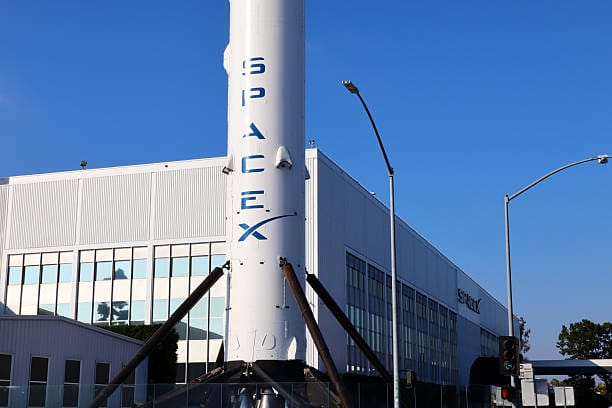
SpaceX is finally going public. Here's what it actually means.




This Week in Private Markets
The private markets have spent years playing a long game. This week, the board cleared.
SpaceX is preparing to file its IPO prospectus — reportedly as soon as this week, but most likely next, (hey Elon, it’s Friday!) — targeting a June listing at a valuation of roughly $1.75 trillion, per reporting from The Information and Bloomberg. The expected raise of more than $75 billion would dwarf Saudi Aramco's $29.4 billion offering in 2019, the current record. If it closes near target, SpaceX would immediately rank among the six most valuable public companies on earth.
For secondary market participants, this is the inflection point they've been waiting for. SpaceX has been one of the most actively traded names in private markets for years. When the S-1 drops, it will be the most closely read financial document Wall Street has seen in a decade — and the first real window into Starlink's unit economics.
The Big Story: SpaceX Plans the Largest IPO in History

SpaceX has been valued at many things over the past two years. The number that matters now is $1.75 trillion.
Following its February merger with xAI — which combined Musk's rocket and satellite business with his AI venture — SpaceX has been racing toward a filing that would formalize what private markets have been pricing in for months. The prospectus is expected this week or early next, with a June listing on the horizon.
A few things investors should understand before the S-1 lands:
The Starlink story is the whole story. By the end of 2025, Starlink had reached an estimated 9.2 million subscribers and roughly $10 billion in revenue. Analysts project that figure could approach $24 billion in 2026. The xAI merger adds an AI infrastructure layer — orbital data centers, Grok integration — that's contributed to the valuation jump from $800 billion (December 2025) to $1.75 trillion today.
Musk is reportedly pushing for an unusually large retail allocation. Per Reuters, he's seeking to make up to 30% of shares available to retail investors at IPO — roughly 3-6x the typical range. If accurate, this would be one of the most significant structural changes to IPO mechanics in years.
Secondary holders are watching lock-up terms closely. SpaceX has historically managed employee and investor liquidity through bi-annual tender offers rather than primary rounds. The IPO will change that dynamic. How long early employees and secondary buyers must hold post-listing will shape the near-term supply picture.
One caveat on the valuation: the S-1 will be the first time the market gets to scrutinize SpaceX's actual margin structure. The xAI integration adds complexity — the SEC is reportedly scrutinizing the merger's disclosure implications. The $1.75 trillion number presupposes clean financials and a favorable market window. Neither is guaranteed.
SpaceX stock lockup schedule and tiered release structure
SpaceX did not use a simple 180-day lockup for all pre-IPO holders. Instead, the company’s post-IPO structure reportedly uses a tiered release schedule designed to spread potential selling over time rather than open the gates all at once.
That matters because SpaceX began trading on the Nasdaq on June 12 under the ticker SPCX, after pricing its public offering at 135 per share and raising 75 billion. A small initial float can create scarcity in the first days of trading. But as more stock becomes eligible for sale, the supply picture can change quickly.
How the lockup period works
Under the reported tiered structure, investors may be able to sell up to 20% of their stock starting on the second full day of trading after SpaceX releases its first earnings report following the second quarter. There is also a performance trigger: another 10% may become eligible if the stock trades 30% above its IPO price for at least five of the 10 trading days before that earnings report.
The schedule then continues in smaller waves. Investors can reportedly sell 7% increments after 70, 90, 105, 120, and 135 days post-IPO. Another 28% unlocks after SpaceX reports its third-quarter earnings, with the remainder unlocking after the 180-day lockup window.
This structure does not eliminate selling pressure. It just changes the timing. For early investors, employees, and secondary holders, the key question is not only whether the stock performs, but when liquidity becomes available and how much supply enters the market at once.
Stock float expansion and potential selling pressure
Float is the amount of stock actually available for trading. It is a critical mechanic in any major IPO because it determines how much supply the market has to absorb.
Reports suggest less than 5% of SpaceX shares were initially available for stock market trading after the IPO. That limited supply may have helped support early demand, but the dynamic can shift as lockups expire and more holders gain the ability to sell.
Why float matters after the IPO
If buyers remain strong, a larger float can improve trading depth and make the stock easier to buy or sell. If demand weakens, more available shares can pressure the stock price.
Some reports suggest a large block of shares could become eligible for sale after the initial earnings report, with another block potentially eligible if the performance trigger is met. Over time, the tradable float could expand meaningfully, while shares held by Elon Musk and other long-term holders may remain locked for longer.
For secondary market participants, the IPO creates a path to cash, but liquidity arrives in stages. A holder who bought before the IPO may still need to think carefully about timing, taxes, concentration, and whether selling into an unlock window makes sense.
SpaceX stock trading performance and volatility
The first few weeks of public trading have already shown why IPO investing is not just about getting access. It is also about price, timing, and volatility.
SpaceX opened trading above its IPO price, but post-IPO excitement can fade. As the stock moved through its early public market trading window, investors began weighing the same factors that mattered in private markets: Starlink growth, Starship costs, xAI integration, margins, and liquidity.
Like other publicly traded companies, the market is repricing risk in real time. For a company with SpaceX’s scale, ambition, and retail following, early trading can be driven by more than fundamentals. Sentiment, supply, index demand, earnings expectations, and headlines around Starship, Starlink, and xAI can all move the stock.
A key takeaway for private market investors is straightforward: an IPO is a liquidity event, not a guaranteed return. Once shares trade publicly, the stock has to compete with every other public market opportunity.
Valuation context for SpaceX stock
SpaceX’s valuation has always carried two stories at once. The bull case centers on Starlink, launch dominance, government contracts, AI infrastructure, and the possibility that SpaceX becomes one of the defining platforms of the next decade. The bear case is simpler: even great companies can be expensive stocks.
At a valuation near the top of the global public market, the company has little room for sloppy execution. Investors are not just buying today’s business. They are paying for years of expected growth, operational scale, and cash generation.
What Bulls argue
The bullish view is that SpaceX is not a normal aerospace company. Starlink could become a global communications platform, launch demand may keep growing, and the xAI merger could add an intelligence and infrastructure layer that traditional valuation models struggle to capture.
In that scenario, near-term volatility may matter less than long-term market dominance. Investors with a multi-year view may focus less on the first two months of trading and more on whether SpaceX can convert scale into durable cash generation.
What Bears argue
The bearish view is that the IPO already priced in too much perfection. A high revenue multiple, heavy investment needs, technical execution risk, and uncertain margins can make the stock vulnerable if the company misses expectations.
This is where valuation discipline matters. A strong company can still be a difficult investment if the entry price assumes flawless execution.
Anthropic Eyes a Q4 IPO — And Bankers Are Expecting $60B+

The same week SpaceX signaled its filing, The Information reported that Anthropic executives have discussed going public as soon as Q4 2026. Bankers vying for the mandate reportedly expect the offering to raise more than $60 billion.
For context: Anthropic closed a $30 billion round at a $380 billion valuation in February. It's projecting roughly $26 billion in annualized revenue by the end of this year. Enterprise customers now number 300,000+, with large accounts (over $100K run-rate) reportedly growing nearly 7x in the past year.
The competitive dynamic is worth noting. OpenAI is also eyeing a public listing, with some advisors pointing to late 2026 or 2027. Kalshi prediction markets currently give Anthropic a 72% probability of going public before OpenAI. Both companies need the capital — frontier model training costs are accelerating faster than revenue in the near term — but an IPO also provides something else: a public market comparable. Right now, there's no clean benchmark for what an AI lab is worth as a going concern. Whoever files first sets the frame.
What it means for secondary holders: Anthropic secondaries have been actively trading. An IPO would trigger a significant liquidity event for early employees and investors who've been waiting years. Watch for tender offer activity in the months before any S-1 filing — historically, companies use pre-IPO tenders to manage cap table ahead of the roadshow.
Defense AI's Capital Moment: Shield AI at $12.7B

The week's third major story came from a different sector, but the underlying dynamic is the same: private capital flowing into companies building AI-native infrastructure.
Shield AI raised $2 billion — $1.5 billion in Series G equity led by Advent International, and $500 million in preferred financing from Blackstone — at a $12.7 billion post-money valuation. That's more than double its valuation from a year ago and nearly five times where it stood in late 2023.
Shield AI builds autonomous AI pilots — software that can fly aircraft in GPS-denied, communications-degraded environments where human pilots can't operate. Its Hivemind system has been deployed on 26 classes of vehicles, including F-16s. The U.S. Air Force recently selected it as a mission autonomy provider for Collaborative Combat Aircraft.
The raise also funds an acquisition: Aechelon Technology, a defense simulation software company whose technology underpins how the U.S. military trains pilots and tests aircraft in synthetic environments. The combination deepens Shield AI's "train in simulation, deploy in the field" thesis — which is essentially the defense sector's version of the foundation model approach.
Worth noting: JPMorgan's Security and Resiliency Initiative co-led the Series G. The same initiative is reportedly considering participation in Reflection AI's $2.5B round. Traditional financial institutions are increasingly treating AI infrastructure as a balance-sheet decision, not just a venture bet. That capital behavior shift has implications for how private markets price this category.
Quick Takes

Reflection AI eyes $2.5B raise at $25B valuation — The Nvidia-backed, open-model AI startup founded by former Google DeepMind researchers is reportedly in talks for a new round that would more than triple its $8B valuation from October. JPMorgan's Security and Resiliency Initiative is considering co-investing. Notably, the company has not yet released a public frontier model.
Anthropic wins preliminary injunction in DOD blacklisting suit — A federal judge ruled in Anthropic's favor, finding the company likely to prevail on claims that the government's decision to brand it a potential national security adversary was unlawful. The ruling cited a lack of statutory support and noted zero amicus briefs supporting the government.
Harvey raises $200M at $11B valuation — The legal AI company, with clients including NBCUniversal and HSBC, raised at a valuation up from $8B in December. Legal AI is one of the cleaner enterprise monetization stories in the current cycle: clear ROI, professional services workflows, and high switching costs.
🎓 Manual
Lock-Up Period
A contractual restriction that prevents insiders — founders, early employees, and pre-IPO investors — from selling shares for a set period after a company goes public, typically 90 to 180 days. Lock-up expirations often create short-term selling pressure as restricted holders gain liquidity. They're a key factor to watch in any IPO analysis, especially for companies like SpaceX where secondary holders have been accumulating positions for years.
🎓 Data Point of the Day
$49.1 billion
Venture capital investment into defense technology in 2025, per PitchBook — nearly double the $27.2 billion recorded the prior year. Shield AI's raise this week is a data point in a structural trend, not an outlier.
👀 What We’re Watching
- The SpaceX S-1 — The prospectus filing will be the most important private-to-public disclosure in years. Starlink's margin structure, the xAI integration's financial treatment, and the retail allocation mechanics will all be scrutinized immediately upon release.
- The Anthropic-OpenAI IPO race — Both companies need capital, but the first to file sets the public market valuation framework for the entire AI sector. Watch for pre-IPO tender offer activity as a leading indicator of timeline.
- JPMorgan's Security and Resiliency Initiative — The bank is co-investing in both Shield AI and reportedly Reflection AI through this vehicle. When a major financial institution creates a dedicated program for AI and defense startups, it's a signal that this category has moved from speculative to structural in institutional portfolios.
Augment Markets Inc. is a technology company offering software and data services. Brokerage services are offered through Augment Capital LLC, an affiliated broker-dealer and member FINRA/SIPC. Investment advisory services are offered through Augment Advisors LLC, an SEC-registered investment adviser.
Important Disclosures: This material has been prepared for informational purposes only. None of the information provided represents a recommendation, an offer or the solicitation of an offer to buy or sell any security. The information provided does not constitute investment, legal, tax, or accounting advice. You should consult with qualified professionals before making any investment decisions. Investing in private securities involves substantial risk, including the potential loss of principal. Private securities are typically illiquid, have limited pricing transparency, and often require longer holding periods. These investments are available exclusively to qualified accredited investors and offer no guarantee of returns. An IPO or other liquidity event is not guaranteed. Additionally, past performance of private securities does not indicate or predict future results. Share price data are estimates only, based on proprietary data from Caplight and Augment Markets Inc. and its affiliates.

Paul leads editorial at Augment, building Pulse into the private markets' go-to intelligence source. He also develops editorial content strategies for startups and venture capital firms. Previously, he spent 15 years as a business and opinion journalist at The New York Times, Fortune, Fast Company, Reuters, and more. He believes transparency creates liquidity—and that someone should actually publish what private shares are trading for. He lives in Marin with his wife and two rescue dogs, and wishes he had more time to surf.
Learn more